Walk: County looking at options for data center moratorium
GEOFFREY WOEHLK/THE FORUM
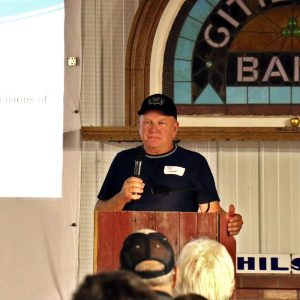
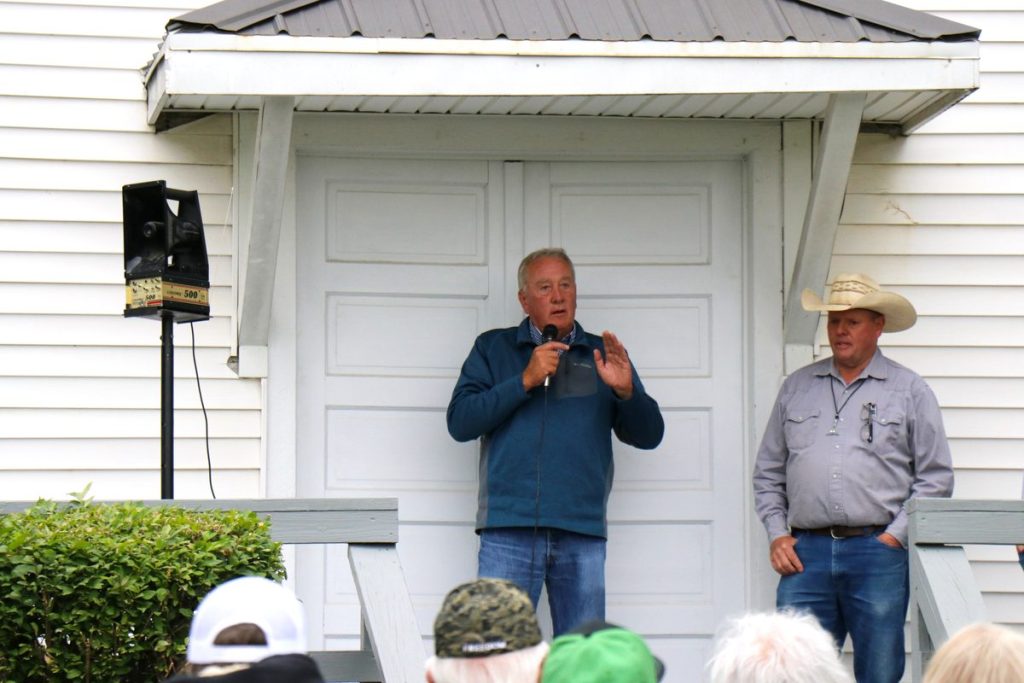
Scott Walk, Nodaway County commissioner for the South District, said during a community meeting held Thursday at the Salem Church near Barnard that the county is working with an attorney on options for a data center moratorium. He said he expects to know more next week.
BARNARD, Mo. — In front of the largest gathering yet of residents opposed to a proposed data center, Nodaway County Commissioner Scott Walk said the county is working to find a legal way to delay the project so officials and the community can have time to learn more about the potential impacts.
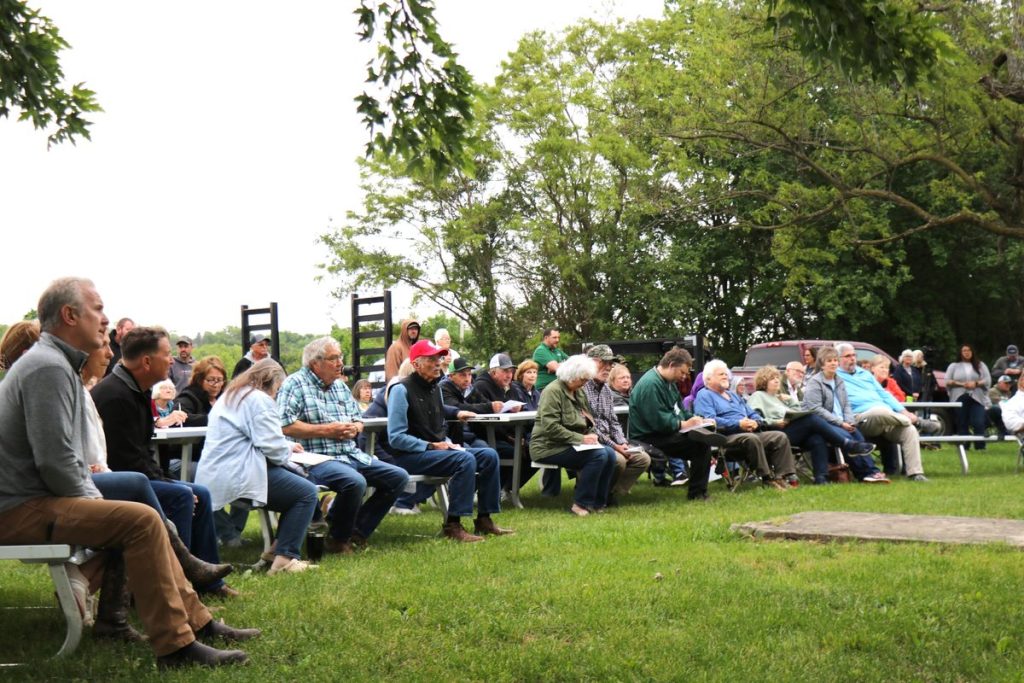
Between 100 and 125 people attended an informational meeting on Thursday evening at the Salem Church near Barnard, hearing from landowner Tim Schafer, who hosted the event, along with members of the Nodaway County Says No opposition group and other speakers.
Schafer, who owns land near the site of the proposed hyperscale AI data center, said he and others are particularly concerned about the amount of water the data center would use, air pollution from the on-site natural gas turbines that would accompany the data center, noise pollution and potential pollution of wastewater with chemicals and metals.
Schafer said he wants the Nodaway County Commission to impose a 6-to-12-month moratorium on projects like the data center to allow for more research about the potential effects.
Walk, who represents the county district where the data center would go, told the crowd that the commission has consulted with an attorney about a moratorium like one imposed by the Camdenton Board of Aldermen earlier this month. However, the city of Camdenton has more levers to pull than Nodaway County, Walk said, which has no permitting or zoning ordinances. Because of that, the commissioners have consistently said there is little they can do about the project even if they were dead set against it.
WHITE CLOUD ACRES
Scale Microgrids, the company developing an AI data center that would be built about 6 miles south of Maryville, has said the total investment in the project would reach about $6 billion, including the approximately $4 billion hyperscale data center and natural gas power generators that would be built on the site. The company set up an informational website at whitecloudacres.com.
However, Walk said during Thursday’s meeting, “I believe we have a path” to a similar measure that could buy the county time to do more research.
“By next week, we should have an answer on what we can do and how we can do it in a way that will stand up in court,” he said.
To a largely hostile crowd, Walk said that the commission is just as frustrated as anyone else about the lack of information about the data center. “We’re getting crucified” over something the commission has little control over, he added.
“They don’t have to answer to us,” Walk said.
He also said he has not made up his mind one way or the other about the project, and noted there are definite benefits, like millions of dollars in property tax revenues for local schools in a time when state funding is declining and rural districts are in jeopardy.
But he said he would definitely oppose the project if there were proven negative health effects. That’s something he’s still researching, he said.
Air pollution
That research has included talking with a county official in Loudon County, Virginia, which is home to more than 200 data centers. Walk said the official he spoke to said there were no notable health issues from the data centers over the approximately 25 years the county has had at least one.
One audience member disputed that notion, pointing to a study focused on air pollution from a particular data center project in Loudon County.
The study, released in March, said that the eight natural gas turbines and 51 diesel generators on the data center site causes between $53 million and $99 million in health-related damages annually along with 3 to 6 premature deaths per year. The study analyzed air pollution from the power generators only, and pointed to fine particulate matter emitted into the air as especially harmful, causing respiratory and heart issues in particular, the study said.
One of the factors that drives the high impact of the air pollution in Loudon County is the population density — Loudon County is just outside of Washington, D.C. In a rural area, the dollar amounts and mortality effects would be lower because of the smaller number of people.
The generators at the Loudon County site can collectively produce up to 135 megawatts of electricity, according to the study. That’s less than a quarter of what would be required to power the 600 MW White Cloud Acres facility at peak capacity.
WHAT IS AN AI DATA CENTER?
Data centers are facilities that house large numbers of servers that are used to complete intensive computing tasks at scale. A hyperscale AI data center uses thousands and thousands of such servers, typically utilized by the largest cloud server companies like Amazon, Google, Microsoft and Meta, to power generative AI applications. The facilities themselves are usually basic structures with wall-to-wall racks of servers and other equipment.
Across the highway from the proposed site in Nodaway County will be a 440 MW natural gas power plant to be operated by Evergy. It is not related to the data center project. But the potential air pollution from that power plant would be added to the pollution potentially generated by the proposed natural gas power plant at the data center itself. Scale Microgrids has not indicated publicly how much of the 600 MW data center will be powered by on-site power generators.
Less research has been done about potential water pollution from data centers. Unlike many older data centers, the White Cloud facility would be a closed-loop facility, which not only means it would draw less water daily — recycling the water in its system — but that the water would not be exposed to air, limiting the water lost to evaporation to very small, incidental amounts.
City and county officials have told the Forum that the data center would use only wastewater from the city of Maryville’s wastewater treatment plant for cooling, which would otherwise be discarded into the One Hundred and Two River after appropriate treatment. After it’s used at the data center, the excess water used for cooling would then be put through the typical wastewater treatment process again, either at a new facility near the data center or at the city of Maryville’s wastewater treatment plant. In any case, the water would need to meet Missouri Department of Natural Resources standards.
‘Hold them to account’
Schafer said the next step is to continue raising awareness about the data center and spurring neighbors to action. He said he has already hired an attorney to assist in making public records requests and to advocate on the community members’ behalf. He’s also started a GoFundMe to help pay for the between $50,000 and $100,000 that legal assistance could cost, he said.
UPCOMING MEETINGS
Legislative Coffee
Hosted by Greater Maryville Chamber of Commerce
9 a.m., Tuesday, May 26
Nodaway County Services Event Center
121 E. Lieber St.Community meeting opposing data center
Hosted by Nodaway Says No
6 p.m., Tuesday, May 26
Maryville Community Center
1407 N. Country Club RoadWhite Cloud Acres open house
Hosted by Scale Microgrids
6-8 p.m., Wednesday, June 3
Mozingo Event Center
1 Fall Drive
The next meeting is set for 6 p.m. on Tuesday at the Maryville Community Center.
Holly Caviness, one of the organizers of Nodaway Says No, said she expects an even larger turnout on Tuesday, driven by people who will be unsatisfied with state legislators’ answers at the 9 a.m. Legislative Coffee that same morning hosted by the Greater Maryville Chamber of Commerce at the Nodaway County Services multipurpose building.
“This is not inevitable,” Caviness said. But, she added, stopping the data center project will require more people to get involved and to let elected officials know where they stand.
In particular, Schafer said that Rep. Jeff Farnan was “pretty inconclusive” about whether he was open to doing anything about the data center.
Another speaker, James Gordon, of the Missouri Rural Crisis Center, which organizes opposition to rural data centers statewide, said that Farnan had been instrumental in killing a bill that, in part, addressed large water users.
Gordon appeared to be referring to HB 3362, sponsored by Rep. Colin Wellenkamp, R-St. Charles. The bill included provisions to further limit the effects of large-load electric users on residential electric utility prices, and also would have instituted a large-load tariff on water users that used more than 2 million gallons per day, similar to measures already in place for large-load electric users, along with other accompanying regulations.
Gordon said the bill never made it out of committee despite what he said was unanimous support among committee members. He said he later found out that it was Farnan, who is chair of the Conservation and Natural Resources Committee, who killed the bill. He said he could not get a straight answer about why.
Gordon expressed a sentiment shared by many in attendance, who applauded when he said that county officials and state officials have so far done nothing but point fingers and find excuses about why they could do nothing about the data center.
“We’ve elected these people to represent us,” Gordon said, “and we have to hold them to account.”
GEOFFREY WOEHLK/THE FORUM
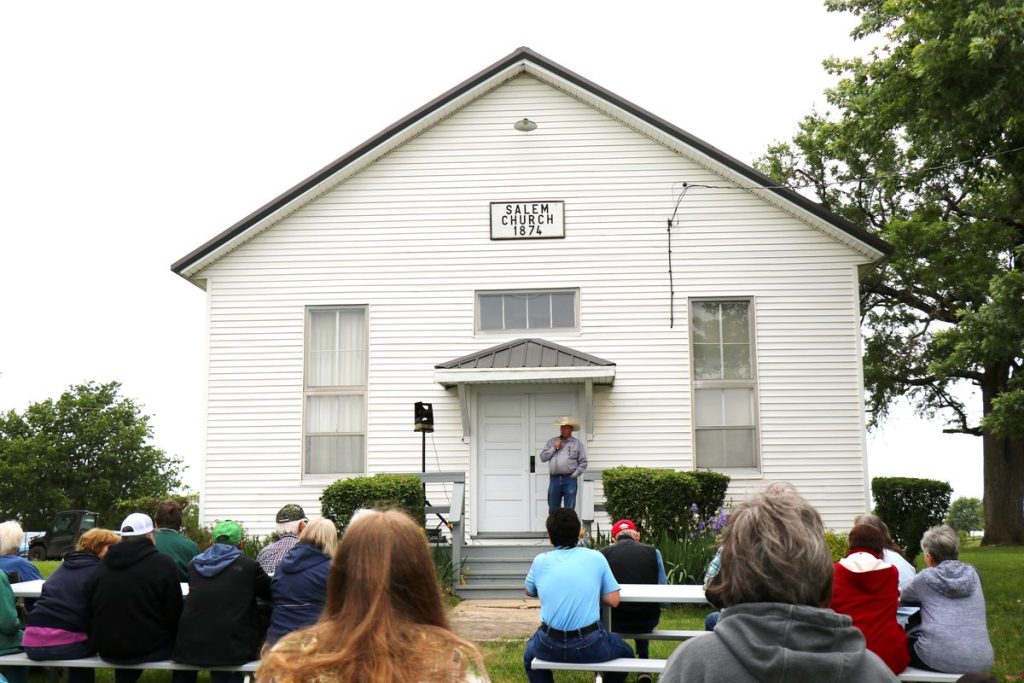
Tim Schafer, who owns land near the site of the proposed White Cloud Acres data center, hosted a community meeting at the Salem Church near Barnard on Thursday evening to discuss opposition to the data center.
GEOFFREY WOEHLK/THE FORUM
More than 100 people attended an informational meeting held at the Salem Church near Barnard on Thursday evening to discuss opposition to the proposed White Cloud Acres hyperscale data center.