County pressing data center developer for public meeting
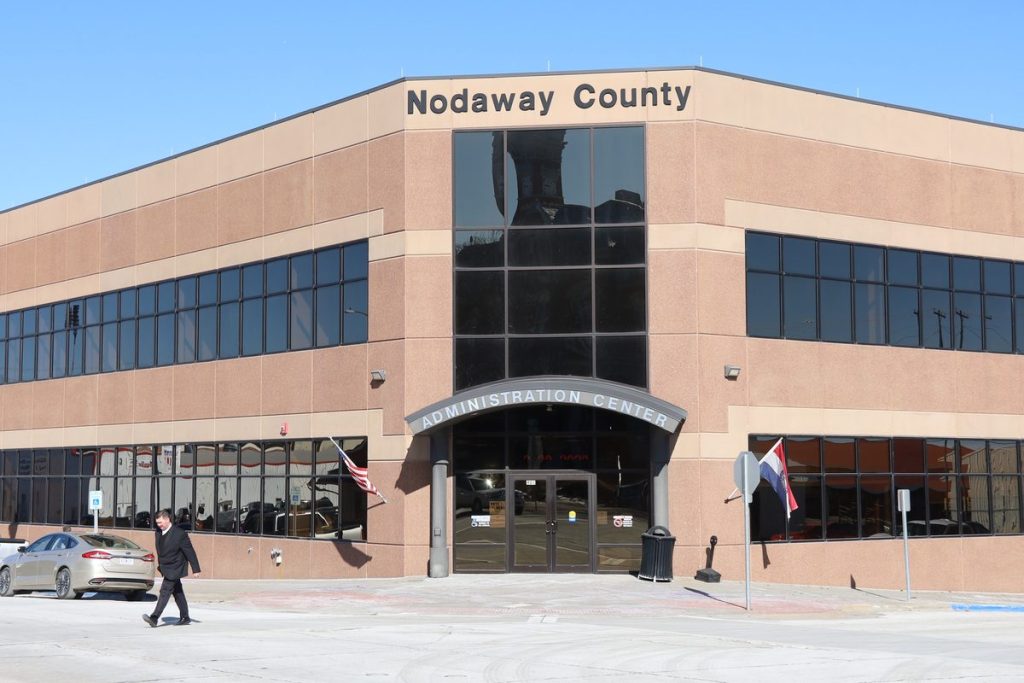
FORUM FILE PHOTO
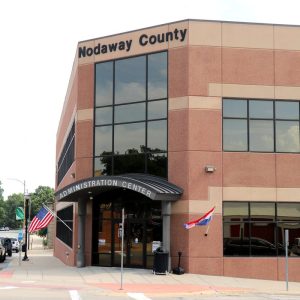
Nodaway County Administration Center (copy)
MARYVILLE, Mo. — The Nodaway County Commissioners said Tuesday that they are continuing to push the developer of a potential AI data center in the county to hold an informational public meeting before the company decides whether to move forward with the project.
The commission has fielded a deluge of emails and in-person inquiries about the data center over the past few weeks, but have said they don’t have much more information than anyone else. That includes what hyperscale company — like Google, Meta, Amazon or Microsoft, to name a few — may end up running the AI data center if it moves ahead. The developer, Scale Microgrids, will likely lease or sell the operation to one of those companies once the project is underway.
Earlier this month, the commissioners said that Scale Microgrids had told them the company would likely decide whether to move forward by June.
In the meantime, the commissioners said they are continuing to press the company to hold a public hearing of some kind.
“But I can tell you that down in Montgomery County, when they had them, the people walked in there and just yelled at them — didn’t hear a word that was said,” South District Commissioner Scott Walk said Tuesday.
So far, the company has created a website for the project, whitecloudacres.com, which as of Wednesday included very little information about the potential data center, which it described as a 600-megawatt facility that represented “a combined investment of more than $6 billion.”
Tax abatements
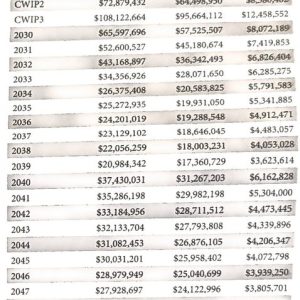
One figure included on the website is a projection that the data center would produce more than $1.1 billion in tax payments over the life of the project.
The commissioners said they did not know where that figure came from. No representative from the company has presented a proposal for tax abatements to the county, though some initial estimates provided by the developers to the county did include some figures with a 50 percent abatement.
North District Commissioner Chris Burns, who has said he is against tax abatements, said Tuesday that offering a tax abatement package may be the only way the commission can gain some measure of control over the facility and ensure the best outcome for residents.
His worst-case scenario, he said, is that the company decides to build the data center a few miles across the border in another county. There, the facility could still use all the same resources from Nodaway County, like water and power, and create all the same potential environmental effects, like noise pollution and air pollution from a natural gas power plant, that will still affect Nodaway County residents.
“But we get zero (dollars) and we have no control,” Burns said.
WHAT ARE CHAPTER 100 BONDS?
Chapter 100 bonds are issued through a state program that essentially allows a local government, through an agreement with a major job creator, to assume ownership of a company’s property and then lease the property back to the company. That exempts the property from taxes since it is now owned by a local government. In exchange, the company then pays a lower amount to “rent” their property from the local government. These are called “payments in lieu of taxes,” or PILOTs.
Offering Chapter 100 bonds, for example, would allow the county to negotiate specific benchmarks that must be met for the company to retain its tax abatements. Typically, those benchmarks are jobs, but could potentially include anything to protect local residents. It could also allow the tax money for schools to be spread out rather than concentrated in one district.
It’s possible, Burns said, that the company would still move forward with the project without any tax abatements. In that case, the county would have little ability to impose any terms, the commissioners said.
Power and water
The two most prominent concerns brought from residents — the use of public power and water resources — have largely been mitigated, the commissioners said, because the company plans to use wastewater from the city of Maryville to cool the massive server farms on the site and build its own off-grid power plant. The amount of clean drinking water the facility would use, Walk said, would be less than the Nodaway County Administration Center, according to figures given to the commission by the company.
Burns said that the company has even broached the idea of paying the city of Maryville to take excess wastewater from the data center back to the city’s wastewater treatment plant to assuage any concerns about the data center dumping water into the One Hundred and Two River.
WHAT IS AN AI DATA CENTER?
Data centers are facilities that house large numbers of servers that are used to complete intensive computing tasks at scale. A hyperscale AI data center uses thousands and thousands of such servers, typically utilized by the largest cloud server companies like Amazon, Google, Microsoft and Meta, to power generative AI applications. The facilities themselves are usually basic structures with wall-to-wall racks of servers and other equipment.
Scale Microgrids has been less clear about the planned accompanying off-grid natural gas plant. The only information listed on the project website indicates the project will have “a natural gas-powered facility designed to provide reliable, on-demand energy.” To entirely power the data center, the site would require an even larger natural gas power plant than the 440-megawatt plant slated to be built by Evergy across the highway from the potential data center site.
Some data centers, including ones planned and utilized by Scale Microgrids, use a combination of grid power and off-grid power depending on demand.
The commissioners also said that like anyone else, they would like more information about the facility before deciding for themselves whether it would be a good thing for Nodaway County.
“I would be against it completely if there’s health issues,” Burns said. Both other commissioners agreed. “If there’s proven health issues, I’m against it, 100 percent against it.”
Studies on potential health issues posed by data centers have been scarce. The biggest health concerns about data center often come from the accompanying power generators. The planned natural gas power plant, which would be built directly across from another natural gas plant planned by Evergy, could add significant air pollution to the area, especially if it is large enough to power the 600-megawatt facility on its own. The data center itself, though, would likely produce little in the way of physical pollution, especially with a closed-loop water system that would recycle most of the water used for cooling.
But being for or against the data center, the commissioners cautioned, didn’t mean they could do much about it either way.
They said Tuesday that adding zoning laws to the county would likely have unintended effects for farmers and would cost more to hire enforcement officers than revenue from zoning permits would produce. However, even if the county did opt for zoning to prevent a data center from building at its preferred location, it’s unlikely they could implement it in such a short time period, they said.