A visit to the National Churchill Museum
A visit to the National Churchill Museum
Dear Editor:
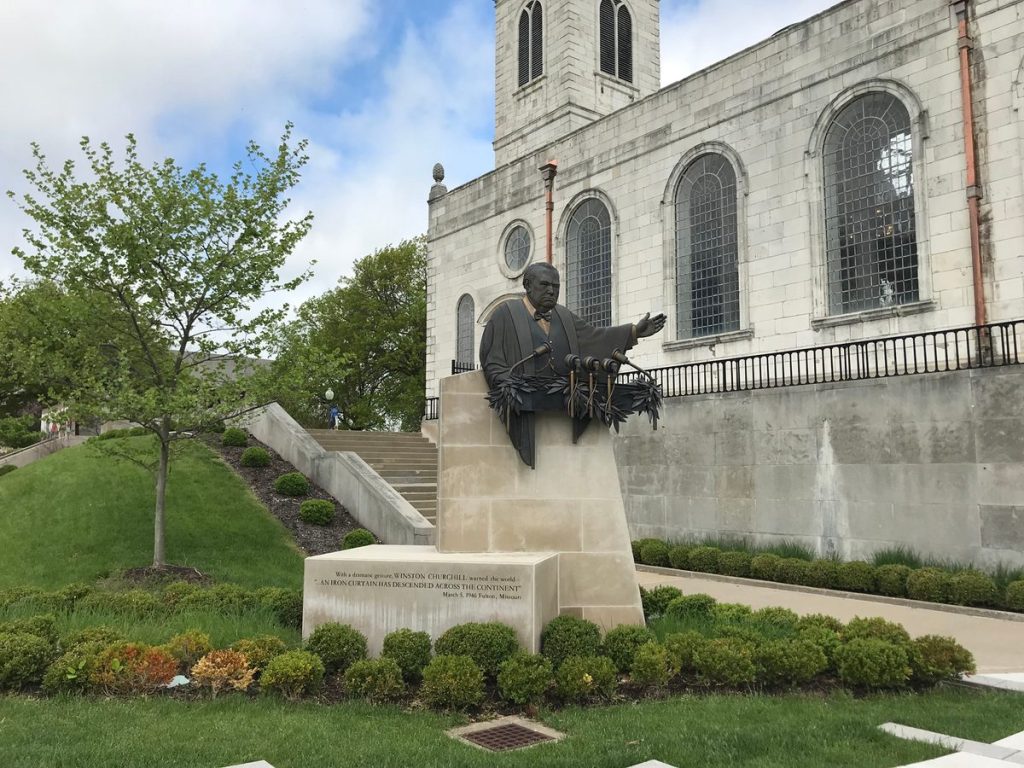
I have travelled to most of the 50 states of this great nation, ‘from sea to shining sea’ and seen many of our state capitals. However, until very recently I have not been to the capitol of the state where I now find myself. I was in Jefferson City this week to attend meetings. To my great surprise and delight found myself only a short 20-minute drive from Fulton, Missouri – the location for arguably the greatest peace-time speech of the 20th century: given 1946 by Winston Churchill,at the invitation of President Truman, best known for the line “From Stettin in The Baltic to Triest in the Adriatic, an iron curtain has descended across the Continent.” It was thought-provoking to stand on the very spot where these words were spoken. However, it should be noted that one line was but a small part of the broader themes of “The Sinews of Peace” speech that not only foretold the Cold War, but also warned against rise of tyranny, totalitarianism and the spread of nuclear weapons, and called for a great alliance of the English Speaking Nations (America, Canada and the British Commonwealth), the creation of NATO and the strengthening of the fledgling United Nations to avoid the Third World War. He also argued that the second world war could have been easily avoided in 1935 or 1936 if Germany had been met with strength, rather than appeasement.
The Churchill Museum on the campus of Westminister College, is in the basement of St. Mary the Virgin Aldermanbury, built by Sir Christopher Wren in 1677 after the Great Fire of London and moved from its original site to Fulton when it was due to be demolished to allow for the rebuilding of the city after the “Blitz”. I met a student in the museum, and we chatted for a while about the history of the second world war. He was 19 years old, the same age as our youngest son. At times like this I always think of our mother who spent much of her teenage age years hiding in terror under the dining room table avoiding the bombing of London – there were no air-raid shelters or underground railway stations nearby. Later the government replaced the table with a steel box where she, her father and her mother sheltered from the bombs. My mother survived but was scarred for life. She was left with many memories, most too terrifying to share. She also left photographs and one left a lasting memory of those terrible times. It shows a picture of her school friends with a cross against the boys who did not return – they were pilots of spitfires and hurricanes shot down fighting the Battle of Britain. I left Fulton with tears of gratitude in my eyes for those young boys who made the ultimate sacrifice in the defense of freedom. As I drove back, I found myself reciting the famous verse from the World War One poem “For the Fallen” by Robert Binyon, which is read at the playing at the “Last Post” (the British version of “Taps”):
“They shall not grow old, as we that are left grow old:
Age shall not weary them, nor the years condemn.
At the going down of the sun and in the morning
We will remember them”.
Lost in all the memorable rhetoric of that great speech of 1946 at Westminster College is the following prediction, which is of great personal meaning “… do not suppose … that half a century from now, you not see 70 or 80 million of Britons spread about the world united in defense of our traditions, our way of life, and of the world causes which you [the US] and we [Britain] espouse. If the population of the English-speaking Commonwealths be added to that of the United States with all that such co-operation implies in the air, on the sea, all over the globe and in science and in industry, and in moral force, there will be no quivering, precarious balance of power to offer its temptation to ambition or adventure”.
Half a century later, I am one of those Britons trying to live up to those lofty ideals.
– Christopher Riley, Maryville