Opposition to data center packs City Council meeting
GEOFFREY WOEHLK/THE FORUM
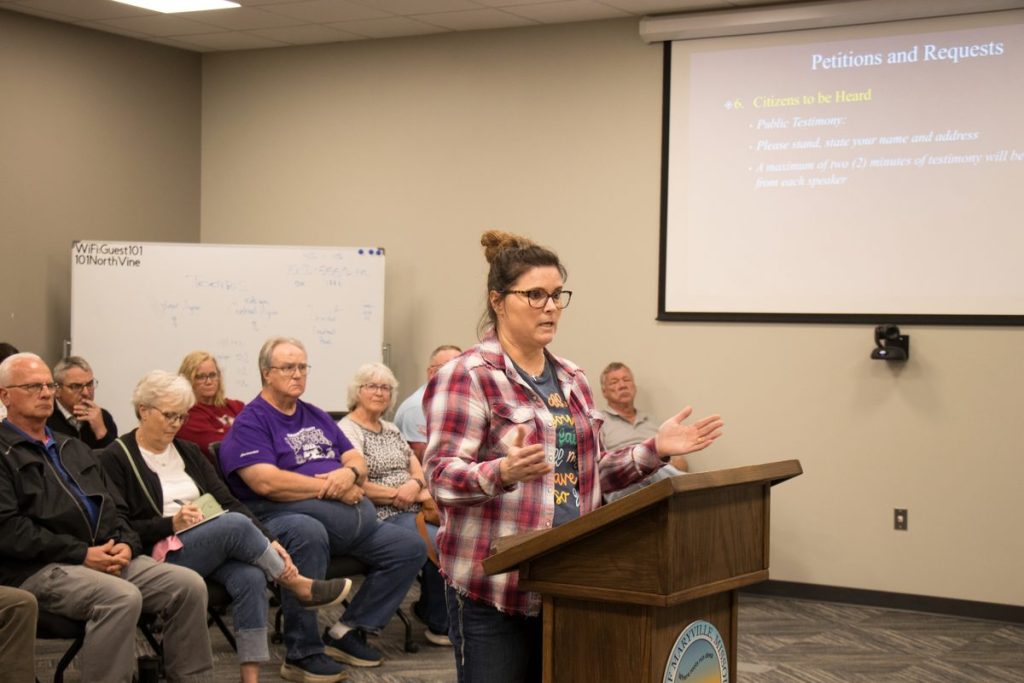
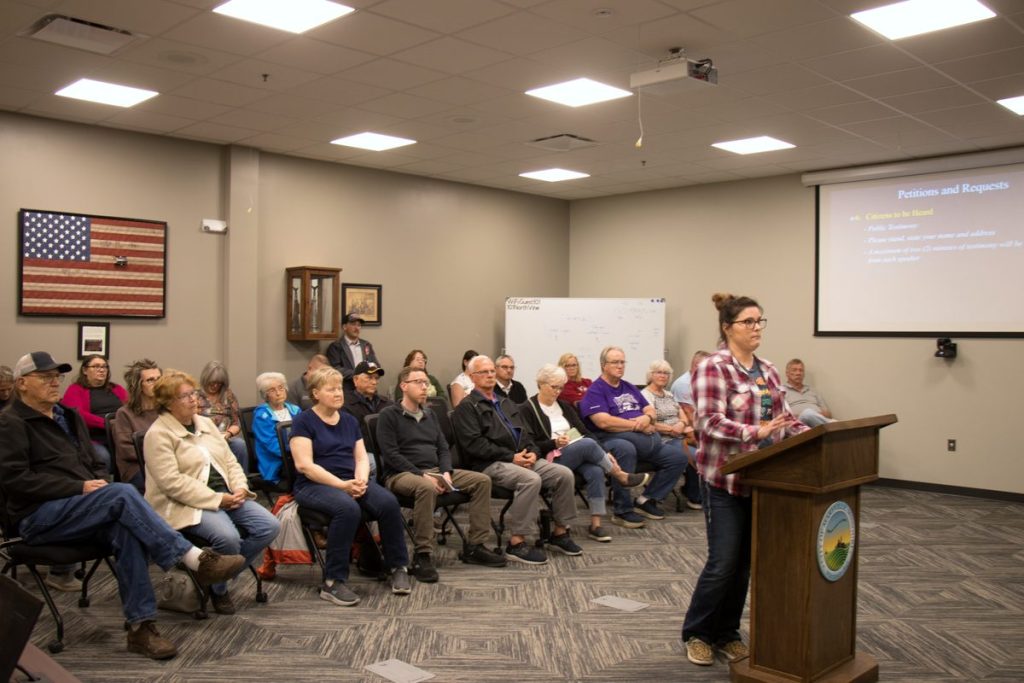
Maryville resident Laura Klaas told the City Council on Monday that she is concerned about the effects a data center may have on utility prices as well as noise, air, water and soil pollution.
EDITOR’S NOTE: The story was updated to include information on the project website.
MARYVILLE, Mo. — More than two dozen community members attended the Maryville City Council meeting on Monday to ask for the city’s help and register their opposition to a proposed $4 billion data center that could be built south of Maryville.
The city has had no contact with the AI data center developers, city officials said, and the center would not be built in the city, limiting the city’s influence on the project. But with few opportunities for a countywide public forum available to make their voices heard, the meeting room at the R. Keith Wood Public Safety Facility became the next best thing, including for multiple residents from outside of Maryville who spoke.
Multiple speakers expressed concern over the future of the city’s water supply and the potential effects on the environment and utility prices.
“Please protect us,” Maryville resident Shanda Keirsey said to the council, citing her own concerns about noise and water supply. “… Those kinds of things are hard for people to live around. And we’re a small group. It’d be hard to fight a big group. So if we could please not give them any concessions at all — make it so they don’t wanna come here. Something like that. If we could do that, that would be so great. We’d all appreciate it.”
The major area where the city may be involved, indirectly, is through providing wastewater for the proposed data center.
Council member Dannen Merrill, who was mayor until the council meeting on April 13, said Monday that Public Water Supply District No. 1 would be responsible for providing water to the data center should it be built, including for the massive amounts required to cool the rows upon rows of servers that collectively produce extreme heat. The city has been approached, he said, by a third party representing PWSD No. 1 that is performing a feasibility study to determine the most efficient way for the rural water district to provide that water. One of those possibilities, Merrill said, is getting the water from the city of Maryville.
More specifically, City Manager Ryan Heiland told The Forum earlier this month that the city could sell its wastewater, which is otherwise discharged into the One Hundred and Two River, to PWSD No. 1 for the rural water district to then use for cooling at the data center. That may require PWSD No. 1 building a small treatment plant at or near the site of the data center, he said.
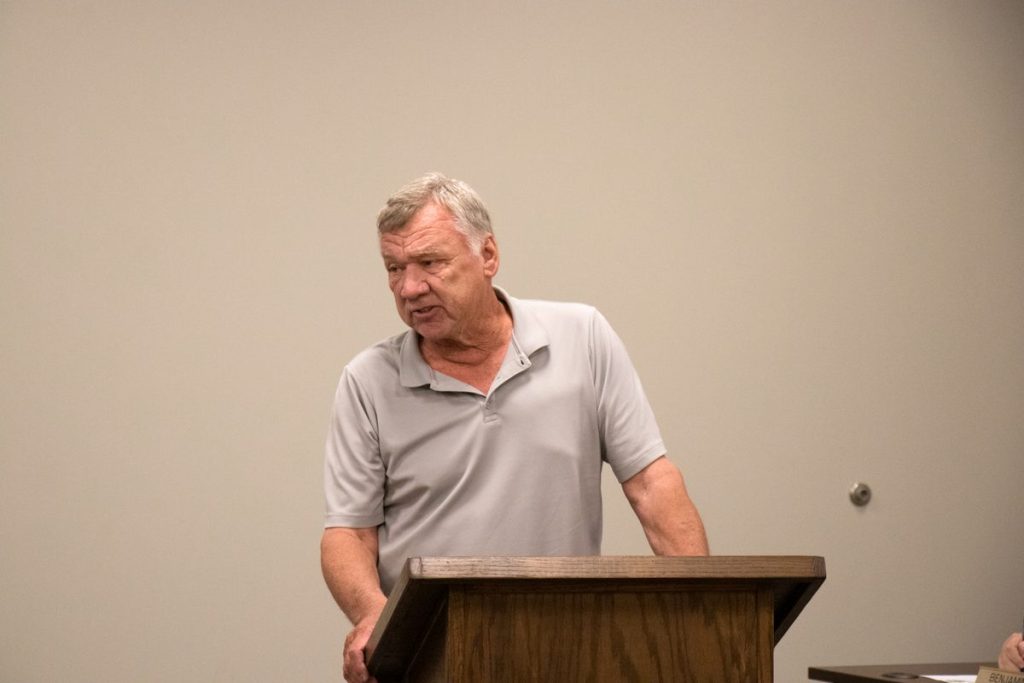
Another speaker, Joe Drake, used his time at the podium to defend his decision to come to an agreement with the data center developers to sell his land. In his telling, he felt cornered into selling his home or instead being forced to live next to the facility and see the value of his property plummet.
“We’re losing our home,” he said. “Not real estate, not a house — our home. We bought that clear back in 1985. We have what you call a big backyard. Memories of kids getting their first deer, grandkids getting their first deer — or missing the deer. Getting chased through the woods by upset cows, whether it’s the kids or dad or whoever. It’s our home.
(People) said, ‘Well, you’re getting rich.’ We’re already rich. We don’t need the money. That’s not what we’re there for. So when (the developers) approached us, the first three times, we said ‘No, we’re not selling. We don’t want your money.’”
But on a fourth approach, Drake said the representative from the developers told him that the facility would be built along his property line, along with a fence that would be lit 24 hours a day for security.
“Now you tell me, am I going to try to work the best deal out for myself?” he said. “Or am I gonna be left with a piece of (expletive) ground? I’m not doing that. So yeah, we finally talked to (the developers’ representative) and worked out an agreement.”
Drake said he did not believe there was much left that could be done, either by the City Council or by the county commission, which has been dealing with the developers, and said that the commission has not done enough to stop the data center.
“It’s too late, because we have no (county) zoning laws,” Drake said. “We had an opportunity to be ahead of this, but now we’re reacting to it. As much as you people want to stop this, I’m assuming, nobody wants it stopped more than me. But it’s too late. We have nothing in place to stop it.”
Multiple speakers Monday said they would like a public hearing on the project to get more information and to share their perspectives. The county commissioners told The Forum on Tuesday that they are pushing the data center developer, Scale Microgrids, to hold at least one public hearing or open house-type event before the company decides whether to move forward with the data center.
The company started a project website, whitecloudacres.com, that on Tuesday listed some basic information about what it said will be a 600-megawatt data center. The website said that the project is projected to produce more than $1.1 billion in tax revenues over the life of the data center. The county commissioners said they were not sure where that figure came from and no more information about the statistic was listed on the site. The site also said the project represented “a combined investment of more than $6 billion.”
Water plant misinformation
After Monday’s meeting, Heiland, the city manager, said there was no truth to the speculation by some that the planned water treatment plant was connected to the potential data center project.
The water treatment plant has been in the works for years in response to issues with the current plant and water quality at Mozingo Lake that escalated in January 2020.
Voters approved a $50 million bond to pay for the project in February 2025, and the city secured a $2.5 million grant from the Missouri Department of Natural Resources as well.
In October of last year, the city announced that building the plant at Mozingo Lake, as originally planned, would cost far more than the approximately $52.5 million allotted. Instead, the new facility would be built on the site of the existing plant to save money. Representatives from Crossland Heavy and engineering firm HDR told the council at the time that prices for materials like stainless steel had risen rapidly because of tariffs.
But the explosion of data center construction across the Midwest was the single biggest factor in driving up the cost of materials and labor, necessitating the water plant’s change in location, Jessica Adams-Weber, a vice president and regional business development director at HDR, said at the time.
“And so that demand has driven a price that’s sort of unseen (before),” she said then.
By utilizing existing infrastructure at the current plant, the total cost of the new water treatment facility is estimated to come in at just over $52.1 million. That figure should not change much because it includes prior design work and the guaranteed maximum price locked in by Crossland Heavy Contractors, the project’s construction manager at risk.
GEOFFREY WOEHLK/THE FORUM
Joe Drake said during Monday’s Maryville City Council meeting that he came to an agreement with a data center developer to sell his land for the project because he felt cornered. “As much as you people want to stop this, I’m assuming, nobody wants it stopped more than me,” he said. “But it’s too late. We have nothing in place to stop it.”
GEOFFREY WOEHLK/THE FORUM
More than 25 community members from Maryville and outside of city limits attended the Maryville City Council meeting on Monday evening to voice their opposition to a proposed data center that could be built south of Maryville. Laura Klaas, a Maryville resident, said she would like the council to ask the Nodaway County Commission to hold a public hearing to address residents’ concerns.