Candidates square off at forum
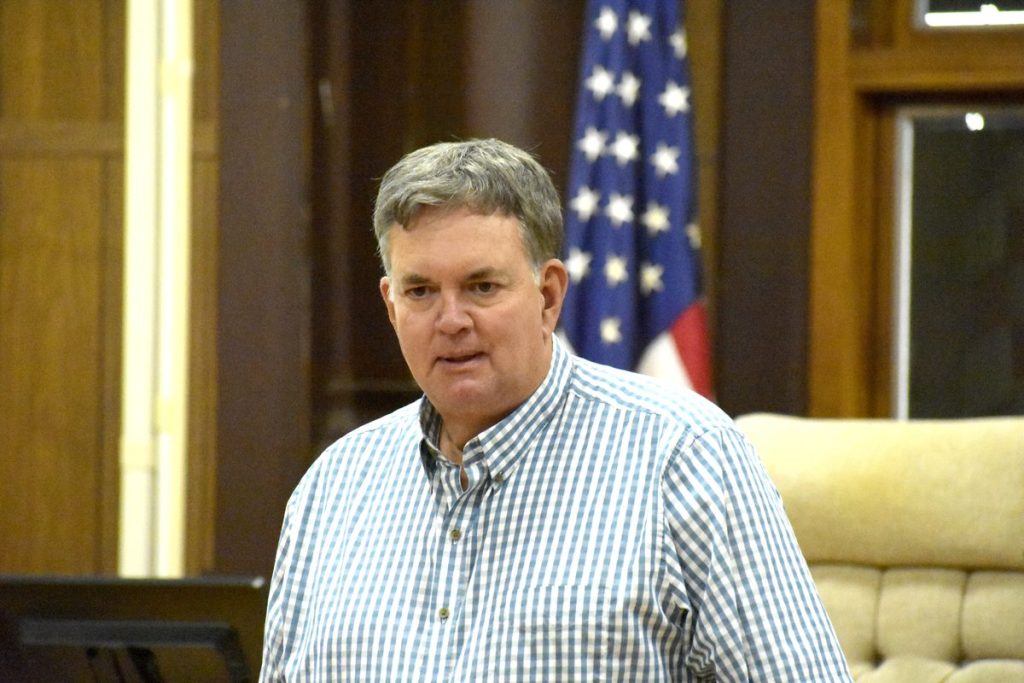
GEOFFREY WOEHLK/THE FORUM
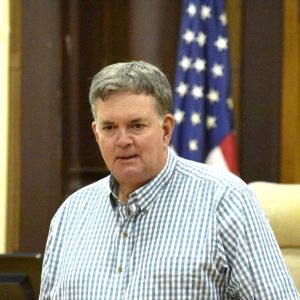
Jeff Farnan, R-Stanberry
MARYVILLE, Mo. — Candidates set to appear on the Aug. 2 primary ballot made their cases to a packed courtroom of around 100 attendees on Thursday evening at the candidate forum hosted by the Greater Maryville Chamber of Commerce.
Held on the upper floor of the Nodaway County Courthouse, the high turnout for the forum reflected the wide-open races for the state legislature — three Republicans are vying to replace outgoing state Sen. Dan Hegeman, while five Republicans and a Democrat are competing to fill Rep. Allen Andrews’ seat. Both legislators are term limited in their posts.
Who was there?
Thursday’s candidate forum hosted by the Greater Maryville Chamber of Commerce included candidates running for:U.S. SenateRepublican
- Dave Sims
Constitution
- Paul Venable
U.S. Representative, District 6
Democrat
- Henry Martin
- Charles West
Republican
- John Dady
- Brandon Kleinmeyer
State Senate, District 12
Republican
- Rusty Black
- J. Eggleston
- Delus Johnson
State Representative, District 1
Democrat
- Jessica Piper
Republican
- Alan Bennett
- Holly Cronk
- Jeff Farnan
- Michelle Horner
- Jasper Logan
Nodaway County Recorder of Deeds
Republican
- Lisa Nickerson
- Renae Sturm
Forum format
Each candidate in each race received two minutes for an opening statement. Then three representatives from local media — The Maryville Forum, Nodaway News-Leader and KXCV-KRNW radio — each asked a question that all candidates had two minutes apiece to answer. Finally, each candidate was allotted two minutes for a closing statement.
While the candidates for state Senate disagreed primarily over governing style and education funding, if voters were looking for compelling differences between each of the Republican candidates for state representative, they were unlikely to have found them Thursday night.
State representative
Fielding questions on mental health services, their willingness to break from their party’s line, their political alignment and abortion, Republican candidates for state representative kept almost exclusively to value statements rather than offering specific proposals and none pointed out any substantive differences over policy they may have with their primary opponents.
On mental health, while most acknowledged the lack of mental health resources, especially in rural areas, as a major problem, only one Republican — Jeff Farnan — said he was willing to put state money toward a specific solution, though his example was targeted and small-scale.
“I think a lot of mental health problems, they start out (in young children),” Farnan, a member of the Jefferson C-123 school board for the past 15 years, said. “I would be for more funding for our public schools for counselors there. I think for these kids, probably, they need someplace to talk about what’s going on in their own life. I know a lot of schools only have part-time counselors. A full-time counselor would really help out in that situation.”
Alan Bennett, a U.S. Army and Missouri Army National Guard veteran from Barnard, said he would like to see more communication among existing mental health and law enforcement agencies.
Holly Cronk, a business owner from Skidmore, said that she supports initiatives like the Northwest Missouri Cooperative Mental Health Board of Trustees, which aims to coordinate efforts to increase access to mental health resources in the region. But Cronk did not indicate that she would advocate for finding funding for the initiative, which it currently lacks, or any other specific efforts she might make as state representative to support the board’s activities.
Both Jasper Logan and Michelle Horner — both conservative activists-turned-candidates from Maryville and King City respectively — said that an increase in need for mental health resources is caused by deep-seated societal issues, and that’s where the solution has to begin — not with government.
“We really need to get to the root of the problem, I think,” Logan said. “We need to get back to, you know, the root of our country. I think that would be a better solution for mental health, a longer-term solution.”
In her opening statement, Horner said she started her campaign to fight for children like her son, who took his own life in 2020. In the aftermath, her family did not have access to mental health resources to help them through the grief, she said.
However, she cautioned that she did not want to “throw money at the problem,” and did not get specific about what she would like to do as a state representative to expand access to those kinds of resources.
“I think that we can set up groups for our kids and (support groups for adults with depression) and start talking together,” she said. “Because sometimes the best medicine isn’t a doctor and it isn’t a lawyer, it isn’t a sheriff, sometimes it’s just one-on-one with each other.”
On the other subjects, the Republican candidates found almost exclusively common ground, echoing priorities of God, the Constitution and the will of their constituents and voicing their support for the state’s current law that outlaws abortion except in cases where the mother’s life is in danger.
It was a tendency that Jessica Piper, running unopposed in the primary as the only Democrat in the race, latched onto.
“I’m sitting up here beside people who, I’m positive, are very nice, friendly people. But there’s no air in between them. They’re going to vote the same exact way. They all believe the same exact thing, as you’ve noticed.”
Piper billed herself as a candidate for people who aren’t satisfied with the results of the Republican-dominated state government.
“When you look around in Missouri, you have to understand that the GOP supermajority has been in power for 20 years — two decades ,” she said. “That’s longer than some of the people in this room have been alive. We hear a lot of the Republicans coming up here and talking about Joe Biden. That is for a reason: because they need to distract you, they need to tell you, ‘Hey look at Washington, doesn’t it suck? Look what’s going on there.’ And they don’t want you to look where? Here.
“They don’t want you to see that your schools are going four days a week. … Why? Because we refuse to fund the schools. Because it’s not a priority. These are GOP policies. What you see right now? These bad roads? It’s a GOP policy. You can’t control your own body? It’s a GOP policy. They put a CAFO in your backyard? It’s a GOP policy. All of these things are purposeful and they happened over a long period of time.”
Piper, a former teacher, and Farnan, who sits on a school board, were the only candidates to specifically mention education in their lists of top priorities.
In her closing statement, Cronk summed up the difficulty facing Republican voters.
“So, I think the big thing here is, this evening, when you look at the candidates and you try to figure out what sets us apart —,” she said, but was cut off for running over her allotted time before she could finish. “Ask me later, I’ll tell ya.”
State Senate
In the state Senate portion of the forum, the differences among the trio of candidates showed up most in their approaches to education and in their attitudes toward how to effectively govern.
The last legislative session was significantly slowed by the Conservative Caucus, a group of seven state senators who held all legislation hostage in an attempt to force a U.S. House map that would likely split 7-1 in favor of Republicans. State GOP leadership favored a 6-2 map that ultimately was approved.
However, the caucus members earned the ire of counterparts within their own party for grinding the gears of government to a halt, forcing an early end to the legislative session and preventing several bills from being passed.
Outgoing state Sen. Hegeman called the group the “Chaos Caucus,” and outgoing state Rep. Andrews termed them “right-wing extremists.”
Delus Johnson, a former two-term state representative from Country Club, said he would have sided with the Conservative Caucus “because I believe we need every single tool necessary to fight the Biden administration.”
“If we need to stop legislation to get a new … Republican member of Congress? Yes, absolutely, I would certainly stand for that,” he said. Johnson went further to say that he would also filibuster every bill that included a tax increase.
Rusty Black, of Chillicothe, and J. Eggleston, of Maysville, both current state representatives, said they would not align themselves with any caucus, or the Conservative Caucus in particular.
“Being there and being part of that discussion that went on, I had two items that were gonna help our area tremendously,” Black said. “And because of that group deciding to leave work early — three days early — it caused those things to not happen, and it would’ve made a difference up here where we live at if it wouldn’t have ended up dying.”
Eggleston said that when he was first elected to the state House in 2014, the House’s version of the Conservative Caucus had been centered around analyzing each piece of proposed legislation through a Constitutional lens.
“Over time, though, new people came in and it became more argumentative,” he said. “It became about, ‘well if you don’t vote with us, then we’re gonna kill all your stuff.’ And there was a lot of this internal strife.”
Eggleston said that “obnoxious” attitude drove him and others away and veered off course from “true conservativism.”
But all three candidates said they would work to build bridges and expressed their abilities to work together with those with whom they may not always agree.
And on education policy, they did indeed not always agree.
As part of the budget passed at the end of the last legislative session, the General Assembly included $21 million for a voluntary grant program that allows school districts to raise their starting teacher salaries to $38,000 with 70 percent of the different paid for out of the state budget. The remaining 30 percent would be paid for by the school district.
All seven of the public school districts in Nodaway County opted to participate, raising minimum starting teacher pay to $38,000.
However, for all districts but Maryville, the rise in starting salary was not accompanied by a corresponding raise for veteran teachers further along in the salary schedule because they could not afford the additional increase. Consequently, teacher salary schedules are compressed at most school districts in the county — for example, at Northeast Nodaway, a teacher would not be scheduled for a raise for another eight years.
Further complicating matters is that the state’s grant program was included as part of the budget — which means it could just as easily not be included in next year’s budget.
Without the same infusion of federal funds that made the program possible this year, most districts in Nodaway County may not be able to sustain the $38,000 minimum beyond this year if the program isn’t funded again — much less raise pay for veteran teachers, too.
Eggleston and Johnson did not indicate they would support continuing the $38,000 minimum, instead proposing alternatives that they said could help raise teacher pay in different ways.
Eggleston said that too much money intended for education is spent outside the classroom. In a phone conversation with The Forum this week prior to the candidate forum, Eggleston was more specific, saying that too much money goes to what he considered to be extraneous administrators at larger school districts — he was careful to point out those positions don’t exist at schools in this Senate district — and to the Department of Elementary and Secondary Education.
Instead, Eggleston told the crowd Thursday, education spending should be “streamlined.” Then, the savings could be used by local school districts, including for teacher pay.
Johnson proposed an even more roundabout solution: cut taxes and fees for businesses, including eliminating the corporate income tax.
That would spur job creation, he said, which would create withholding taxes from personal income taxes and create more sales tax revenue generated by the new employees. That money could then be used by school districts to raise teacher pay.
“So every time we allow a business to go out and create a job, there’s more money coming in for the state. I think that’s one of the things that we need to do, is to allow businesses to thrive, cut down regulations a little bit.”
In a phone conversation earlier this week prior to the forum, Johnson admitted that he was not familiar with the program to raise minimum teacher pay to $38,000.
Black said he believed the funding will stay at least another year.
“I think that will stay for a while,” he said. “It was agreed on by both sides of the building. So I do think that money’s gonna be there. … That funding will probably last a little bit longer than (one year).”
But Black quickly pivoted, saying that fully funding the state’s share of transportation funding for the first time since 1991 will be a bigger difference maker for school districts in northwest Missouri than funding for teacher pay increases.
Nodaway-Holt, where Black said he began his career as an agriculture teacher, will start a new four-day-week schedule in the fall in an effort to incentivize the recruitment and retention of teachers.
The recorded livestream of the entire forum from the Greater Maryville Chamber of Commerce’s Facebook page is available at the link above.
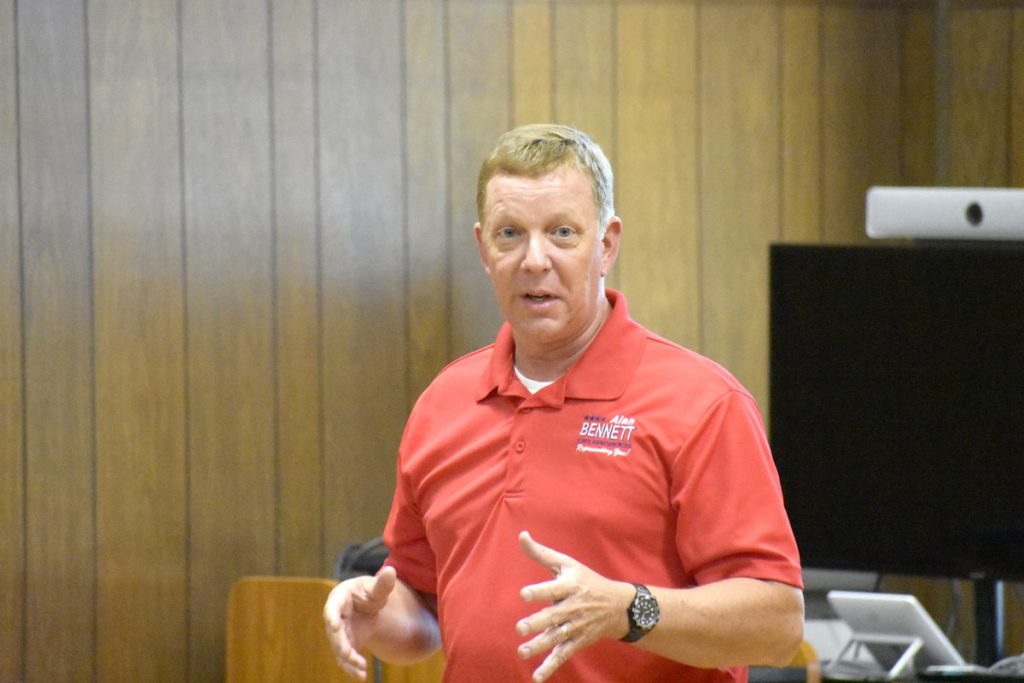
GEOFFREY WOEHLK/THE FORUM
Alan Bennett, R-Barnard
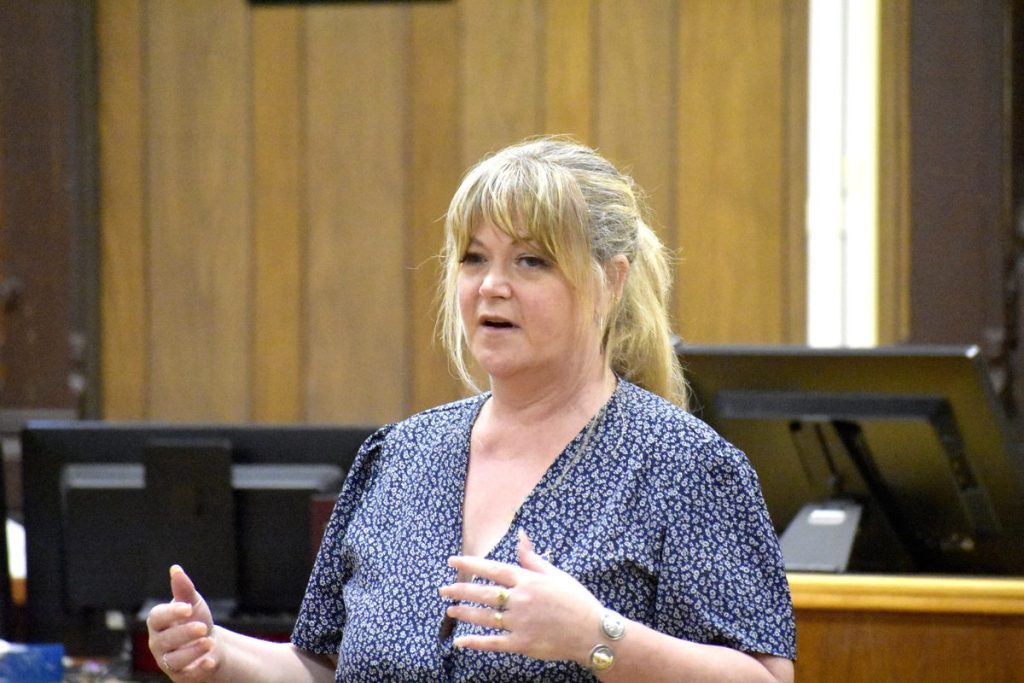
GEOFFREY WOEHLK/THE FORUM
Holly Cronk, R-Skidmore
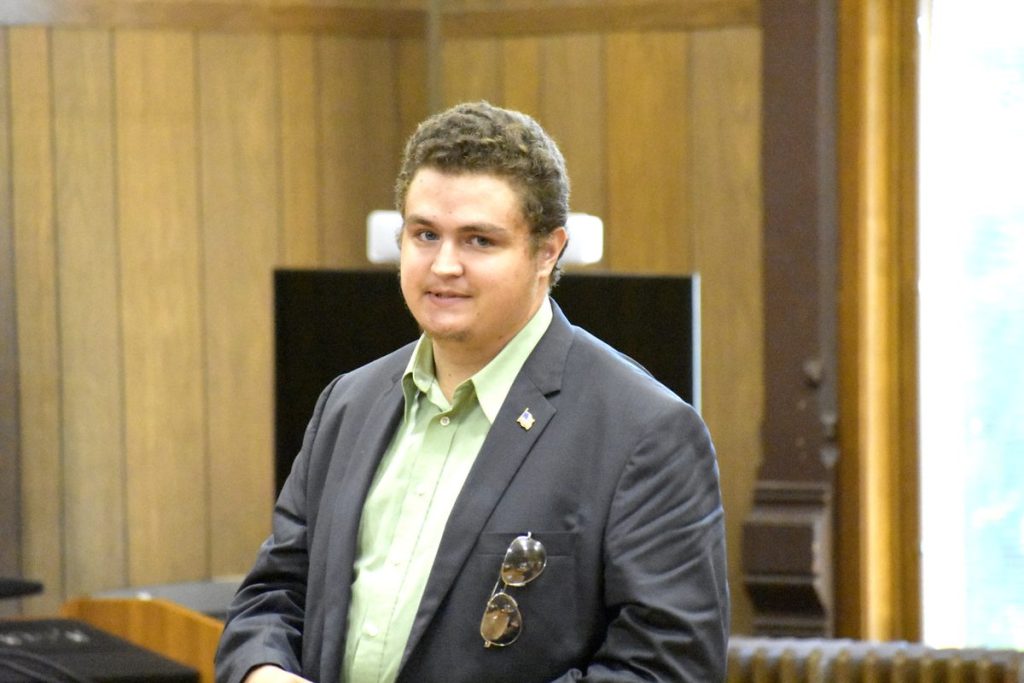
GEOFFREY WOEHLK/THE FORUM
Jasper Logan, R-Burlington Junction
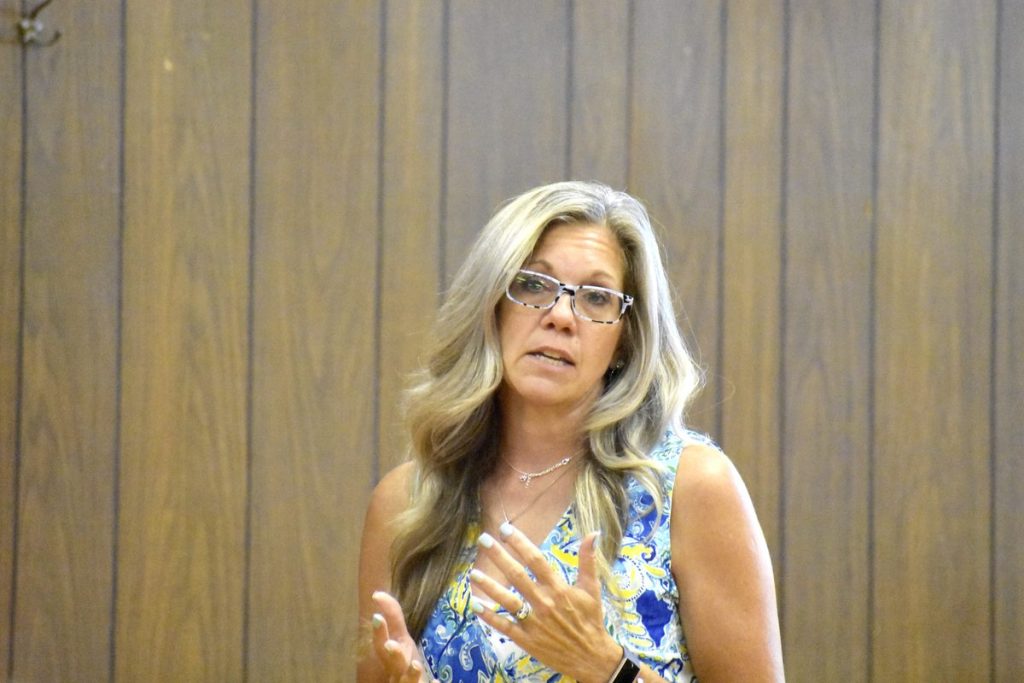
GEOFFREY WOEHLK/THE FORUM
Michelle Horner, R-King City
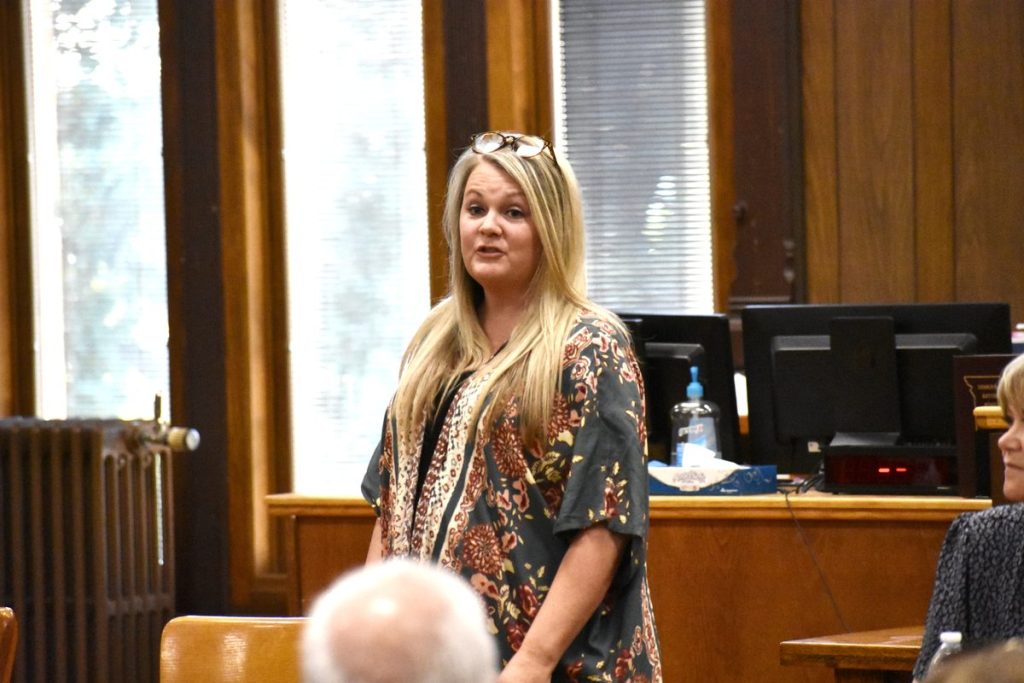
GEOFFREY WOEHLK/THE FORUM
Jessica Piper, D-Hopkins
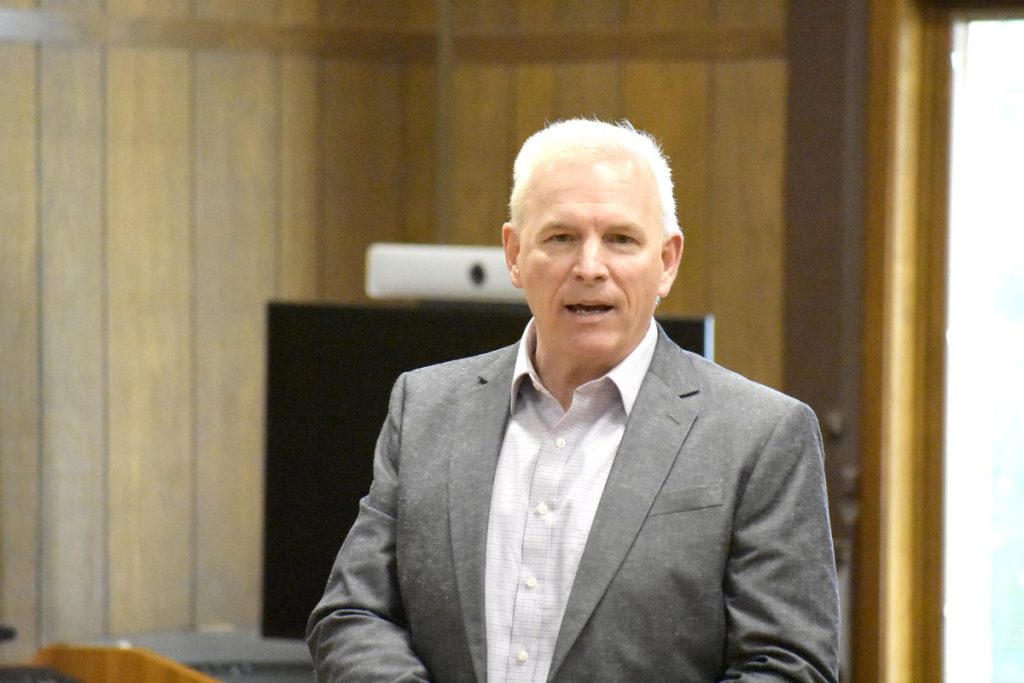
GEOFFREY WOEHLK/THE FORUM
Delus Johnson, R-Country Club
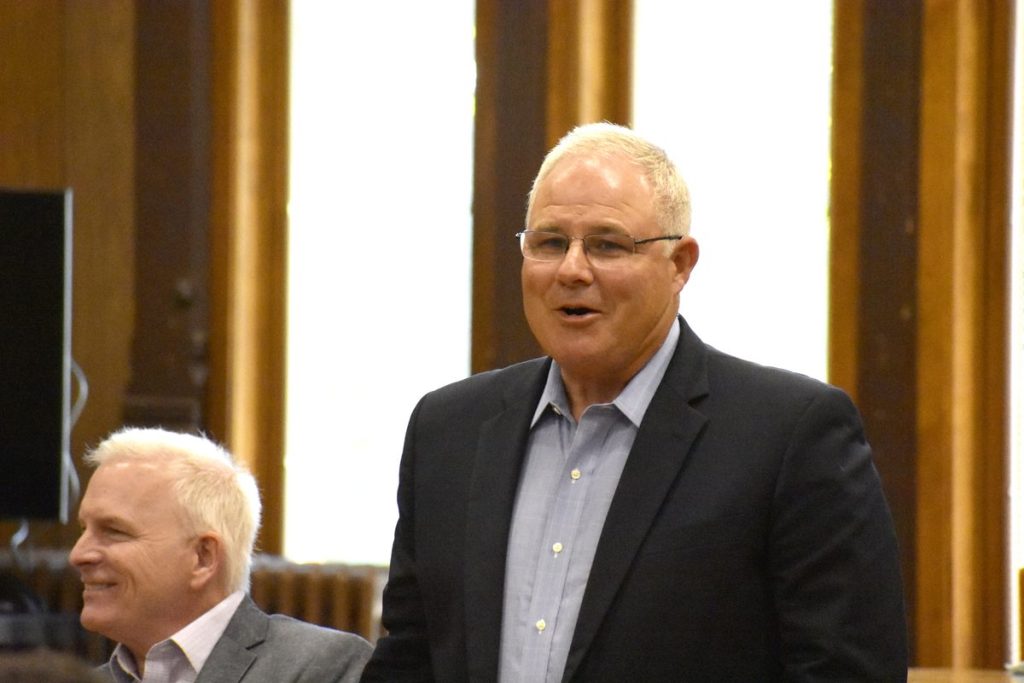
GEOFFREY WOEHLK/THE FORUM
Rep. Rusty Black, R-Chillicothe
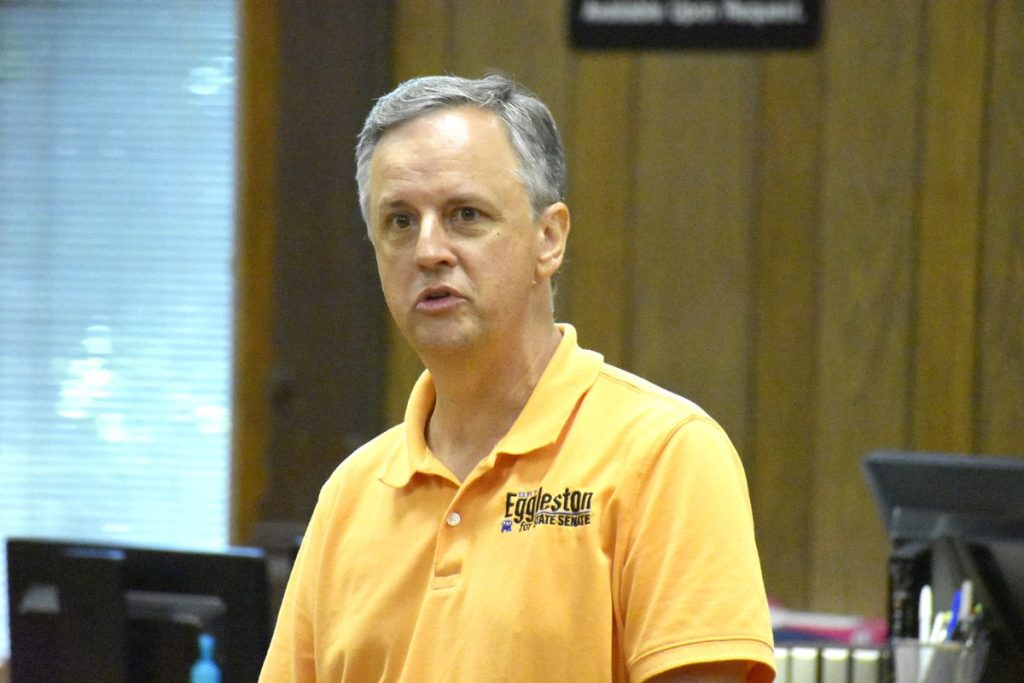
GEOFFREY WOEHLK/THE FORUM
Rep. J. Eggleston, R-Maysville

Your Vote 2022