Infrastructure renaissance underway at Northwest
FORUM FILE PHOTO
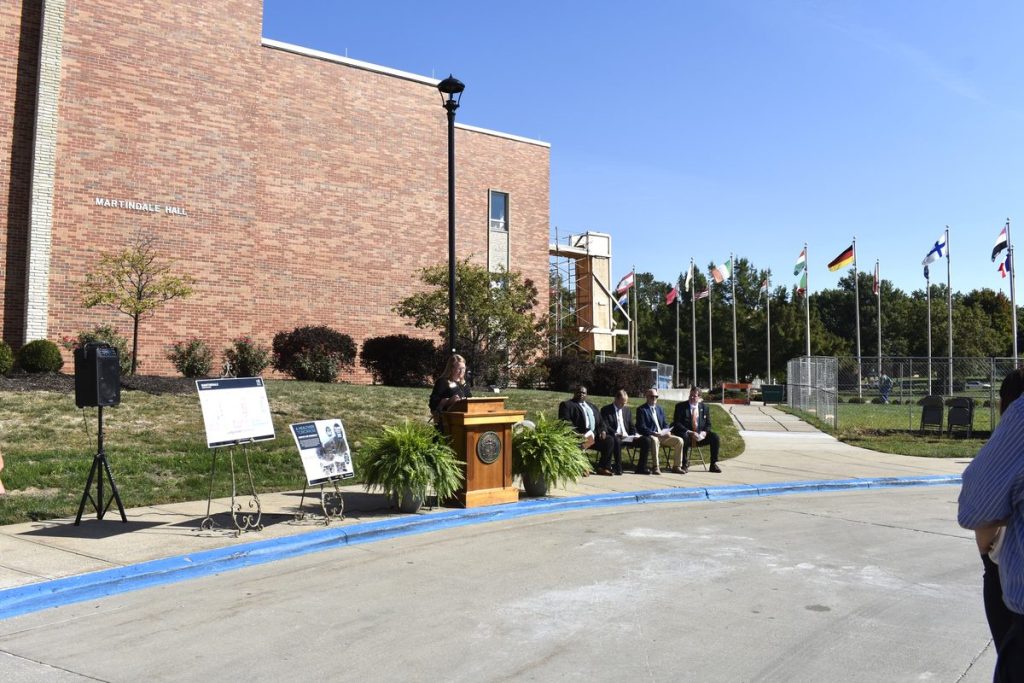
The university began raising funds for the $17.5 million Martindale Hall renovation project in 2022. The state is providing $8.5 million of the project funding with the university picking up the rest. The entire project is scheduled to be ready for students in fall 2026.
The Maryville Forum’s annual Progress Edition is a special section that highlights what our community has accomplished in the previous year and what we can look forward to in the next.
MARYVILLE, Mo. — The largest infrastructure investments in the history of Northwest Missouri State University are underway, upgrading the campus inside and out.
Last year marked the start of the largest capital project in the university’s history: a $105 million infrastructure outlay to enhance energy systems across campus along with sewer and stormwater improvements.
And that’s in addition to an ongoing $17.5 million renovation of Martindale Hall, a $4.7 million stormwater project in partnership with the city of Maryville, a $1.7 million upgrade to the Garrett-Strong Science Building and a $750,000 overhaul of College Avenue.
ENERGY INFRASTRUCTURE
The transformative infrastructure overhaul began last year and projects to wrap up in summer 2026. During that time, the university expects to replace chillers and cooling towers in the university’s central cooling plant and to decentralize its heating infrastructure by installing high-efficiency water boilers in buildings to drive utility efficiencies and flexibility. The project also includes upgrades to critical utility infrastructure like building HVAC, electric distribution, domestic water, sanitary sewer and stormwater management systems.
Increasingly, the antiquated centralized heating and cooling plant, as well as the utility infrastructure, have become problematic for Northwest. Campus disruptions have occurred more frequently as a result of steam pipe leaks, breakdowns and component failures.
Currently, Northwest’s centralized heating plant provides steam heat to campus buildings with three natural gas boilers that were installed during the 1960s and are 27 to 33 years past their expected useful life. Two alternative fuel boilers in Northwest’s central heating plant are inoperable and beyond repair, the university said. Further, the boiler controls are antiquated electromechanical systems with limited capabilities.
Steam generated from the boilers is distributed to the buildings through 18,000 linear feet of piping in underground tunnels, which also have sustained substantial deterioration.
The centralized cooling plant consists of three chillers and cooling towers, two of which have exceeded their useful life.
That’s where the improvements come in across three phases that began last year and are scheduled to be completed in summer 2026, according to informational materials from the university. Information from those materials is below.
Phase I (2024)
- Replacement of two chillers at the chiller plant: The chillers distribute chilled water throughout the campus to cool and dehumidify buildings. The new chillers will be equipped with modern technology to produce chilled water more efficiently.
- Domestic water, sanitary sewer and stormwater upgrades: Northwest will replace aged water infrastructure and install building-level domestic water metering to improve reliability and reduce disruptions throughout campus. Building-level domestic water metering will improve Facility Services’ ability to locate, troubleshoot, improve and monitor inefficiencies inside buildings. All buildings are expected to lose water for at least one day each. These disruptions are planned for the summer months, through summer 2026, to limit student impacts.
- Electrical infrastructure upgrades (part 1): Northwest is installing building-level electrical metering and other upgrades to reduce disruptions and improve the reliability of electrical distribution throughout the campus. The upgrades will improve Facility Services’ ability to locate, troubleshoot, improve and monitor inefficiencies inside buildings.
- Conversion from centralized steam plant to decentralized hot water plant (part 1): This upgrade will reduce disruptions and improve the reliability of hot water production throughout the Northwest campus. When complete, smaller hot water plants will supply heat to up to four buildings, compared to one plant that currently provides steam throughout the campus. This upgrade also will reduce the number of buildings impacted during emergency disruptions and give Northwest the ability to reduce or turn off hot water systems during cooling seasons. Phase I affected Lamkin Activity Center, including the Student Recreation Center and the Robert and Virginia Foster Fitness Center; Martindale Hall; the Olive DeLuce Fine Arts Building; and the Fire Arts Building.
Phase II (2025)
- Installation of new winter chiller, replacement of secondary equipment in the chiller plant and upgrade of the control system: The new winter chiller will allow for the production of chilled water during all months of the year. The upgrade will result in improved reliability and comfort inside facilities, fewer disruptions, improved reliability, and increased capabilities for the university, including control systems for better control and monitoring of the chilled water system.
- Electrical infrastructure upgrades (part 2): In Phase II, several buildings will be addressed including Colden Hall. Northwest is installing building-level electrical metering and other upgrades to reduce disruptions and improve the reliability of electrical distribution throughout the campus. The upgrades will improve Facility Services’ ability to locate, troubleshoot, improve and monitor inefficiencies inside buildings.
- Conversion from centralized steam plant to decentralized hot water plant (part 2): In Phase II, this project will affect the Ron Houston Center for the Performing Arts, The Station and the Garrett-Strong Science Building. Additionally, exterior tunnel construction is anticipated. The new equipment is expected to produce and distribute hot water more efficiently than the centralized steam plant and will give Northwest the ability to reduce or turn off hot water systems during cooling seasons.
- HVAC upgrades (part 1): The new equipment will improve reliability, reduce disruptions and improve comfort inside buildings. Monitoring systems will help Northwest predict and repair issues before they arise and cause disruptions. The new HVAC equipment is designed with modern energy codes, resulting in more efficient heating and cooling inside buildings.
Phase III (2026)
- Conversion from centralized steam plant to decentralized hot water plant (part 3): The facilities affected during this phase will include the Administration Building, Perrin Hall and the J.W. Jones Student Union. Additionally, exterior tunnel construction is anticipated.
- HVAC upgrades (part 2): Upgrades may impact the Administration Building, B.D. Owens Library, Everett W. Brown Education Hall and the J.W. Jones Student Union, among other buildings. These disruptions are planned for the summer months to limit student impact.
MARTINDALE HALL
In 2023, the university began in earnest a $17.5 million remodel of Martindale Hall to modernize the building for the School of Health Science and Wellness. That year, the university completed a $1.3 million remodel of the facility’s third floor. Work on the first and second floors are underway now and expected to be ready for students in fall 2026.
When completed, the newly remodeled Martindale Hall will house the university’s foods and nutrition lab, a well-being lab and a sports science lab, as well as classrooms, collaboration spaces and lounge spaces.
The state is providing $8.5 million of the project funding with the university picking up the rest, much of it from fundraising. Mosaic Life Care donated $250,000 to the third-floor renovation which was completed in 2023.
The facility first opened in 1926 as the university gymnasium and was renovated and repurposed for academic programs between 1973 and 1975.
STORMWATER
Northwest and the city of Maryville have partnered on a major stormwater improvement project that will get started in 2025.
In 2022, the Missouri Department of Natural Resources awarded the $4.7 million project a $3.7 million grant through the state’s allocation of federal American Rescue Plan funds.
“The proposed stormwater improvement project is yet another example of a transformative town-and-gown collaboration between the city of Maryville and Northwest Missouri State University to improve critical community infrastructure,” said Maryville City Manager Greg McDanel at the time.
The project has steadily moved along since then and is expected to get underway this year. When complete, it will upgrade critical infrastructure on Northwest’s campus and in adjacent neighborhoods where drainage from hard surface areas collects in undersized stormwater infrastructure and flows southeast through drainage channels across First Street into Judah Park.
As a result, heavy rain often overwhelms the existing system, causing surface flooding and creating the potential for damage to nearby structures and property.
The improvements will include additional surface inlets, stormwater pipes, catch basins and green infrastructure.
GARRETT-STRONG
In August of last year, the Northwest Board of Regents gave the green light to a $1.7 million renovation of part of the Garrett-Strong Science Building with an aim to modernize four academic laboratories, including the acquisition of leading-edge equipment and learning tools to support health science education.
The university will fund the project with the assistance of a MoExcels grant from the Missouri Department of Higher Education and Workforce Development, which will provide 70 percent of the project cost, or about $1.19 million. Northwest will provide the remaining $510,000 to complete the project.
Northwest expects the upgraded lab spaces to enhance program capacity and training for students studying in health care and wellness-related fields such as anatomy and physiology, medical nutrition, exercise prescription, health and wellness, biology, biochemistry and biomechanics.
Work on the project is expected to be completed this year.
CITY OF MARYVILLE
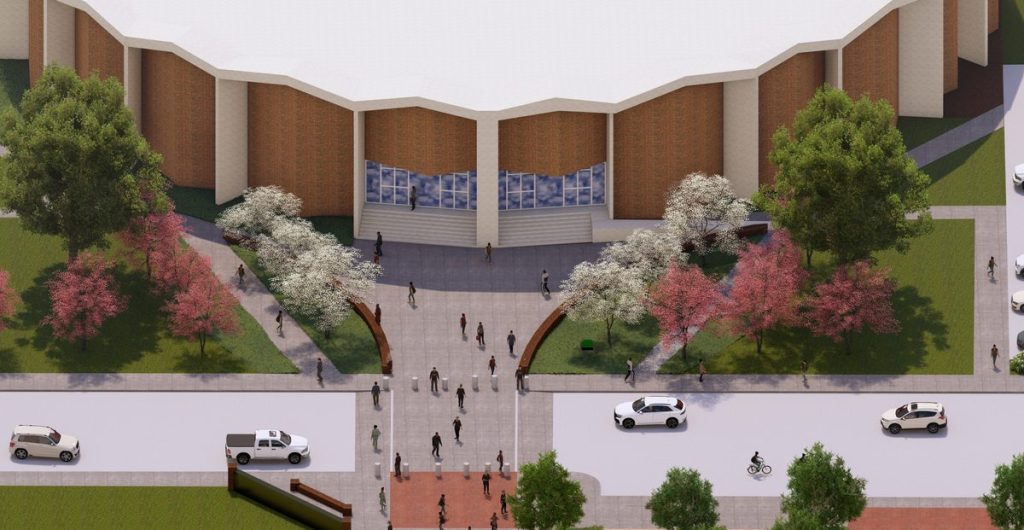
This preliminary rendering from JBC Landscape Architects shows an overhead view of proposed pedestrian safety enhancements on College Avenue, including a traffic table with bollards designed to make for a safer crossing, and a sidewalk added to the south side of the street to improve the connectivity of the Fine Arts cluster to the rest of campus.
LAUREN ADAMS/NORTHWEST MISSOURI STATE UNIVERSITY
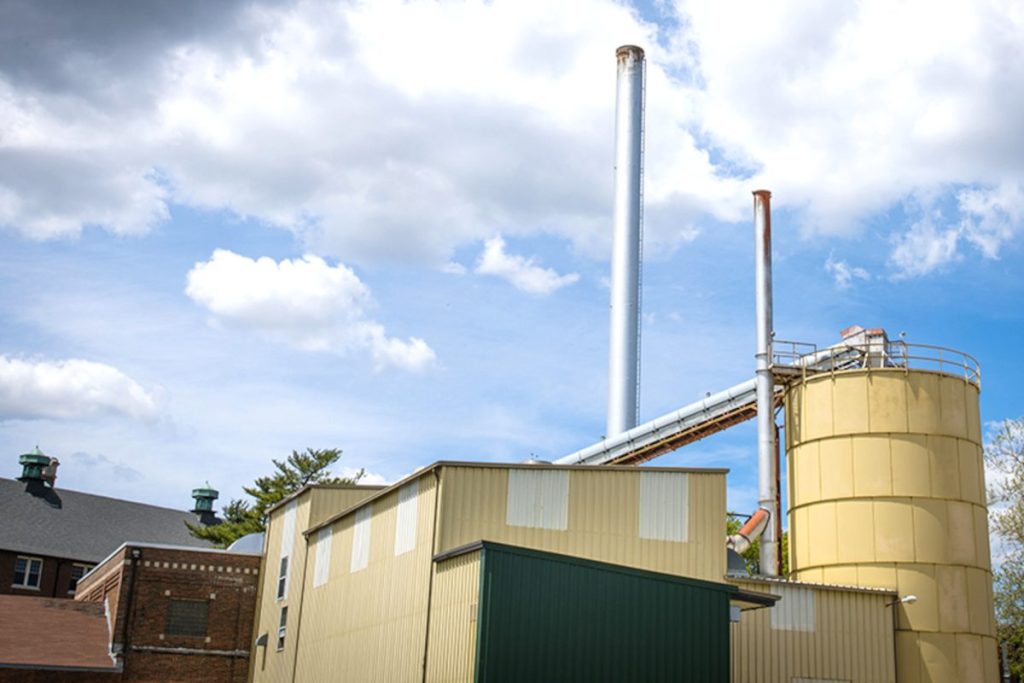
Part of the Phase II energy infrastructure improvements planned for 2025 at Northwest Missouri State University is converting from a centralized steam plant to a decentralized hot water plant to more efficiently and reliably provide hot water throughout campus. It’s part of a $105 million infrastructure project, the largest capital project in the university’s history.