Ombudsmen program seeks caring volunteers
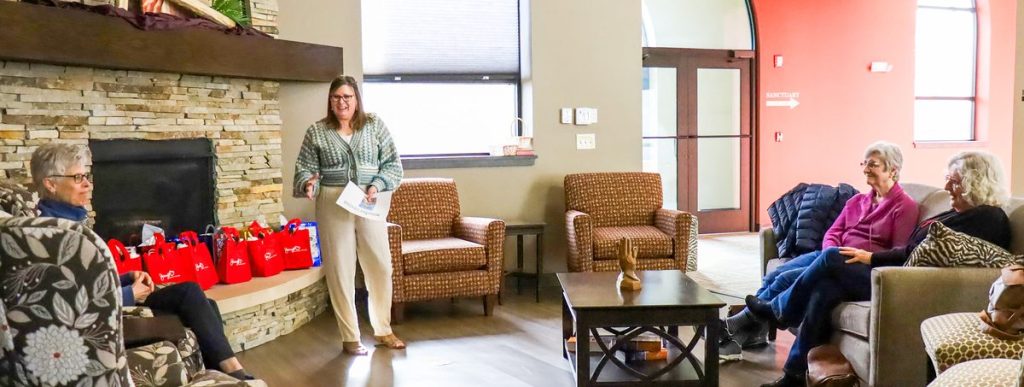
FORUM FILE PHOTO
Rita Wallinga, regional ombudsman coordinator for Young at Heart Resources, is shown speaking during an April 2024 YAH Give 5 event helping to find volunteers for local nonprofit organizations. Last week she spoke to The Forum about Young at Heart’s volunteer ombudsman program and its need for volunteers.
MARYVILLE, Mo. — Young at Heart Resources, which offers resources to seniors, is drawing attention to its volunteer ombudsman program during National Residents’ Rights Month this month.
Regional Ombudsman Coordinator Rita Wallinga currently works in the local program — part of a statewide and nationwide network of individuals who help residents in long-term care facilities — and said they’re in need of more volunteers to help cover all the facilities within the northwest Missouri area.
“Our goal is to help residents in long-term care facilities maintain and improve their quality of life by helping ensure that their rights are preserved,” she said.
Wallinga said the volunteer ombudsmen will visit a facility to spend time with residents, making sure they know their rights and working as an intermediary between the facility’s staff and administration and a resident.
“It’s to make sure that they understand that just because they’re in a long-term care facility doesn’t mean all of their rights are gone,” Wallinga said. “They still have the right to vote, the right to choose their own physician, their own pharmacy, to see their medical records. They can refuse their meds if they want. (They have) the right to communicate freely.”
She explained that while some long-term care residents have their own cellphones, many do not because of the cost. Wallinga said sometimes residents don’t know that they can ask to use a phone, or have a nurse bring one to them.
“I think folks don’t know that,” she said. “We’re really just advocating for their rights.”
While the position sounds intense and possibly difficult, Wallinga said it is really about visiting with the residents and helping them if possible. As an advocate for the resident, and the resident alone, Wallinga said an ombudsman is not focused on any concerns other than the resident’s. Sometimes that may be that they want a bath or shower in a more timely fashion, or they don’t want to eat at a certain time. She said sometimes it’s just a matter of some confusion that happened between the facility and the resident. As an intermediary, ombudsmen can bring issues to light to improve life for the resident.
“We’re a facilitator because we help residents engage in self-directed and self-empowered advocacy,” Wallinga said. “We really want to empower them to advocate for themselves first.”
While talking about concerns a resident may have, the ombudsman also serves another purpose — reducing a feeling of isolation, especially among those who don’t have close family or friends. Since the ombudsman isn’t tied to the state or to any long-term facility, the ombudsman over time can build a relationship and can become a trusted confidant.
She said each volunteer can spend two to four hours in a facility each week or every two weeks just talking with people, and that’s part of what she likes most about her work.
“I guess I just like to help people,” Wallinga said. “… They deserve to be taken care of well because the majority of them have worked hard all their life.”
She said the job is also very flexible with scheduling. Volunteers are required to file a short, note-filled report with Young at Heart about a visit, but they are not mandatory reporters. However, should the volunteer be concerned with something they hear or see, they have a chain of command for gaining advice.
Covering the long-term facilities in the seven western counties of the YAH coverage region, Wallinga explained that there are many facilities inside those counties.
“It would be nice to have more volunteers,” she said, noting that she has two facilities in Maryville that don’t have a volunteer ombudsman. “It would be nice to have that so those residents can see the same person every week or every two weeks.”
Wallinga makes her rounds at least quarterly — many facilities more than quarterly — but said consistency is key, and having the same person to talk to about concerns is helpful for people of a certain age.
“While they sometimes remember me and know me, it would still be nice to have somebody be able to be in there every week,” she said.
To become an ombudsman, a volunteer must pass a background check and complete 36 hours of initial certification training. Each year thereafter there are 18 hours of virtual continuing education units that must be completed, she said.
Contact Wallinga at [email protected] or by phone at 660-240-9400.