Cicadas – What’s all the buzz about?
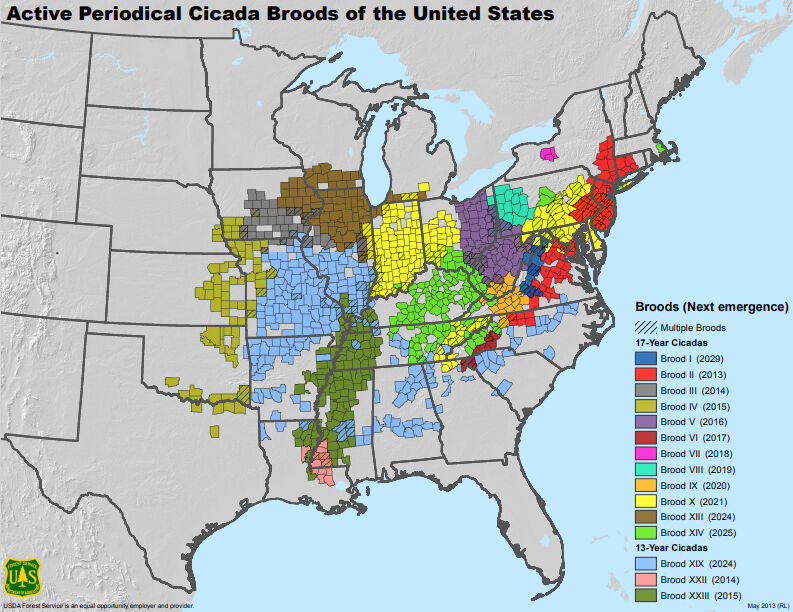
U.S. FOREST SERVICE MAP
This map shows the active periodical cicada broods in the United States. Two broods that haven’t emerged together since Thomas Jefferson was president are set to crawl out of the ground starting this month.
JEFFERSON CITY, Mo. — Periodical cicadas are insects that emerge as broods every 13 or 17 years, depending on the brood.
According to information from the Missouri Department of Conservation, mass emergences can range over several states. They generally begin emerging in May and remain above ground through most of June. The enormous number of cicadas emerging at one time swamps birds and other cicada predators with more juicy insect food than they can consume. This allows most of the cicadas in the brood to survive and produce another generation that will live in the ground for the next 13 or 17 years.
Brood 19 will emerge in May and into June of 2024. It comprises four species of 13-year cicadas, noted the news release. This brood was last seen in 2011. This brood is sometimes called the Great Southern Brood because it occurs throughout much of the southeastern United States, including 15 states. The brood’s range includes much of Missouri, southern Illinois and Arkansas, east to Virginia, North Carolina and Georgia, and south to Louisiana, Mississippi and Alabama.
About the same time that Brood 19 emerges in spring of 2024, Brood 13 will be appearing in parts of Iowa, Wisconsin, northern Illinois, northwestern Indiana, and perhaps the southern edge of Michigan. Brood 13, called the Northern Illinois Brood, is a brood of 17-year cicadas.
The last time these broods emerged in the same year was in 1803, when Thomas Jefferson was president, the year the Louisiana Purchase was signed.
With the anticipated periodic cicada emergence that is predicted to occur this year, the state herpetologist that works for the MDC would like to receive any documentation about amphibians or reptiles consuming cicadas.
“This will be a great opportunity to document some of these predator-prey accounts,” Jeff Briggler, MDC herpetologist, said in a statement. “Snakes, box turtles and even aquatic turtles have been documented consuming cicadas during the last periodic cicada emergence.”
Briggler would like to document the species of herp (reptile or amphibian), date of the observation, name of the observer and the location of the account. GPS coordinates would be preferred but a location description would suffice.
Briggler encourages anyone who encounters this kind of activity or any other interesting or unique reptiles or amphibians to reach out to him at [email protected] or by contacting the Missouri Department of Conservation headquarters at 573-522-4115.
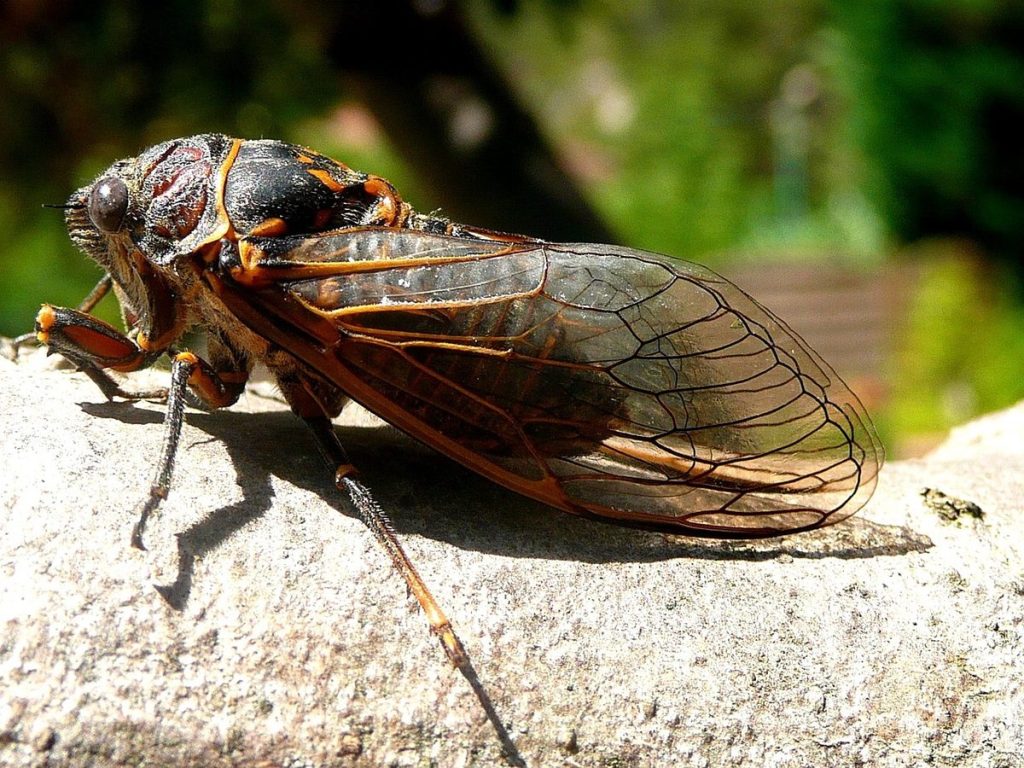
Cicada