Column: Viking disease becoming common issue
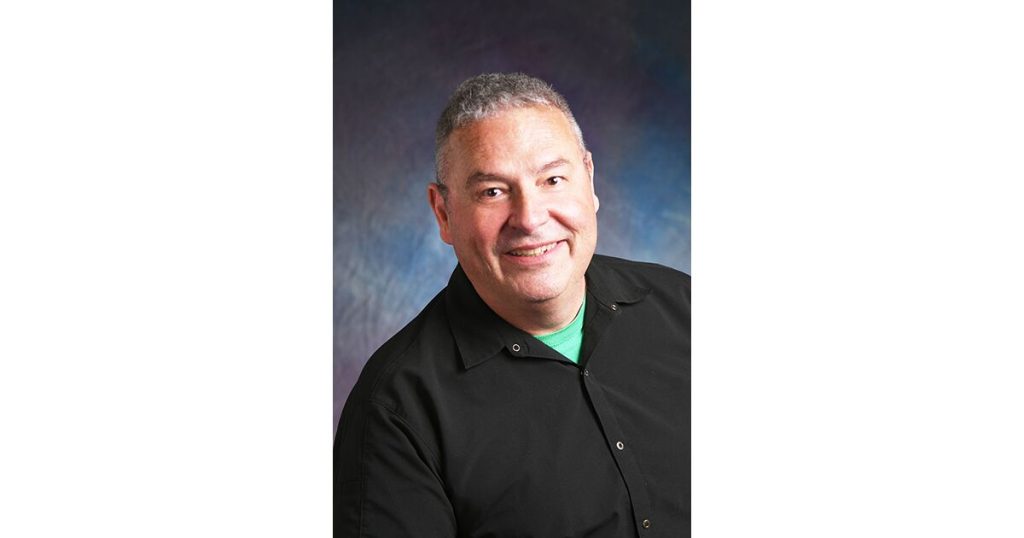
Frank Grispino MOT, OTR/L, CHT
I would like to discuss what I’ve found to be a very common issue in northwest Missouri. The problem is known as Dupuytren’s Disease. It’s described as “a benign fibromatosis of the palmar and digital fascia of the hand” in the clinical reference, Rehab of the Hand. That’s a mouthful.
Basically, it’s an abnormal growth of connective tissue that results in nodules, cords and in some cases, contractures of the fingers in a flexed position. Because it’s associated with genetics from people of northern European descent, it is also known as “Viking’s Disease.” My unscientifically proven theory of why it’s so common in northwest Missouri is that we have quite a few people of northern European descent in northwest Missouri.
A lot of people have it and don’t realize it. One thing positive about the condition is you normally don’t need to do anything about it until you notice a decrease in your hand’s functional ability. This usually presents with difficulty putting your hand in your pocket or a glove. Before that, nodules or cords will likely be visible or felt on the palmar surface of hands and fingers when the fingers are straightened out as far as they’ll go. There is also a tabletop test. Try laying your hand flat on a table, palm down. If you can’t, you may have a Dupuytren’s contracture starting.
It more commonly starts in your 50s if you’re male and 60s if you’re a woman. It can come back regardless of what treatment option you choose. President Ronald Reagan, British Prime Minister Margaret Thatcher and former Denver Broncos quarterback John Elway all had Dupuytren’s Disease.
The TV commercials starring Elway would lead you to believe a positive tabletop test is the point that you need to act. Those commercials are paid for by someone that has a financial gain to get treatment before the disease has a functional impact. They are pushing a “non-surgical” approach to treatment. The inference is the treatment is less invasive than surgery. The gold standard treatment in the past has been to enter the palm and fingers with a scalpel, release the diseased tissue and let things heal up and to start hand therapy a few days after the surgery.
The commercials are touting the effectiveness of collagenase. This is an injection that breaks down collagen, which is what the diseased tissue is made of. A physician injects collagenase into the diseased tissue and then has the patient come back in a day or two. At that time, the surgeon ruptures the tissue with a needle or by forcefully moving the fingers into full extension. Collagenase is also being marketed to treat Peyronie’s Disease. Peyronie’s Disease is a similar condition, but the tissue causes a bend in the penis when erect.
The issue with collagenase is collagen is also what makes up tendons. It’s possible the treatment could lead to a chemical disruption of the nearby finger flexor tendons. Just because the treatment isn’t considered “surgery,” that doesn’t mean there aren’t considerable risks. Chemical and mechanical rupturing of tissue is brutal in itself. Collagenase-treated hands are black and swollen following the procedure.
Surgery probably has more risks, but it would be my choice if I had the disease. I was recently a panel member for a hand therapy continuing education course. The panel consisted of three hand surgeons and me. The hand surgeons all preferred the needle and collagenase approaches vs. open surgical techniques.
There are two points I would like to stress. Don’t do anything to your hand unless there is a negative impact of the disease on crucial hand functions. The second point is, you need to be a good consumer of health care. Be responsible by doing your own research on what’s the best treatment for you in your specific case.
Frank Grispino is an occupational therapist/ certified hand therapist and clinic director of ARC PT+ in Maryville, Mo.