
Happy birthday, Dad
Skye Pournazari
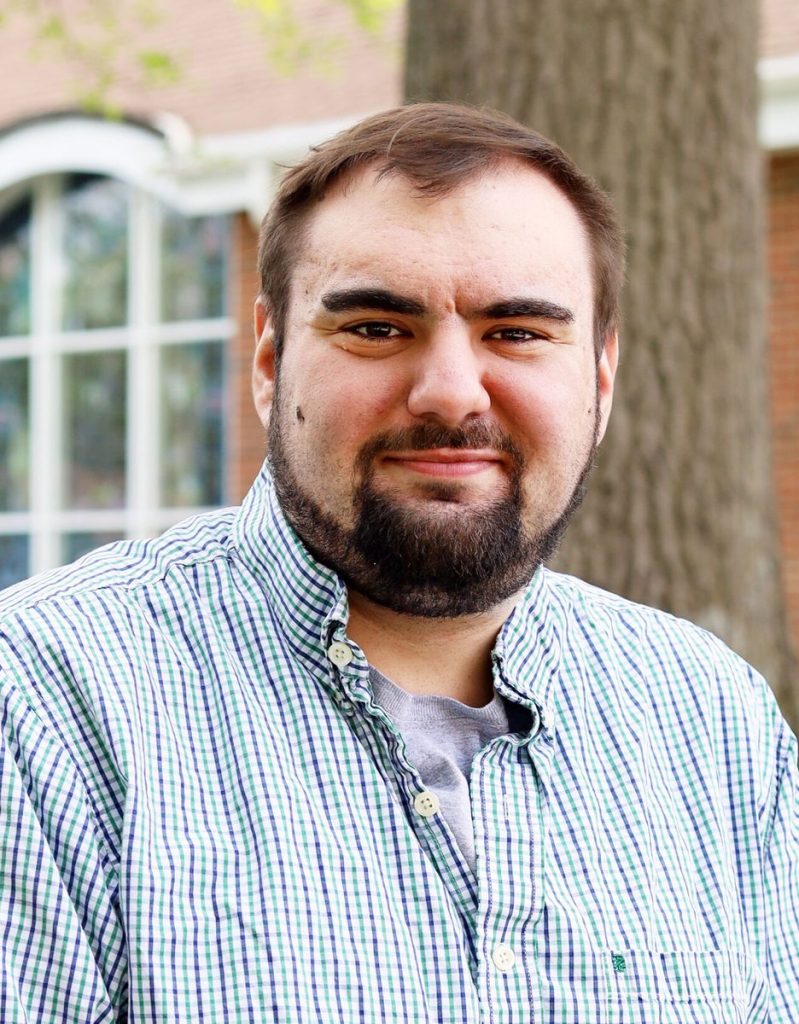
EDITORIAL MUG: Geoffrey Woehlk
When you’re a kid, your parents aren’t really people. They don’t have wants, desires or dreams. They vacillate wildly and arbitrarily from knowing everything about the world when you’re younger to — seemingly always about 14 years in or so — knowing absolutely nothing about anything.
My dad turns 79 today. Which I’m sure he’s delighted to see in print — no, it’s not a typo, sorry, Dad!
Growing up, my dad did all the dad things: taught me stuff like how to throw, how to drive and to never touch another man’s thermostat — the essentials.
Obviously, I love my dad, but as far as good dads go, there’s nothing really extraordinary about that. Take anybody with fond memories of their dad and they’ll be happy to tell you the same story. In fact, we all know people with not-so-great dads who still seem to find only the fond memories after they’re gone.
But the further we get into our own lives, the more we inevitably start to realize the challenges our parents faced not as parents, but as people (those being two different states of being, obviously), including the sacrifices — and missteps — they made in trying to be the best parent they knew how to be.
The older I get, the less ordinary and more extraordinary managing to be a good dad gets.
My dad is an immigrant, born under threat of Allied bombing in Germany during World War II and crossing the Atlantic with his mother to a better, freer life. He tells stories from his mother of his bombed-out school, of taking shelter beneath a bridge during an air raid, and, most vividly, of being confused after he came to America through Ellis Island as an 8-year-old boy about why Howdy Doody’s voice sounded so different in English.
My parents were both old, as far as parents go, when they had me. They were already raising five kids in a Brady Bunch-like blended household, but without the housekeeper, while working full-time at a university. They’d already lived more of a life than I have now, alternately making mistakes and finding their footings along the way.
It’s no wonder that by the time it was just me left with them in the house that my mistakes never seemed like that big a deal. They’d seen it all and more, not just as parents, but in their lives before parenthood.
My dad had been a professor and administrator for decades at the university I attended, and although he had retired by the time I started there, my last name still was recognizable to professors.
There were people who didn’t like him, sure. Once, a nun he fired told him he’s going to hell. But knowing that somehow made him even more of a real person to me — not just Dad, but a guy who some people didn’t like and some people did, like some sort of … regular person.
But for the most part, people I encountered always lit up when they talked about my dad. They described him going to bat for them when they needed him, his counsel in a tough time or his patience and encouragement when trying to accomplish a goal. After I found myself in leadership positions, he told me once that when people came to me with a request that they cared about, it didn’t matter what it was, I should never default to saying “no.” “Try to find a way to say ‘yes.’” Not sure where that advice was when I wanted a new car in high school, but apparently he was practicing it at work, anyway.
Seeing my dad through the eyes of other people who worked with him on a day-to-day basis revealed what kind of person he is in a way that as his son, I could never see on my own. We can never see our parents that way on our own, really.
It turned out, though, that he was the same guy at work as the one I knew at home, the one who found fulfillment in helping other people find success or opening themselves up to a new idea they hadn’t thought of before.
In all the moments in between teaching me how to tie a tie, insisting that calculus is a valuable life skill and lecturing me on the importance of not blocking the air vents, he was demonstrating those values every day — on good days and bad, busy days and days when our Broncos lose by 50.
One thing that’s become clear to me during my years of reporting in television and newspaper is that not everyone shares those values, and even if they do, sticking to them when it matters most is another matter entirely. Telling the stories of those that do is what I find most fulfilling in my own job, even if more people seem to have a stronger opinion of where I should spend the afterlife than ever did my dad.
I’m lucky that my dad is still here to continue to demonstrate how to live that kind of life, not because he feels the need to set an example for his grown-up kids or for his grandchildren, but because that’s the splendid person he is inside.
I expect that for those of us whose dads are still around, that feeling is not unique to me — I’m just the one with access to a newspaper column, and thought I should say it while he still is.
Our parents leave their marks on us in ways that aren’t always easy to see, or take time to manifest. We are in many ways a living reaction to our parents, sometimes in opposition and sometimes in concert, no matter how old we get.
Thanks, Dad, for setting an example I can proudly follow — or at least, acknowledge and then decide to instead make new mistakes all my own.
For example, were I turning 79 – or even 39! – I’m 100% certain that my dad would have gotten me a gift.
…
Well, whatdya gonna do. Kids these days.
Blame it on our upbringing.
Happy Birthday, Dad.
Geoffrey Woehlk is the news editor at The Forum.Geoffrey Woehlk is the news editor at The Forum.



