Column: The discourse of beauty
FORUM FILE PHOTO
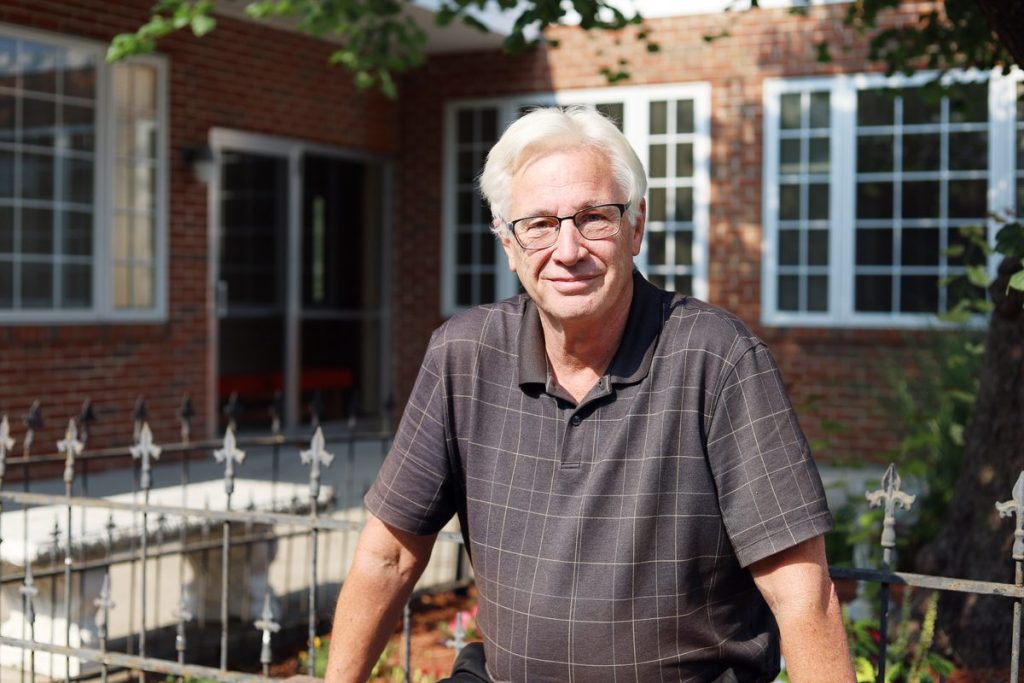
Pastor Joel Whiteside First Presbyterian Church
I begin every day with a long walk along a path in a park running through a heavily wooded area alongside a flowing creek. On some mornings it is hard for me to get fully into gear. On those mornings I try extra hard to find some scene of beauty somewhere along the way. This is not hard. It could be a slant of sunlight filtering through the trees, the brilliant color of a cardinal, the peaceful sound of water passing over rocks or the intricate spider web which catches the light along with a tasty meal for its builder. In the woods where I walk, there is the most intense blue I have ever seen scattered amidst the perfect green of vines and grass in the woods (probably just a weed I imagine — but beautiful nonetheless).
On this recent celebration of our nation’s independence, I have this appreciation for the vast, diverse beauty of this land and its people. Beauty is everywhere if we have the heart to see it.
I remember the movie, “The Color Purple,” where it was stated, crudely, that God becomes angry if we walk through a field and do not notice the color purple.
Moving toward the end of his gospel, Mark tells the story of a woman who breaks open an alabaster jar full of a fragrant ointment, and like the kind host in Psalm 23, she anoints Jesus’ head with oil. Jesus answers nearby critics of this woman’s deed by saying, “She has done a beautiful thing.” NIV
She has done a beautiful thing, not a good thing or a true thing, but a beautiful thing. Now consider this: Jesus did not say she did a true thing. We uphold and defend truth. Truth inspires and motivates us. But Jesus did not say this. Neither did he say she did a good thing. We admire those who do good things, who adhere to a code of ethics and who seek to choose the right thing regardless of the cost. But Jesus did not say she did a good thing. She did a beautiful thing. Beauty has a way of impacting us in a way that even truth and goodness lack. Beauty has the power to transform us and impact our hearts.
God speaks to us in words and visions of beauty. This includes all kinds of beauty, whether in nature or in human society.
When we see a beautiful thing, we are moved in our soul. We are transformed from within. Plotinus was a Neoplatonist philosopher of the third century of the Common Era. He once said, “The soul that beholds beauty, becomes beautiful.” Beauty has the power to make us better people as well as the power to make us want to be better people.
Think now of the beautiful moments of your lives. Maybe it was singing a hymn in a church, looking across some majestic landscape, beholding the sun burning in the sky as it sets down across the ocean, fields of ripe corn waving in the wind, or maybe it was witnessing some selfless deed by another person that suddenly made life make sense. Then multiply this experience times a thousand, or ten thousand, then you have some measure of the beauty of the Lord.
Jonathan Edwards, one of America’s great theologians, based his thought on a vision of God. This thought included these principles.
Virtuous love is the highest kind of beauty.
Because God is love, God is the most beautiful thing.
God is beautiful because the three persons of the trinity exist in a perfect harmony of love.
This divine harmony is a fountain from which all harmony and beauty flow.
God calls out to us in words of beauty. We answer in praise and wonder.