Column: The power of good
FORUM FILE PHOTO
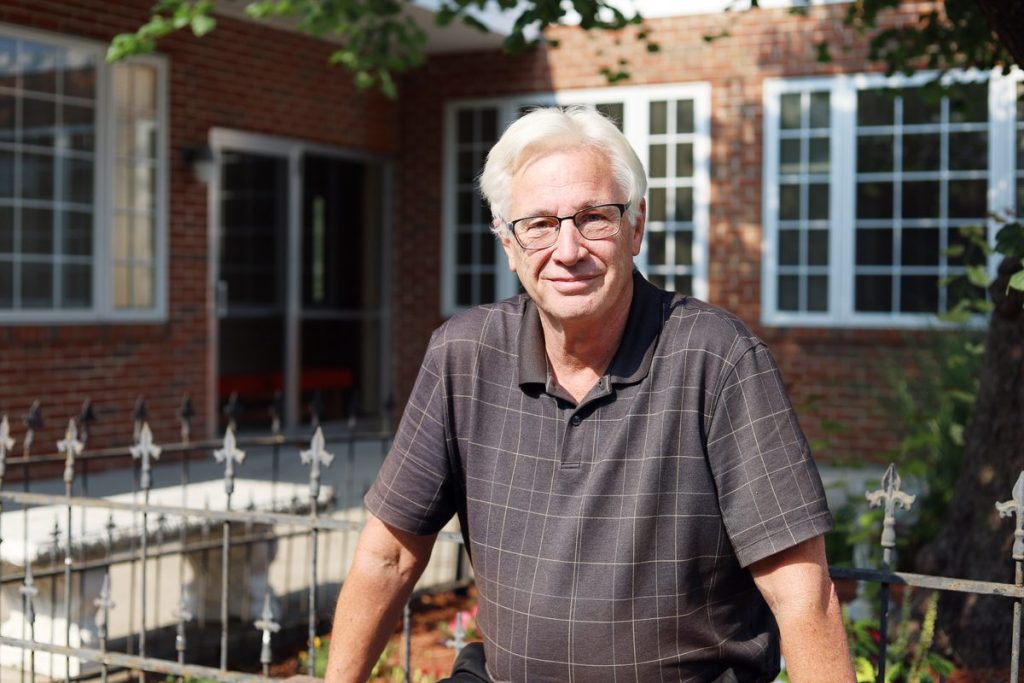
Pastor Joel Whiteside First Presbyterian Church
There is a passage in the New Testament that is attributed to the writings of the disciple Peter.
It is in the first chapter of the second Book of Peter that this author tells us of the power of our deeds and our goodness. Deeds of Goodness are a path toward personal and spiritual empowerment. The author makes this claim by using the metaphor of a “ladder of virtue.” The steps of this ladder are given us are the following: Faith, virtue, knowledge, Self-Control, Godliness, mutual affection and finally, love.
Admittedly, there is a going on with all these steps. Goodness is associated with the seven virtues given in Christian tradition, which are: (1) humility, (2) charity, (3) chastity, (4) gratitude, (5) temperance, (6) patience, and (7) diligence.
It seems to me that this ladder of virtue may need to be a greater factor in our understanding of faith. No, these virtues won’t win our salvation. No, these virtues won’t make us better than others. No, these virtues won’t just be another burden imposed upon our journey of faith. These virtues are said to support honest and authentic faith. As such we are given this power to change our lives and the lives of others, one deed at a time.
We can “speak” more powerfully of what is important to us, through our deeds and our goodness. We live in such a time of dispute and conflict about values and perspective. In such a time as this, deeds of goodness can have a very clarifying effect on the expression of what is important in life, what we believe and how challenges can be overcome.
Acts of goodness can bring us together. We can argue about anything these days. But the goodness of our deeds will enjoy a greater power and an ability to draw people together across the divide of social, political and religious difference.
Further, there is a liberating/empowerment aspect of the ladder of virtue. Virtue can repair whatever brokenness there is in our minds, hearts and relationships, so that climbing upward on this ladder of virtue has the effect of lightening the load we carry around in our lives.
In Dante’s “Divine Comedy,” Purgatory is conceived as a tall mountain where, as people ascend, their sins are purged and virtues are added.
This surprising insight is contained in the following verses in the Fourth Canto of the Purgatorio:
“This mountain is such that
Always at the start the climb is the hardest,
But the higher that one mounts the less one tires.
Therefore, when it seems to you so gentle
That walking up is just as easy for you
As riding down a river in a boat,
Then you will be at the end of this path:
There you can hope to rest from your fatigue,
I say no more, but this I know is true.”
Somewhere in our desire to live a life of Christian fullness, we need to remember that ladder of goodness.
Faith is about human freedom, and goodness leads us there. There is no freedom without it.