The Forum talks with state candidates
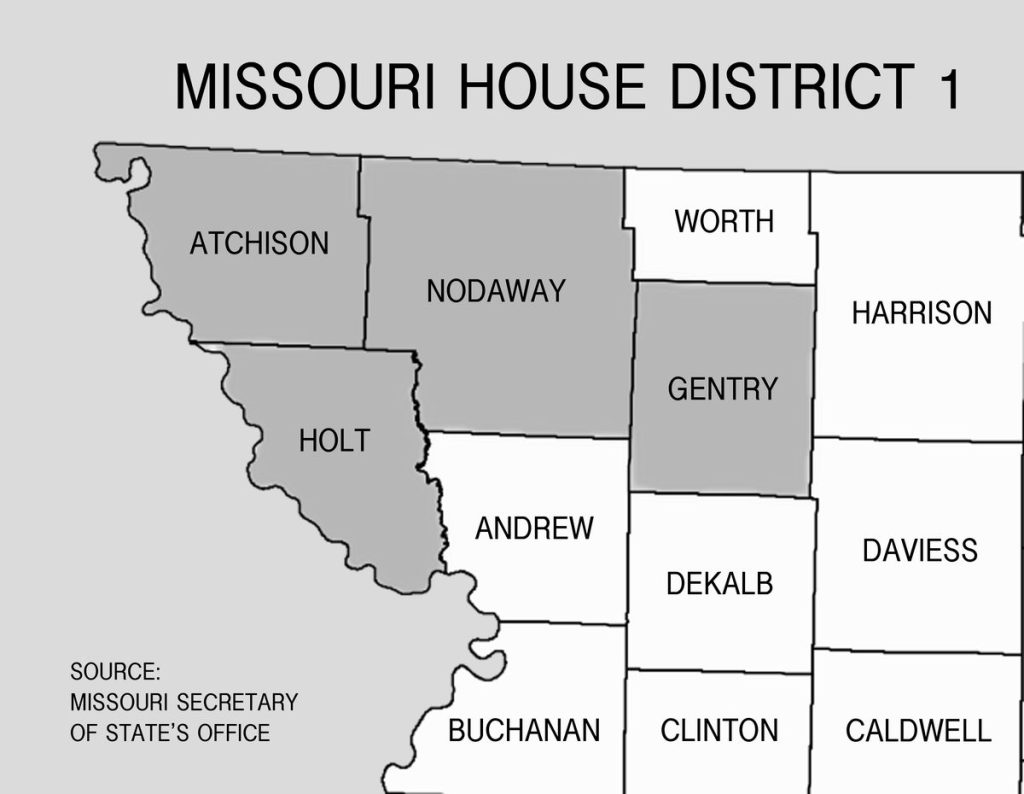
7-28-22 House District map.jpg
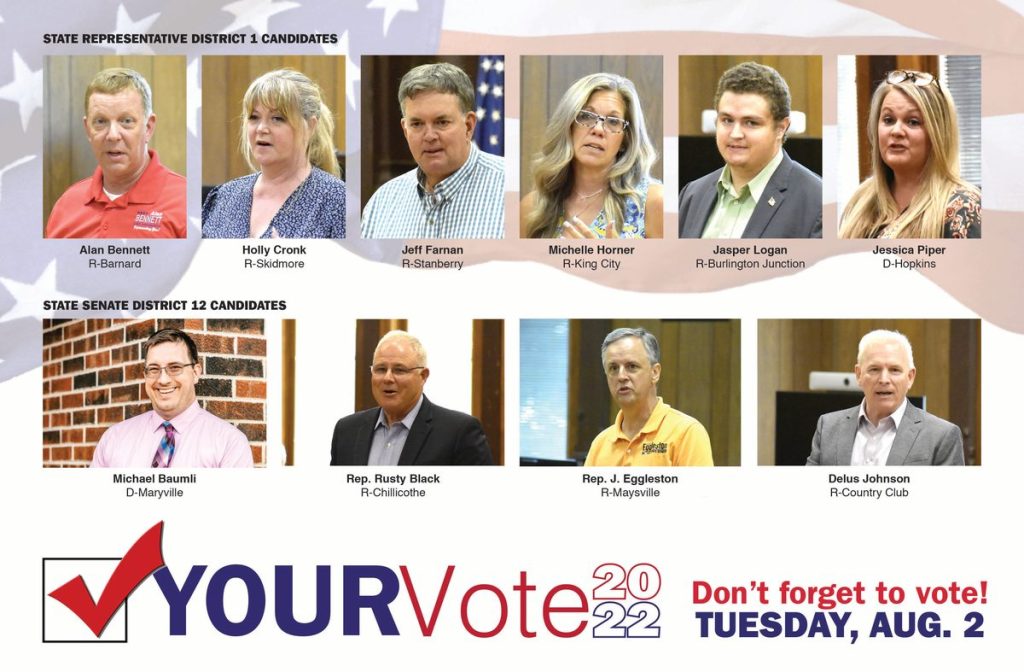
MARYVILLE, Mo. — The Forum interviewed each candidate running for state representative from District 1 and state senator from District 12.
In addition to their priorities, each candidate was also asked to discuss education in the face of a teacher shortage crisis that local school administrators have said threaten rural schools in particular.
STATE REPRESENTATIVE DISTRICT 1
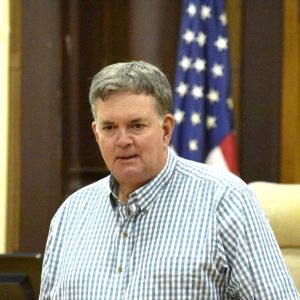
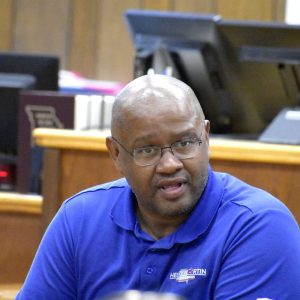
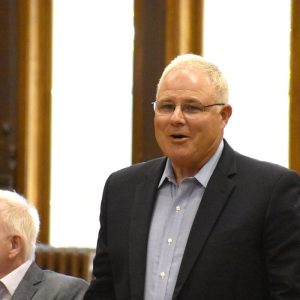
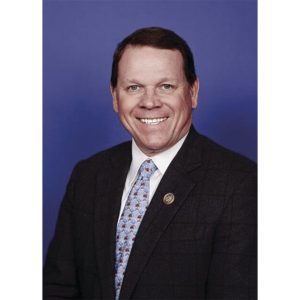
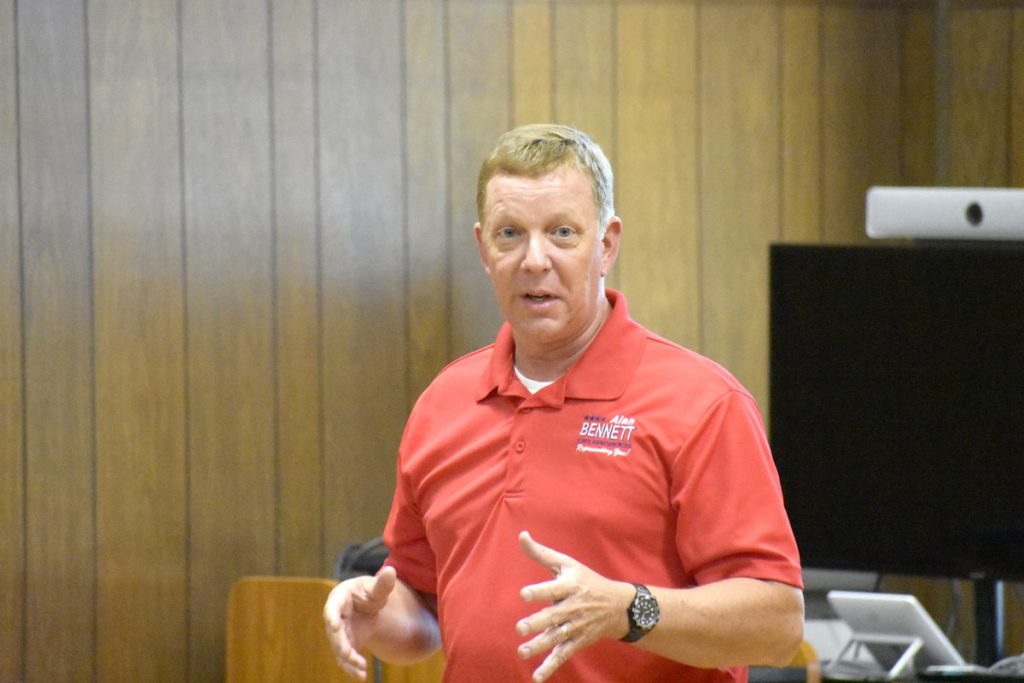
ALAN BENNETT, R-Barnard
Priorities: Roads, Broadband, Federal term limits
Keeping northwest Missouri conservative is what drove Alan Bennett, a U.S. Army and Missouri National Guard veteran from Barnard, to run for state representative.
“Seeing the direction of where we’re going,” Bennett told The Forum about why he entered the race. “With Allen Andrews leaving, in my view it’s important to keep this area red and to maintain conservative policies in the state.”
Top priorities
Bennett said his top priorities if elected would be roads, expanding broadband access and calling a constitutional convention to put term limits on federal offices.
Working at the Missouri Department of Transportation has given him a unique perspective on road conditions, Bennett said, and an appreciation for the needs of northwest Missouri roads.
He said he wants to “hold MoDOT accountable” and ensure the region gets its fair share of funding to maintain roads.
Bennett said that further broadband expansion would also help to reverse an issue present in most rural areas across the country: shrinking population.
“Shrinking population means less representation,” he said.
A more robust fiber network, he believes, would attract more people to the area where they could live and work comfortably.
“There’s the broadband, there’s the road network that’s gonna allow us to increase population,” Bennett said. “That’s kinda counterintuitive to small-town people, but if we’re gonna be relevant, we have to maintain our representation.”
As for the constitutional convention, Bennett said he supports a resolution passed by the state House in May that calls for a convention to consider an amendment to the U.S. Constitution to put term limits on members of Congress.
The House first passed such a resolution in 2018, but it was set to expire in 2023.
A constitutional convention is held when two-thirds of state legislatures call for one. Then three-fourths of states must ratify any proposed amendment to amend the Constitution.
Education
Bennett told The Forum that he believes the state’s teacher baseline salary grant program is “a step in the right direction.” He said he is in favor of increasing teacher pay in general.
“Now, how you do that, that’s a big commitment to continue (the baseline salary grant program) moving forward,” Bennett said. “I think it’s worth talking about and debating and seeing where we’re at.”
More important than state support for teacher pay, he said, is for local school districts to find other ways to recruit and retain teachers.
“If your employer builds a culture that you feel comfortable with, you’ll sacrifice some pay,” he said.
He said schools are the “cornerstones” of northwest Missouri communities.
“You go there, you meet friends, you socialize, you know the teachers,” Bennett said. “So if you can create a culture, it’s gonna make a difference for some pay. Especially when you’re talking about, you go to St. Joe, you can make $10,000 more, but you’re working in an inner city, kind of. It’s a more difficult working environment.”
To help close the gap, though, Bennett said he believes the key is to encourage population growth that will grow a school district’s tax base.
Bennett also said he supports open enrollment efforts that would allow parents to move their children to other school districts outside their home district, and he supports school voucher programs that would allow parents to move their kids to private schools and move tax dollars from their home public district to the private school.
“If my school was failing — now, I love my school — but if my school was failing, and there was another option, I could take the short time — 12 years — that my kids are in school and move that money,” Bennett said. “My whole life though, 80 years — the other 60 years, my money’s still going to the public schools. I’m not looking to say, ‘pull my money out of the public school system for my entire life.’”
Outgoing Rep. Allen Andrews, however, has opposed legislation like that, siding with public school administrators in his district that have said erosion of public tax dollars, especially when redirected to private schools, hurts all public schools because it means less money to go around in general.
But Bennett said he did not foresee open enrollment or voucher programs significantly affecting school districts in northwest Missouri.
He did say that he does not want to see rural schools forced to consolidate.
“Consolidation terrifies me, really,” Bennett said. “There’s nothing worse than shutting down a school and trying to reorganize.”
In Barnard, Bennett said he remembers the effect on the community that came from shutting down the school there. A full-fledged consolidation, he said, would be even more difficult.
“I don’t wanna see that happen,” he said.
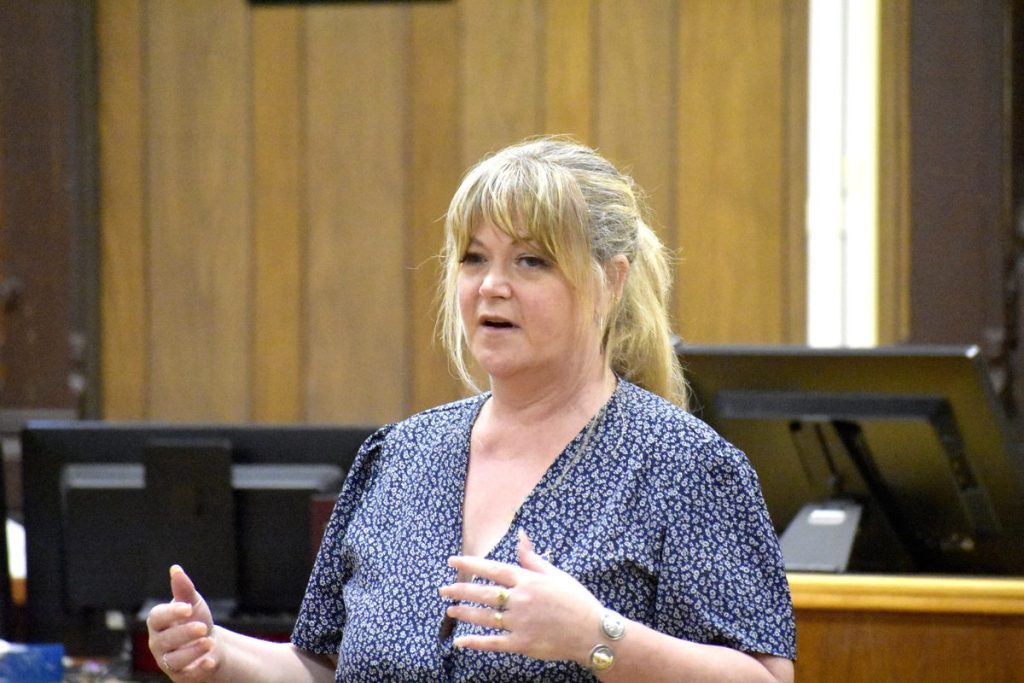
HOLLY KAY CRONK, R-Skidmore
Priorities: Agriculture, Infrastructure, Mental health
Business owner Holly Cronk, of Skidmore, is running for state representative because she thinks she can help make things better for the place she lives.
“It just seemed like, ‘you know? I could do this,’” she said. “I love where I live. I’ve done good work so far, it’s been successful, and I think I can really make a positive impact in representing northwest Missouri in a good light, in a productive way.”
Top priorities
During a thorough conversation with The Forum, Cronk went into detail on her views across a range of issues and her ideas on how to address them. Instead of bullseye-like priorities, she said she preferred to think of them more as “umbrellas” that covered several areas of interest.
First was agriculture, which she broke up into priorities of family farming and agribusiness, both of which she hopes to help grow and protect.
That includes keeping both corporate and foreign interests out of family farming, she said.
“I want to make sure our family farms are protected,” Cronk said. “I wanna make sure that those continue to stay the way that they are. That’s Missouri. We are agriculture.”
Cronk’s second priority would be infrastructure, but she said she defines infrastructure much more broadly than others might: everything from roads to water to broadband expansion to education, which she sees as an interconnected base that needs to be shored up before rural communities can grow again.
“It’s every element that builds a strong community, that’s infrastructure,” Cronk said.
Third, Cronk said she wants to find ways to address access to mental health resources, which she called “the worst crisis in our country.”
Education
But it was on education that Cronk clearly differs the most from her opponents in the Aug. 2 primary, speaking bluntly about the likelihood of consolidation for small schools and saying she would support a dedicated revenue stream to better fund education.
A subject she’s passionate about as a former guidance counselor, Cronk spent the most time during her interview talking about the future of education in Missouri and the steps she believes need to be taken to ensure long-term, high-quality education in rural areas like northwest Missouri.
Cronk said she would strongly advocate for school choice measures, like open enrollment policies that would allow parents to move their children to another school district and potentially take their tax money with them, and for significant increases in state support for teacher recruitment and retention initiatives including higher teacher pay.
The ship on school choice, Cronk said, has already sailed, and full-blown open enrollment for parents who want to move their kids for any reason — good or bad — is likely inevitable.
She also acknowledges the effects that could have on small schools who may lose students and funding: consolidation. But without reversing trends in population changes, Cronk said that is going to happen at some point no matter what.
“There’s already small schools that are struggling that are on their way out, whether we like it or not,” she said. “There’s gonna be nothing that’s gonna revitalize them unless their community that supports them grows.”
But what she calls a “course correction” for education in the state also needs to come with investing in teachers.
Cronk said she would support the continuation of the state’s $38,000 teacher minimum grant program, and believes it should be expanded further, calling it “sad” that the minimum is only at that figure.
“You’re looking at somebody who’s a potential mentor, you’re looking at somebody who’s molding your child for 6, 7 hours a day …,” she said. “Their day doesn’t end at 3:30, their day often ends when they go to bed because they’re grading at home. They’re working on curriculum, they’re coming up with (ideas) and thinking, ‘how can I reach so-and-so?’”
If it can be done with existing funds, Cronk said she would “without a doubt” work to maintain or increase state funding for teacher salaries — and went further.
“If it comes down to higher taxes on the voter? I have to tell you, I would still take my licks and still vote for higher pay for our teachers,” Cronk said. “They’ve been ignored for way too long. … I have to tell you that I would vote for a program that supported our teachers, I would. And I may not be that popular, but you know what, that’s where I have to go with my heart.”
Cronk also said that she would want to look into ways the state could assist with growing its pool of teachers for the future. One such suggestion, she said, would be to consider student loan forgiveness programs for teachers educated at Missouri state colleges and universities who then teach for a number of years at Missouri K-12 schools.
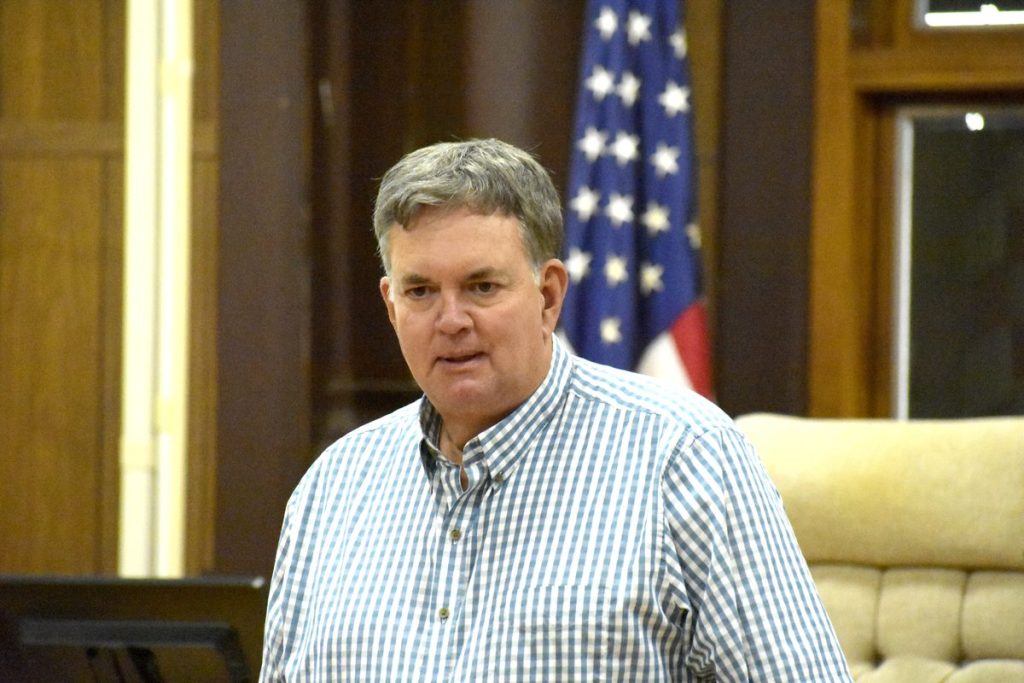
JEFF FARNAN, R- Stanberry
Priorities: Education, Small businesses, Farming
Business owner Jeff Farnan, of Stanberry, said his wife was quick to support him when he was considering running to represent District 1 in Jefferson City.
“And she said, ‘yeah, but you know, you’re gonna have to buy a suit to go down there,’” Farnan recounted to The Forum.
A member of the Jefferson C-123 Board of Education for the past 15 years, Farnan said he has a diverse background as a small business owner and a farmer as well.
“I’m running for the next generation,” he said. “I’m running to guarantee that my grandkids and all the other little kids around have the same rights and liberties as we do now.”
Top priorities
If elected, Farnan said he would focus on three areas that he knows well: working to reduce regulations for small businesses, to decrease burdens on farmers and to support education.
Farnan said his top priority was education, a perspective he said he’s gained during his time on the Jefferson school board seeing how rural schools operate.
For small businesses, Farnan said he would like to try and get rid of red tape that can make things unnecessarily difficult. He used an example from his own business, the Spec Shoppe, as an optician.
“In my business, we deal with Missouri Medicaid,” he said. “And … if we have a patient come in that has Medicaid, we have to go to one website to check and see if they have it, the second website to see if they’re eligible and the third one to file a claim to see if we get reimbursed. So stuff like that needs to be streamlined. It’s just ridiculous the way that we have to do it now.”
On farming, Farnan said he will advocate for ways to make farming less of a gamble and make it more consistent.
“I’ve farmed all my life,” he said. “I’ve been a farmer since I was knee-high to a grasshopper, basically, and I hope I do it until the day I die.”
This year, for example, Farnan said he thought he had more money on his cattle than he had ever before. But after running the numbers on his input costs, which were much higher than they have been in the past, he found out he hadn’t.
“So farming, like I said, is a gamble,” he said. “But there’s no other way of life I’d rather live.”
Education
Farnan said he would strongly support continuing state funding to help raise teacher pay.
“Are we gonna have to go back to the teachers and say, ‘hey, sorry, it was just a one-year deal, you’re gonna have to go back to our regular base (salary)?’” he said. “So I think that’s a major concern.”
Instead, Farnan said he would push to continue the state’s grant program that helps pay to raise salaries to $38,000 and potentially increase it further.
“I would definitely do everything I can to … make sure that it even goes next year and continues on that way,” he said.
Recruiting and retaining teachers, he said, will be essential to allowing rural schools like those in northwest Missouri to survive, making it one of the most important focuses he would have in the state legislature and the most important investment the state can make.
“This needs to be a top priority, definitely,” Farnan said. “I think we should make room in other budgets to get our teachers paid. I think, education, that’s where everything starts. That’s our future that we’re trying to teach.”
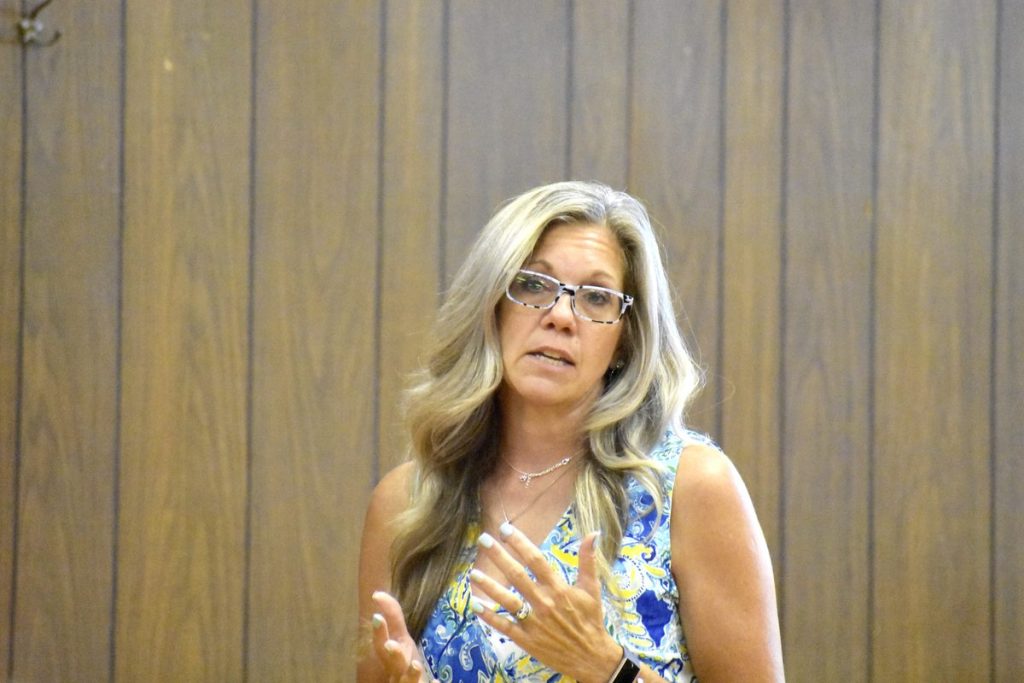
MICHELLE HORNER, R-King City
Priorities: Mental health, Education reform
When her son took his own life in 2020, Michelle Horner, now of King City, wanted to quit. Instead, she’s running for state representative, she said, to advocate for greater access to mental health options and improve schools.
For more than a decade, Horner said she has been working with Republican advocacy groups, lobbying for changes to education in Jefferson City.
At the time of her son’s death, she was president of the High Noon Republican Women, a group based out of eastern Jackson County, where she lived.
She wanted to quit the organization, but her colleagues had a different idea, she said.
“‘You have fought for so long for our kids, why are you giving up now? You need to run for office, you need to be a strong voice,’” Horner said they told her. “… They said, ‘don’t let the memory of your son go to waste.’”
Top priorities
At the very top of Horner’s priorities is access to mental health care and other resources for children in need, she said.
After moving to King City to be closer to family, Horner said it became clear that in rural parts of the state, and even back in Jackson County, there wasn’t the support system her children needed to cope with the loss of her son, or for other families dealing with trauma.
“Nobody would talk to my kids about losing their brother, because they were home when they found him,” she said. “No place would even do anything like that. So it’s like, when do we put our kids as a priority, especially when it comes to mental health? … If we don’t fight for our kids and protect our kids now, we’ll lose it. Our small towns, our colleges — everything’s gone. Because if we don’t fight for them, when will we? It’ll be too late.”
Horner said the simple fact is there isn’t enough funding going to programs that could help expand access to those types of services.
“There’s just no funding for it,” she said. “I mean, you can’t throw money at a problem and solve the problem, but you can make things available within the state funds instead of spending money on useless spending, going through the stuff that’s useless and actually spending towards something that will be good and beneficial for our kids here in the state.
“I think we need to focus on that aspect instead of the wasteful spending we’re spending, like a million dollars on a stupid fountain. We need to really focus on spending that money to give rural kids in the smaller communities someplace safe for our children.”
Horner said one way to do it would be to give mental health and child-oriented programs a dedicated revenue source. One suggestion she had was to reserve local wind farm property tax revenue at local school districts for services that she said would more directly benefit students instead of on capital projects or facility repairs.
How can schools spend wind farm money?
School districts that receive property tax revenue from wind farms are not required to spend the money in any particular way.
“(Districts) have to spend (the wind farm revenue) on like, a track, or the gym, or fixing the school up — they’re not for like a resource officer for mental health or protection,” she said. “That kind of stuff we need to look at and say, ‘no, if you’re going to have this kind of money, you have to make it available for all kinds of things that the schools can use to help our kids. … Because they get a lot of money, some of these schools get a lot of money from them.”
Education
Horner said she believes she’s been unfairly saddled with a reputation as being “anti-school.” But she said she isn’t, she’s only in favor of “fixing the schools.”
However, part of that, she said, means relying less on schools to do what she said should be done in the home.
“I think a lot of it has to do with our parenting,” Horner said. “And I think our society has changed. I think we have focused on giving our kids what they want instead of actually helping our kids and helping our schools.”
Another important aspect of fixing Missouri schools is increasing teacher pay, Horner said.
“I think our teachers are the most important thing, they really do set an example for our kids,” she said. “I don’t think we should rely on them as being parents by any means … but I really think our teachers need to have higher pay than what they do.”
Horner said she would support continuing the state’s $38,000 minimum teacher pay grant program, but would prefer measures that instead incentivize better performance by students.
“Yeah, I agree that we need to keep our teachers at a good pay, but we also need to look at what they’re doing and how they’re educating,” she said. “Yeah, I agree that we need to do something to keep that kind of thing, but I think there’s a happy medium that we need to really look at.”
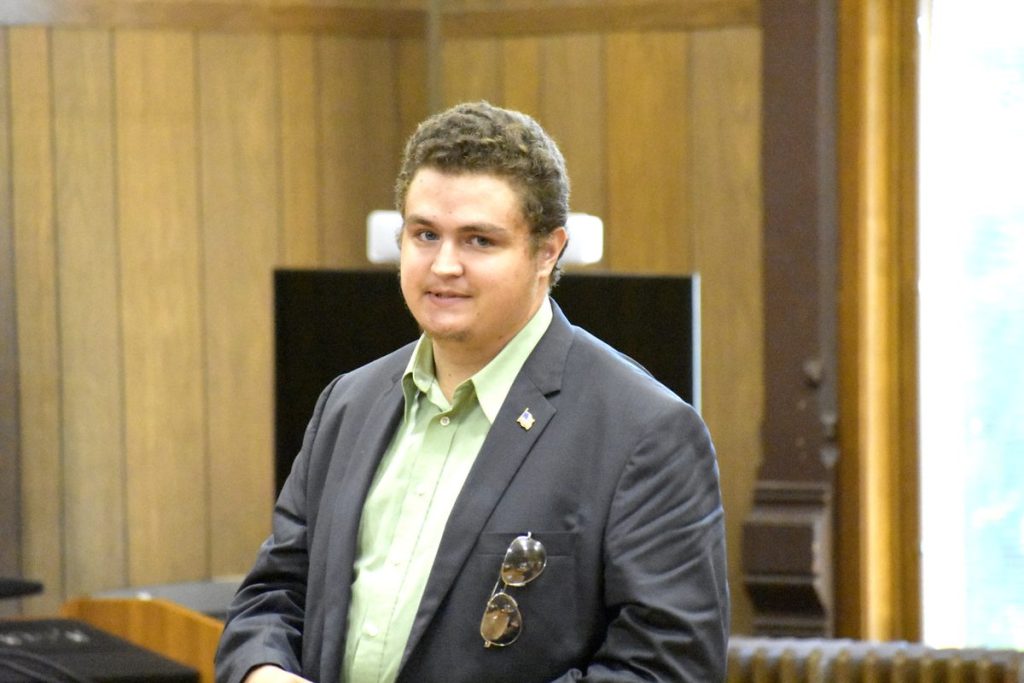
JASPER LOGAN, R-Burlington Junction
Priorities: Second Amendment, Pro-life policies
The youngest candidate on the ballot, Jasper Logan said his experience in politics and with two online small businesses make him the right choice for state representative.
“I’m running because I think our country’s headed in the wrong direction and I thought we need somebody who’s gonna stand up and do something about it,” Logan told The Forum.
Logan has worked on multiple campaigns in recent years, working for the Missouri Republican Party in 2018 to elect Sen. Josh Hawley, volunteering for former President Donald Trump’s campaign in 2020 and running an ultimately unsuccessful primary campaign for state representative candidate Tina Goodrick in District 9 in 2020 — all while he was president of the Northwest College Republicans at Northwest Missouri State University.
Logan runs two businesses online: Northwest Missouri Coins and Collectibles, which resells rare coins purchased at auction, and Lets Go Brandon Merch, which sells politically-branded merchandise.
“I would say I have experience in both business and in politics, and I think that combination is a good thing for a state legislator to have — I can bring a lot to the table,” he said. “And also I think being the youngest candidate is a good thing because I can connect with the younger generation in our area. We’ve seen young people are leaving and they’re going and finding jobs elsewhere. And I think I can connect with them and try to solve the problems that they’re facing.”
Top priorities
Logan said his top priority would be to “defend our Second Amendment rights,” followed by passing pro-life policies.
“I think that’s really gonna be under attack right now from the Biden administration,” he said. “And also to keep Missouri pro-life, because with all that going to the states now, we’re gonna need the legislature to pass pro-life legislation.”
Although most Republican candidates would not disagree with his positions on those issues, Logan said he’s the best candidate to actually follow through.
“You know, on those issues, everybody’s gonna say that they support it because you kinda have to if you wanna get elected,” he said. “But I think I would be the most supportive. I’m not somebody who’s gonna back down, I’m not somebody who just talks about something because I think it’s what people wanna hear, I’m somebody who actually believes what I say.”
Education
On education, Logan said losing teachers is one of the biggest issues facing rural schools.
“You know, we’re seeing something of a teacher shortage right now because they can go to other states, they can be paid more,” he said. “So I think that’s something we really need to keep an eye on.
“But when it comes down to it, it’s about the budget: we have to balance the budget. And again, we have to make sure we can afford the things like pay increases for government employees without raising anybody’s taxes.”
Logan said he was “very open” to extending the state’s grant program to move minimum teacher pay up to $38,000, but only if it came with acceptable cuts to spending elsewhere.
Additionally, Logan said he would also work on curriculum.
“I’d say I wanna fix some of the issues we’re seeing with critical race theory,” he said.
Although he said he believes parents are overall “pretty happy with the schools up here,” he said he would want to “make sure that we keep that stuff out of our classrooms and that we take care of it in the districts where it is becoming a problem.”
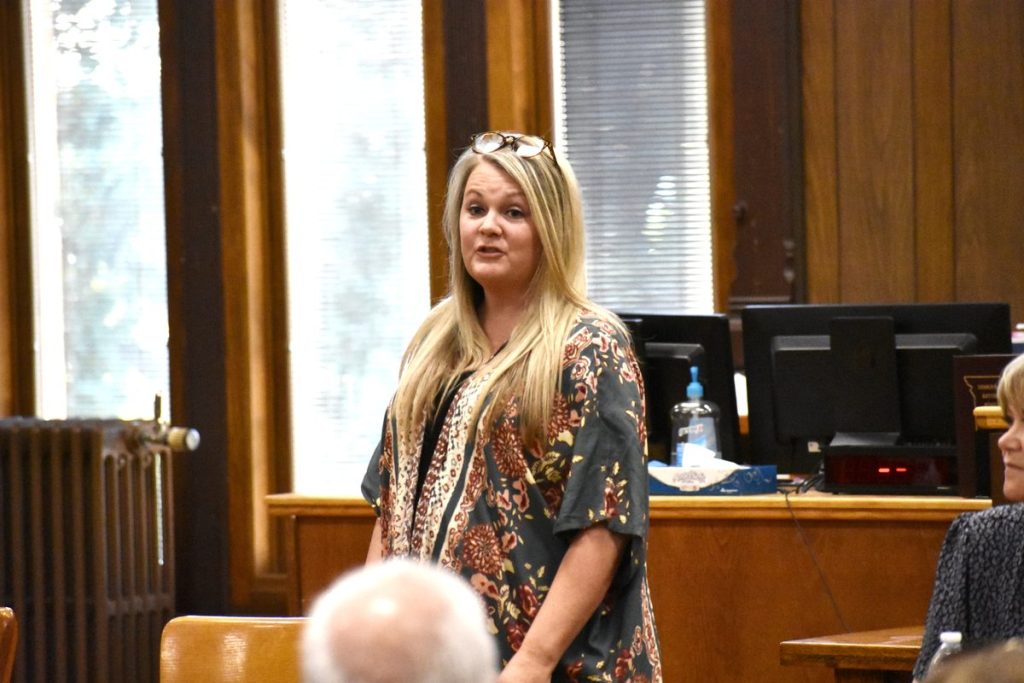
JESSICA PIPER, D-Hopkins
Priorities: Education, Health care, Roads
Jessica Piper, a former teacher from Hopkins, faces long odds as a Democrat running for state representative.
But she told The Forum in her candidate interview that if people listen to her message, she’s confident she can win them over.
“I think I represent something new,” she said. “I came out fighting. I don’t back down. And I’m not someone who would disrespect voters.
“Even if someone doesn’t wholeheartedly agree with me, I’ll never hurt you. I’m not coming for your community, I’m not coming for your children, all I’m gonna do is support you.”
Although more moderate than Democrats in the urban areas of the state, Piper has billed herself as a progressive in a region that hasn’t elected a Democrat to the state House since 1990.
Built off the back of a forward-thinking fundraising apparatus, Piper has managed to raise more money for her campaign than all of her Republican opponents combined, drawing thousands of small-dollar donations from Democrats across the country with whom her message has resonated.
Top priorities
Piper is clear about her No. 1 priority: education.
If elected, she said she would advocate for state programs to increase teacher pay and expand funding to rural schools.
Also, Piper said she would focus on health care measures, including ensuring that Medicaid is properly funded and by pushing for measures that would help rural hospitals and health care providers stay in business.
Third, she said would prioritize roads.
“Our district has some pretty terrible roads,” Piper said. “And I’ve been traveling them, backroads to get to Albany with the bridge out, and I was just appalled at what folks are driving on every day.”
For all three priorities, though, she said the state would need to provide adequate funding, or nothing will change.
Piper blamed Republicans in the legislature for not addressing critical needs across the state despite two straight years of record surpluses, including nearly $4.9 billion heading into this fiscal year — a figure nearly double that of the previous record set last year.
“They won’t spend it,” she said. “You just wanna scream, like, what are you doing? Why are you defunding our schools when you have all this money? Why won’t you pay teachers when you have all this money?”
Gov. Mike Parson has proposed a special legislative session to consider permanent income tax cuts with such a high surplus.
Piper said the money should be spent on priorities like education, health care and roads.
“I’m really sick of that,” she said. “I’m sick of them saying they’re gonna do something, (only) to find out that it’s fake. I’m tired of voters voting for Medicaid expansion, and them fighting tooth and nail not to fund it. It’s sickening. None of their policies help my neighbors or help our community. None of them. And I’m just tired of it.”
Education
Piper said she was disappointed by the General Assembly’s minimum teacher pay grant program because it only covered 70 percent of the difference school districts would need to reach the optional threshold of $38,000, and there is no mechanism to fund it beyond this year.
How many teachers are on the education committees?
According to their online bios, a third of legislators who sit on the education committees dealing with K-12 education in Missouri have K-12 classroom teaching experience.
In the house, there are 7 of 21 representatives:
- Paula Brown, D-Hazelwood
- Rusty Black, R-Chillicothe
- Ian Mackey, D-St. Louis
- Maggie Nurrenbern, D-Kansas City
- Dan Stacy, R-Blue Springs
In the state Senate, three of nine:
- Lauren Arthur, D-Kansas City
- Elaine Gannon, R-De Soto
- Jill Schupp, D-Creve Coeur
School districts that receive property tax revenue from wind farms are not required to spend the money in any particular way.
Instead, some Republican legislators have pushed a program called Career Ladder as an alternative. That program was also funded this year. It allows teachers with more than two years of experience to make up to $5,000 in extra duty pay, sometimes for work they are already performing but are not being paid extra for. The state covers 60 percent of the pay with local school districts providing the remainder.
Rep. Rusty Black, a Republican candidate in the primary race for State Senate District 12, was key in resurrecting the program that had been dormant since 2010. However, no Nodaway County school district has opted into the program because of fears that the legislature did not allocate enough money after massively expanding eligibility — potentially leaving school districts holding the bag.
Piper said Career Ladder is “an awful idea” that is insulting to teachers because it predicates bonuses based on extra work, when teachers need raises across the board.
“They don’t understand teaching,” she said. “They’ve never been in there. … I’ve been to Jeff City countless times, I’ve testified to the education committee, and most of the folks on the education committee aren’t educators. And you can tell when they ask you questions or the bills they pass, because they make no sense.”
STATE SENATE DISTRICT 12
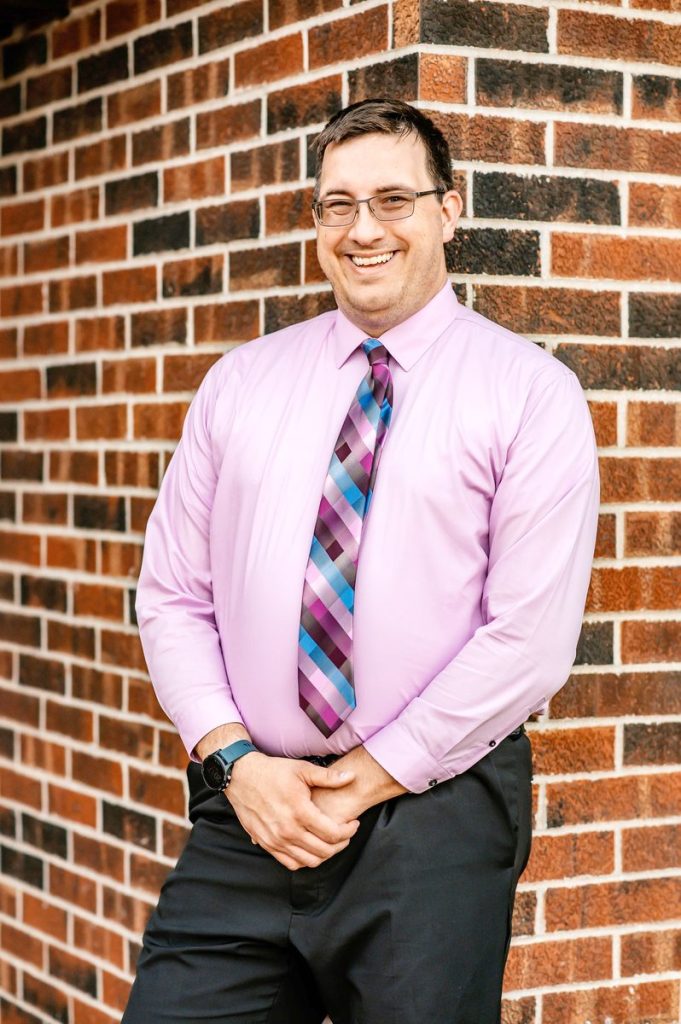
MICHAEL BAUMLI, D-Maryville
Priorities: Medicaid funding, Education, Rural revitalization
As a Democrat, Michael Baumli knows he’s facing an uphill battle in the race for state Senate.
A Democrat hasn’t won a state Senate race in Nodaway County since 1990, when the district included parts of Kansas City and was represented by Pat Danner.
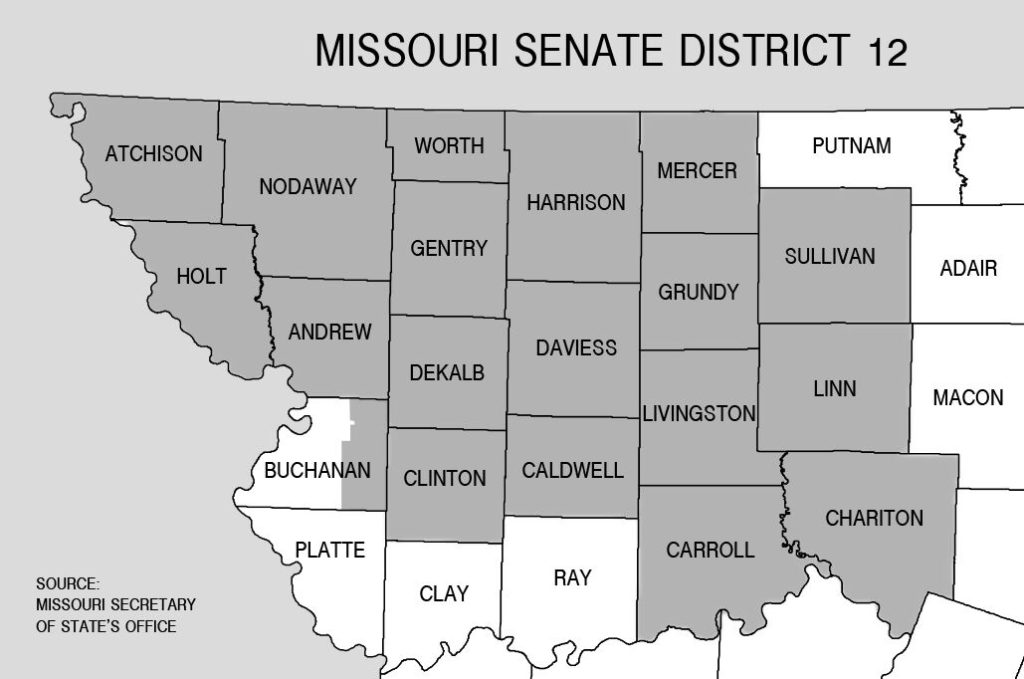
Now, District 12 stretches across 18 1/2 rural counties, and Democratic candidates have been a rare occurrence: only one has even been on the ballot since 2010 — Terry Richard who in 2018 mustered 27.5 percent of the vote against Dan Hegeman, who is now leaving the state Senate because of term limits.
“Honestly I thought there was a bit of a void in the race as far as the kind of Democratic side of things and I didn’t really see anyone stepping up to fill in that void,” Baumli said about why he decided to run. “And I thought with the history of policies that we’ve had over the past 20 to 40 years, I thought it was time for something to kind of redirect how the state is moving.”
Top priorities
If Baumli does manage to pull off an upset, he said his top priorities will be ensuring funding for Medicaid, education and revitalizing rural communities.
Baumli said that keeping faith with voters who approved Medicaid expansion would be his top priority.
In 2020, Missouri voters approved a constitutional amendment to expand Medicaid coverage to adults who make up to 138 percent of the federal poverty level. For a single person, that’s about $18,000, or about $38,000 for a family of four.
According to data compiled by Washington University in St. Louis through the Missouri Department of Health and Senior Services, nearly 2,800 people in Nodaway County were enrolled in Medicaid as of June.
Baumli also stressed support for education.
“A lot of schools around here are shifting to four-day weeks,” he said. “They’re not getting the funding, we’re losing teachers. There are people that are going across the state line just to get a job that pays 20, 30, 40 percent more. And we really need to address that, that’s a lotta talent that we could use here. Our students in the area deserve it.”
Originally from Quitman, now unincorporated, Baumli said he wants to establish programs targeted at bringing population back to rural areas. Specifically, he said he plans to focus those efforts on incentivizing small business growth and building out broadband to hard-to-reach communities.
“Especially with some of the remote work policies, we could bring jobs into this area and allow them to live the same lifestyle that they have in a much more rural region,” Baumli said.
Campaign
Baumli admitted that he hasn’t hit his stride with his campaign yet. He just registered a campaign committee with the Missouri Ethics Commission this month, necessary for fundraising, and he doesn’t have signs or pamphlets yet to hand out to voters.
Without a primary opponent, Baumli said there’s no rush and that he’s kicking his campaign into a higher gear now.
He said he purposely passed over one such opportunity to get his message out when he skipped the Greater Maryville Chamber of Commerce’s candidate forum on July 14 — the only local candidate for state legislature to do so.
Instead, he said, he chose to go to a candidate forum in Kingston, in Caldwell County.
“… being as it was the smaller community, I thought that it would probably be the most likely to be overlooked, and I really like to focus on the people who need the most help — the people that are small and out in rural regions,” Baumli said.
Ultimately, winning will require voters in a comfortably Republican area to flip blue.
Baumli said voters should feel comfortable making that choice because he’s lived here his whole life, scooping manure on a hog farm as a kid and now with more than two decades of experience working in information technology.
“I have a pretty good understanding of modern technology and also the … agricultural background,” he said. “I have no problem addressing issues of cybersecurity and I definitely think that legislatively, we could use some guidance in both of those areas.”
More than anything, Baumli said he represents change.
“Well, we’ve been trying the same thing for, like I said, 20 to 40 years in some areas,” he said. “Are (voters) really happy with the status quo? Are they really happy with the direction? Are they happy having fewer neighbors than they did a few years ago?
“I’m something different and I think I can change that.”
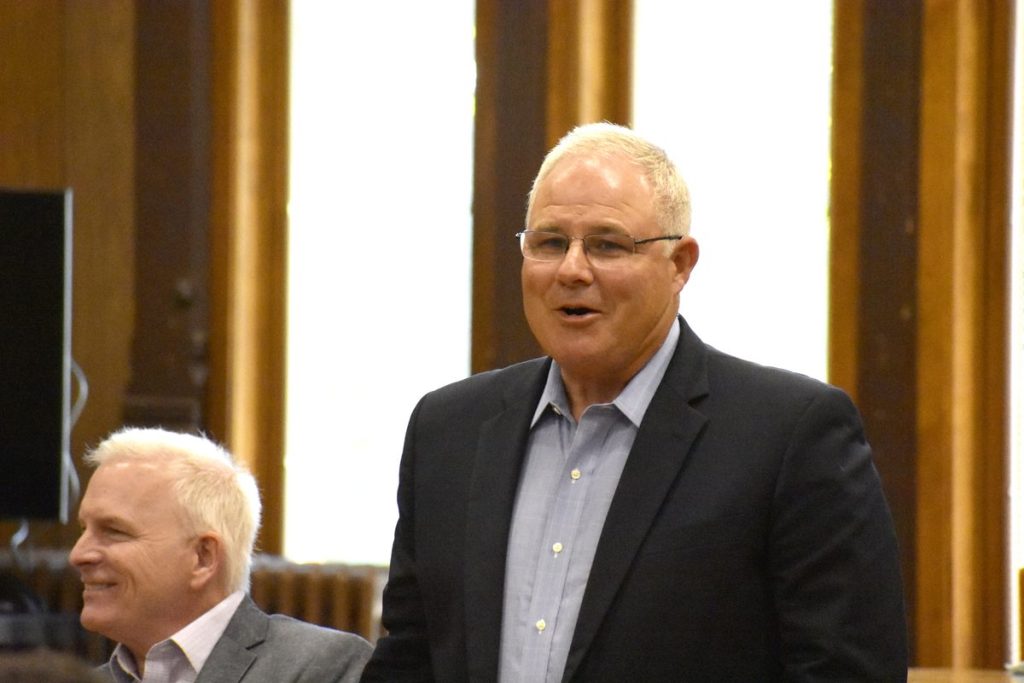
REP. RUSTY BLACK, R-Chillicothe
Priorities: Budget process, Infrastructure, Education, Mental health
During his candidate interview with The Forum this month, Rep. Rusty Black, R-Chillicothe, spoke like the longtime ag teacher he still identifies as, even after six years in the state House of Representatives.
Black began his 33-year teaching career at Nodaway-Holt in the 1980s, and still looks to lay out complicated topics in a way every pupil is able to understand.
He said he’s running for state Senate to represent northwest Missouri, where he’s lived for 61 years, “and hopefully do a good job of doing it so we’re not forgotten at the state Capitol. Because unfortunately (with) what happened to our population, there’s not three senators from up here, there’s one. So that person has got to be able to communicate and work with others to make sure that this rural area of the state is represented.”
Top priorities
Black said he has four specific areas in mind that he plans to advocate for if elected to the state Senate.
First, he said, is working on the budget process to ensure northwest Missouri is getting its fair share of state appropriations. During his time in the state House, Black has served on the budget committee, was on the conference committee on the budget that worked with their Senate counterparts to finalize the budget and was chairman of the education subcommittee on appropriations.
Second, Black cited infrastructure improvements, including expanding high-speed internet access.
His third priority would be education.
“I don’t see myself as any one, tunnel-vision, ‘education’s gotta be this,’ because I taught ag 33 years,” he said. “But I do see that education’s vitally important to our communities, so trying to make sure our resources are there first for our local schools. Doesn’t mean that the local communities give up their responsibility, but the state does as good a job as they can (with) their resources.”
Black also said he thinks the state should do less top-down regulating of what happens in classrooms.
Fourth, Black said he wants to find solutions for Missourians who need access to mental health resources.
Mental health
When his son, a veteran of the war in Iraq, struggled with PTSD, Black said he couldn’t find the treatment he needed in Missouri. Instead, he had to find it in Texas, starting simply with the tools to properly diagnose his condition.
“I think that mental health is so hard to talk about, and sometimes want to make that a partisan issue,” Black said. “And I won’t be a part of that. It’s not a partisan — ‘well Republicans do this, Democrats do this’ — it is not a partisan issue. But it’s also something very hard.”
But he doesn’t have a silver bullet that would make affordable mental health care available to all Missourians, especially those in rural areas like northwest Missouri.
Instead, he said it could start with smaller steps. For example, Black said that existing state dollars could conceivably be redirected to localized grant programs specifically designed to help prospective mental health care providers overcome whatever barriers are keeping them from operating in an area without adequate coverage or to expand services in existing areas.
Education
Black said that he supports continuing the state’s $38,000 minimum salary grant program — unless a better solution comes along.
During the budget process last session which produced the program, Black advocated for a lower figure that would have been a smaller jump for schools that had minimum salaries significantly lower than $38,000. That, he said, would have put less of a burden on the districts and allowed for more flexible long-term planning.
While he would support prioritizing the continuation of the program, he stressed it was one-time funding and that a different package designed to aid teacher recruitment and retention could be on the table for the next legislative session.
The State Board of Education’s Teacher Recruitment and Retention Blue Ribbon Committee, for example, met for the first time in June and is charged with delivering its recommendations to the State Board of Education by October. Black said he would give those recommendations a close look, even if they did not include the same $38,000 minimum salary.
Black did tout his key role in the return of the Career Ladder program that was also included in the state’s budget this year. The program allows teachers with more than two years of experience to make up to $5,000 in extra duty pay, sometimes for work they are already performing but are not being paid extra for. The state covers 60 percent of the cost of the extra pay, with local districts picking up the remaining 40 percent.
Black said he was responsible for increasing the state’s share to 60 percent from the 40 percent it had been when the program was last active in 2010.
However, most Nodaway County school districts have opted not to participate in the program because, administrators have said, they feared the legislature did not allocate enough money. This year’s budget set aside a little more than $37 million for Career Ladder — the same figure allocated in 2010.
But in 2010, the program only covered teachers with five or more years of experience, not two, and the state was only covering 40 percent of the cost, not 60.
The result was school districts like many of those in Nodaway County deciding to opt out over the fear of tens of thousands in unanticipated expenses if the state ran out of funding and didn’t allocate more.
Black said he was surprised and disappointed that school districts did not believe the state would make good on its share.
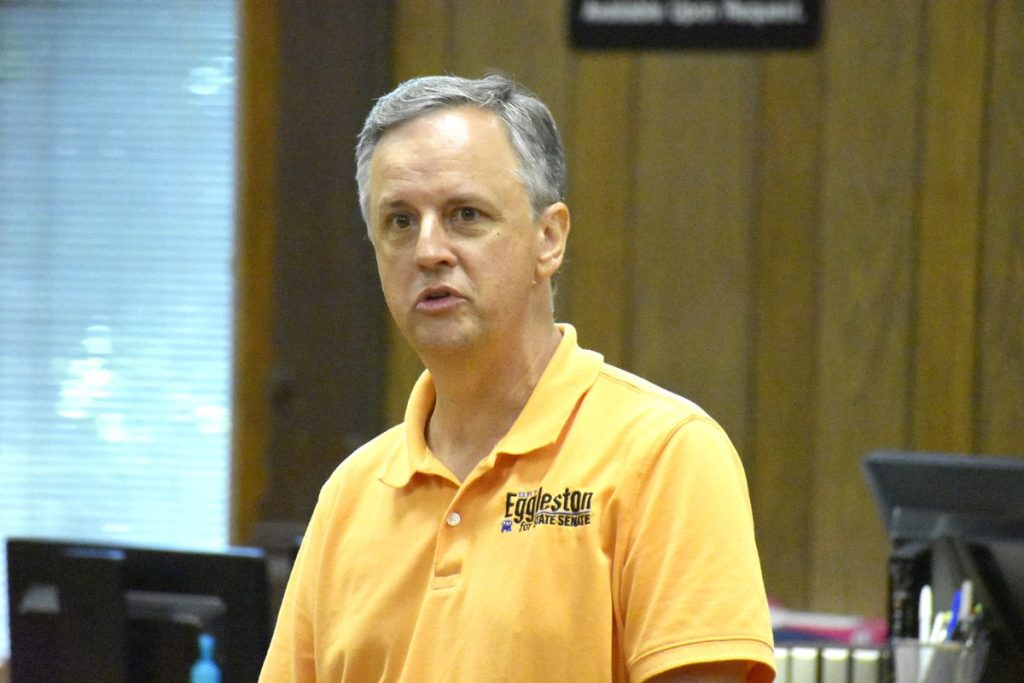
REP. J. EGGLESTON, R-Maysville
Priorities: Roads, High-speed internet, Tax policy
During a phone interview with The Forum earlier this month about his candidacy for state Senate, Rep. J. Eggleston, R-Maysville, said he wanted to run for Senate after reaching his eight-year term limit in the state House of Representatives because he still felt he had more to contribute.
“I just think being a senator’s about serving others — especially those that don’t have any other voice in government — and not be catering to oneself or corporate moguls or big lobbying firms or any of the other kind of corruptive influences you’ll find around the Capitol,” Eggleston said.
Top priorities
Eggleston listed three priorities he’d like to focus on if elected to the state Senate: better roads, increasing access to high-speed internet and improving tax policies.
On roads, Eggleston singled out more funding for lettered routes in rural areas. His work would build on an existing significant investment from the Missouri Department of Transportation this year in such low-volume routes: This year’s state budget includes $100 million for low-volume routes, about $53 million of which is earmarked for northwest Missouri. Terry Ecker, a member of the Missouri Highways and Transportation Commission, credited the senator Eggleston is running to replace, Sen. Dan Hegeman, R-Cosby, with being instrumental in bringing that funding to northwest Missouri.
“MoDOT has not really kept up on the low-volume routes — the lettered routes — the way they should,” Eggleston said. “Part of that is due to funding, but part of that is due to prioritization of the funding that they have gotten.”
On broadband expansion, Eggleston said he’s advocating “for wall-to-wall, all-you-can-eat internet in every home in the state.
“High-speed internet to our rural communities is gonna be key for keeping them alive and vibrant in the years to come,” he said.
On tax policy, Eggleston said he will make sure “that our income tax and sales tax and property tax codes are as low and fair as possible so people can keep more of their hard-earned money.”
Education
In the interview with The Forum, Eggleston said he viewed the state’s minimum teacher salary grant program as “a one-time thing.” Instead, he advocated for redirecting funds from the Department of Elementary and Secondary Education and blamed spending on administrative staff by larger school districts for draining education money from the larger system.
Eggleston was not concerned about the program continuing, saying that first, its impact was likely limited.
“I think most of the schools that will take advantage of (the $38,000 minimum salary grant program) are ones that are just a little below the ($38,000 threshold) and were happy to take the money this year and could probably absorb it in the years to come,” he said. “I think that’s more of a one-time solution and even just a talking point for those that wanted that rather than a long-term solution.”
However, that has not been the case for most Nodaway County school districts, most of which raised their minimum salaries by a few thousand dollars. Officials from those districts have expressed deep concerns about what might happen if they are forced to lower teacher salaries next year in the event state funding dries up.
But Eggleston said that ultimately, he doesn’t think the program will prove necessary anyway because of other ways the state can increase funding to local school districts.
How much money is spent on education?
The state has allocated about $7.5 billion for K-12 education in FY 2022. Of that amount, about $3.6 billion comes from the state’s general revenue fund and another $1.6 billion comes from earmarked funds with dedicated funding sources like lottery revenues. The remaining approximately $2.3 billion comes from federal funding.
All told, according to data from the National Education Association, local sources provide 61 percent of school funding in Missouri, the second-highest percentage in the country. The state’s share is the lowest in the nation.
The average Missouri teacher made $51,557 in 2021, less than in all but four other states.
“Well mostly it’s being more efficient with the money we have,” he told The Forum. “I mean, oftentimes people talk about, ‘there’s not enough money; need to raise taxes.’ Actually, people’d be surprised — even before COVID and all the CARES Act money came down — Missourians, through all the different ways that (they) were taxed, were paying around $11 billion a year for public education. But there was nowhere near 11 billion actually making it to the classroom.
“…There’s so many mouths to feed in the bureaucracy of government between the taxpayer and the teacher, and if we could clean up some of that, then there’d be more resources — you know, better and better salaries for teachers — and more resources in the classroom without having to further burden the taxpayer.”
Eggleston was quick to say that he did not believe any of those mouths belonged to people at school districts in northwest Missouri. Instead, he seemed to indicate he favored decreasing funding to the Department of Elementary and Secondary Education and adjusting the state’s Foundation Formula to redirect funds away from larger school districts that he said spend too much money on “huge staffs” that include “assistant superintendents and secretaries to the superintendents.”
“DESE … has a ton of employees just to oversee the whole system,” he said. “And then once you get to the local area — and this is more so worse when you get to bigger cities and bigger schools — but a lot of them have a ton of administrative staff. And, you know, they don’t just have a single superintendent, but they have a whole staff of people under the superintendent … and things like that, that obviously require to be paid and get benefits and all of that.
“And so if there was a way to streamline some of that particular bureaucracy in there — those middlemen, so to speak — then more money could flow to the teachers and to the classrooms.”
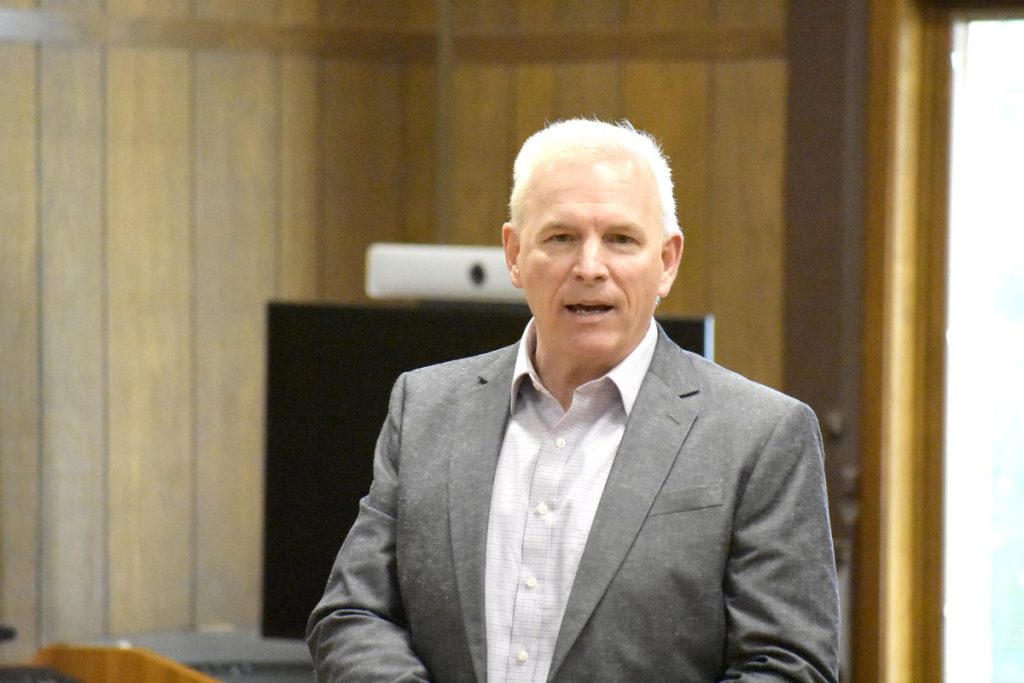
DELUS JOHNSON, R-Country Club
Priorities: Second Amendment rights, Keeping abortion illegal
Living up to his own expectations of what it means to be conservative is at the top of former state representative Delus Johnson’s reasons he thinks he’s the right choice for state Senate.
“I’m running because we need a proven leader in Jeff City with a strong, conservative voting record,” he told The Forum in a phone interview.
In the state House from 2011 until he left in 2019 due to term limits, Johnson said that he had asked the same simple question before considering voting for any bill.
“My litmus test was very easy: Whenever I read a bill in the Missouri House of Representatives, I looked for the words ‘require’ or ‘increase,’ and I voted against those,” he said. “Because a true conservative will always vote to either conserve or reduce and never increase.”
Top priorities
Johnson didn’t hesitate to list his top two priorities: protecting every law-abiding citizen’s right to possess a firearm and keeping Missouri’s abortion law the same as it currently is. He described both debates as “huge battles in the legislature coming up in 2023.”
On guns, Johnson said he does not support any measures that would prevent anyone but a criminal from owning a firearm.
“And the reason I say this, there are some Republican lawmakers out there that are agreeing that if a person is accused of mental instability, then law enforcement would be able to take their guns away without their due process of law,” he said. “…So that’s one thing I will always support, is ensuring that any law-abiding citizen’s rights to own firearms are never taken away.”
On abortion, Johnson said he supports Missouri law the way it is now, which makes abortion illegal in all cases except for when the mother’s life is in danger.
“All eight years (in the state House), I voted to not only protect life in the mother’s womb, but I also voted against any type of embryonic stem cell research that would destroy life, and I even went so far as to ensure that there was never any type of state funding of embryonic research that would destroy life,” he said.
Education
During his phone interview with The Forum earlier this month, Johnson said he wasn’t familiar with the state’s grant program that assists school districts in raising minimum teacher pay to $38,000. But he said he generally supports increasing teacher pay as long as the state budget allows for it.
Later, at the Greater Maryville Chamber of Commerce’s candidate forum held a few days after the phone interview, Johnson clarified that he wants to significantly cut the state’s budget. He said that the best way to increase teacher salaries was not through state subsidies, but through cutting state revenues from taxes on businesses — including doing away with the corporate income tax altogether — which he said would lead to even higher state revenues spurred on by job creation, new employee spending and more income tax collections.
“So every time we allow a business to go out and create a job, there’s more money coming in for the state,” he said during the July 14 forum. “I think that’s one of the things that we need to do, is to allow business to thrive, cut down regulations a little bit.”
Elsewhere in education, Johnson said he is “totally for all school choice,” and indicated he would support measures like school voucher programs that would allow private schools to receive public tax dollars for students who enroll.
What to bring to the polls
Although Missouri passed a new voter ID law that will require a photo ID to vote, that provision doesn’t take effect until November.
In the August election, the acceptable forms of identification remain the same.
According to the Missouri Secretary of State’s office, voters will need to show one of the following to cast a ballot:
- Identification issued by the state of Missouri, an agency of the state, or a local election authority of the state;
- Identification issued by the United States government or agency thereof;
- Identification issued by an institution of higher education, including a university, college, vocational and technical school, located within the state of Missouri; or
- A copy of a current utility bill, bank statement, paycheck, government check or other government document that contains the name and address of the voter
Without one of those forms of identification, a registered voter may still cast a provisional ballot. The ballot will count if: 1) the voter returns to their polling place on Election Day with a photo ID or 2) the signature on the provisional ballot envelope is determined by the local election authority to match the signature on the voter’s voter registration card.
Voters who cast provisional ballots will receive a stub from the provisional ballot envelope with instructions on how to verify the provisional ballot has been counted.
Teacher pay program background information
In this year’s state budget, lawmakers funded a grant program that allows school districts that opt in to raise their minimum teacher salary to $38,000 with the state paying 70 percent of the difference.
The grant program was a priority of Gov. Mike Parson and was only possible because of a massive infusion of federal dollars this year from funding packages like the American Rescue Plan Act. Next year, that federal money will not be available — throwing rural teachers’ salaries especially into uncertainty during what state officials have acknowledged is a crisis-level teacher shortage.
All seven public school districts in the county have opted into the minimum salary program for the 2022-23 school year. At Maryville R-II, the raise was small enough — $500 — that the district was able to bump the entire salary schedule up proportionally, and could likely absorb the cost even with the loss of state support.
But at the six school districts in the outlying county, raising the minimum pay meant an increase of a few thousand dollars. Officials at those districts have said it was a necessity in an extremely difficult hiring environment that has forced them to come up with creative ways to attract and retain teachers.
However, most of those school districts cannot afford to raise the salaries of more veteran teachers further up the pay scale, resulting in extreme wage compression — a flat salary for nearly a decade of teaching.
Consequently, school administrators and board members at multiple districts have expressed deep concerns about what might happen if they are forced to lower teacher salaries next year in the event state funding dries up.
Geoffrey Woehlk
Alan Bennett R-Barnard
Geoffrey Woehlk
Holly Cronk R-Skidmore
Geoffrey Woehlk
Jeff Farnan R-Stanberry
Geoffrey Woehlk
Michelle Horner R-King City
Geoffrey Woehlk
Jasper Logan R-Burlington Junction
Geoffrey Woehlk
Jessica Piper D-Hopkins
7-28-22 Senate district map.jpg
Geoffrey Woehlk
Michael Baumli D-Maryville
Geoffrey Woehlk
Rep. Rusty Black R-Chillicothe
Geoffrey Woehlk
Rep. J. Eggleston R-Maysville
Geoffrey Woehlk
Delus Johnson R-Country Club
Geoffrey Woehlk
State Rep and Senate candidates