Forum Flashbacks: July 21-27
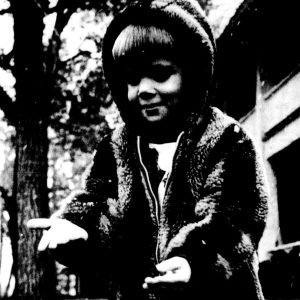
FORUM FILE PHOTO
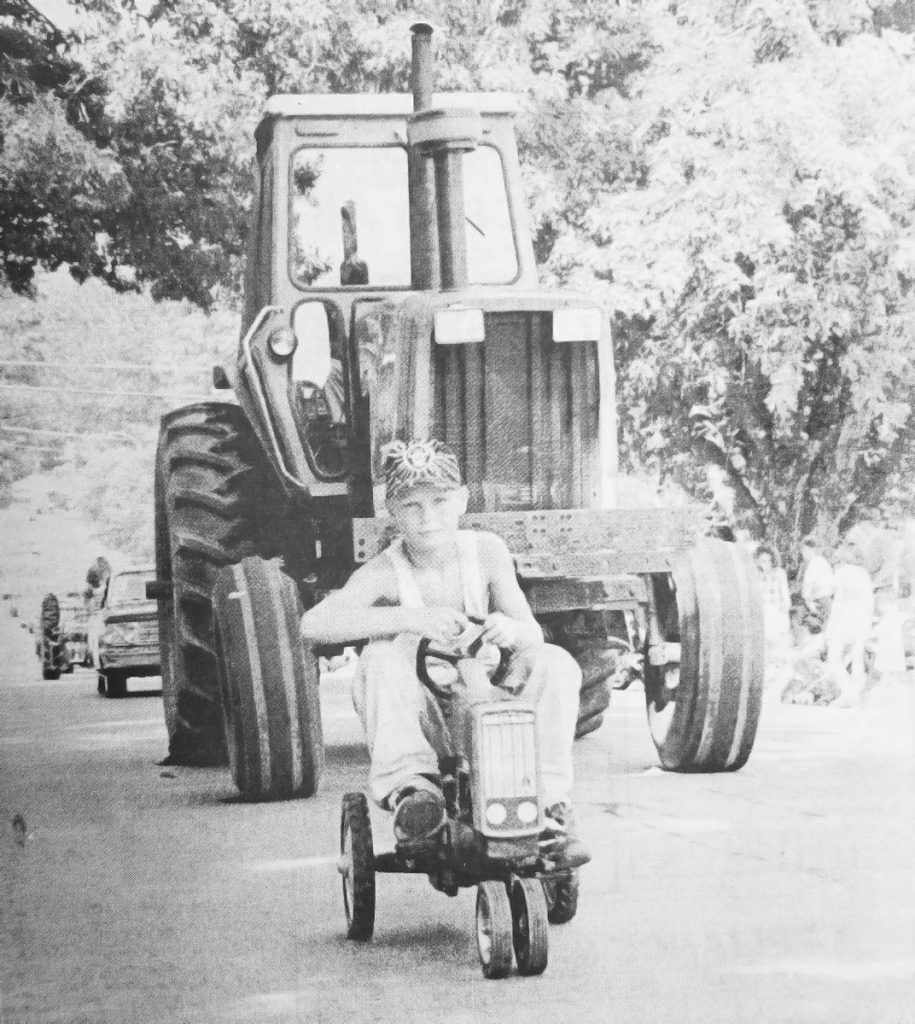
25 YEARS AGO: Nodaway County Fair – Look out behind you. Young Camron Hull is no match for the tractor that is bearing down behind him in the Nodaway Fair Parade. The large tractor was driven by Bob Hull.
5 years ago
Crappie anglers at Mozingo Lake have noticed a distinct fall-off over the past couple of years in the number of fish they’re reeling in, and the Missouri Department of Conservation is working to do something about it.
Earlier this summer, MDC, which manages the Mozingo fishery – known as perhaps the hottest fishing spot in northwest Missouri – cut the lake’s creel limit for crappie from the state standard of 30 fish to 15.
Other crappie regulations remain unchanged. The overall possession limit is still 60, and no size limit was imposed.
MDC Fisheries Management Biologist Tory Mason, who helps manage the Mozingo fish population, said the decline in crappie action is directly related to heavy pressure over the past two or three years.
“It just seemed that anglers kind of got on top of them and took out about two years of fish,” Mason said.
15 years ago
Many grocery stores across the country promise good prices, large varieties and quality customer service.
But Maryville’s Hy-Vee has something that no other grocery store in the country can lay a claim to.
The Maryville Hy-Vee has Fred Mares. …
Hy-Vee’s lead greeter, an unassuming man of 48 who is easily identified by his ever-present smile, is different than store greeters for other businesses.
Oh, you could probably find someone else who has won employee of the month at their place of employment or had their face on a poster for a national ad campaign, like Mares; but you’d be hard-pressed to find another grocery store greeter who has won a Pulitzer Prize.
On July 17, 1981, the country was in shock watching breaking news unfold about a disaster in Kansas City, Mo.
Due to a structural design flaw, two suspended walkways collapsed on top of each other at the Hyatt Regency hotel, plummeting crowds of gathered people to the floor below.
All told, 114 people died and more than 200 others were injured. …
Mares was a bureau reporter for the Kansas City Times; …
“It just so happened that I was in Kansas City when this all happened,” Mares said. “I was a regional corresponder and happened to be in the city, and they called everyone in.” …
Mares’ job that first night was to interview taxi drivers who were ferrying blood to the scene to help emergency workers provide on-site medical attention to the more than 200 men and women who were injured. …
As the days and weeks progressed, the Kansas City Star (the evening paper) and the Kansas City Times (the morning paper) would piece together the events that happened that dark July evening. …
“We hired our own architects and pieced together the entire story of how those skywalks were built and came up with the information long before the review board revealed their final report,” Mares said.
The papers’ investigative work would earn their staffs, and Mares, the 1982 Pulitzer Prize for Local Spot News Reporting.
25 years ago
The Wabash Trace Nature Trail has hit a roadblock that the biggest bulldozer and earth mover will not be able to budge.
“They’re not going through here at all. I will fight ’em to the end.” These are the words of Bud Boyles, a landowner who says six miles of the land the trail is scheduled to be built on belongs to him and 59 other land owners, and they are not looking to have a nature trail constructed on their land.
The story behind the tug of war for a six mile by 100-foot stretch of land in Northwest Missouri dates back to 1879. It was in that year that pieces of land were taken from landowners and given to a railroad company to build a line on. …
From that point, the tale jumps ahead 100 years to 1983, the last year a train crossed the tracks in the area. Two years later, March 11, 1985, Boyles purchased 40 acres in Nodaway County. Running across the land was a stretch of railroad easement 100 feet wide.
In 1988, every trace of a railroad ever being on the land, from the railroad ties to the metal track to every spike holding the track down, disappeared. The land was abandoned and the railroad was gone.
It was at this time that Boyles said the land legally became his. …
Norfolk Western Railroad, owned by the Norfolk Southern Corporation and based in St. Louis, saw things differently. Over the years, they had taken control of the railway, and in 1996, decided to sell it to a group of people looking to connect a section of a nature trail in Iowa with a nature trail in Maryville. Enter the Friends of the Wabash Trail.
“When we bought the land, we thought we had a secure deal,” Maurice Peve, who sits on the Board of Directors for the Friends, said.
The Norfolk Southern Corporation was not as confident.
When the Friends of the Wabash Trail paid them $50,000 for the land, Norfolk Southern gave them a quitclaim deed on the land, something that generally raises questions in any realty agent’s mind. …
Norfolk Southern had questions about their ownership of the land because, as the Missouri Constitution states, once a rail line is abandoned, the ownership of the tract of land reverts back to the adjacent land owner, and this rail line had been abandoned in 1988, or had it.
“Norfolk claimed the rail line had not been abandoned,” Boyles said. “But I’ve got documents that say otherwise.” And he does.
In June of 1996, the situation came to a head as Boyles, with 16 other plaintiffs, took the Friends of the Wabash Trail to court to prove their point and take possession of land they believe to be theirs.
That brings us today, with Boyles and his cohorts not backing down, the Friends of the Wabash Trail trying to proceed; and the judge still looking over documents filed and trying to decide on the fate of the land.
100 years ago
SUPPLY OF COAL
IS RUNNING LOW
————
Only About 200 Tons In City Now Counting College Supply and Little Prospect of Relief
————
SOME IN TRANSIT
AT PRESENT
————
The coal supply of Maryville is getting low. In fact the supply is about out. Along with the coal supply running out comes the word there is little possibility of getting more coal for some time. About two hundred tons will cover the entire coal supply of Maryville including the supply at the State Teachers College.
The Gray Fuel Company is out of coal and has no prospect for more at present.
William Everhart is a little better supplied. The Everhart Fuel Company has about 100 tons in the bins, with between three and four hundred cords of wood scatered(sic) throughout the county. Mr. Everhart has had his supply of coal since the first of April for use in the ice plant. This afternoon he said that he had been experimenting with cord wood and coal as fuel for his ice plant. By using cord wood the plant can be kept running on half to one ton of coal each day.
The remainder of the coal which he does not use can be used for fuel in the homes of Maryville. It is now his plan to send out his teams next week so that he will have a good supply of cord wood ready in case of any emergency.
Shoemaker & Bovard report that they have but fifty tons of coal in the bins and have forty tons in transit. The supply now on hand is of poor grade and is being used by the farmers for threshing purposes.
Glover & Alexander have twenty tons of coal ready for use but have none in transit.
The Maryville High School coal bin is empty with the exception of but a few pounds. The school had a large supply in the bins last year, but on account of the coal been(sic) dampened during a fire in the coal bin the coal was moved outside of the building. …
The State Teachers College heating plant has about thirty tons of the black diamonds ready for use. The entire amount will be used for testing the heating plant this fall before the fall term of school begins, according to J. R. Brink.
The Maryville Electric Light and Power Company will begin burning oil about Tuesday according to C. C. Hellmers. The power company has nearly a month’s supply of coal but it is being saved in case of necessity.
The 100-year flashback is courtesy of the Missouri Digital Newspaper Project from the State Historical Society of Missouri, viewable at shsmo.org/collections/newspapers/mdnp. The original article ran in the July 22, 1922, edition of The Maryville Tribune, a predecessor of The Maryville Forum.