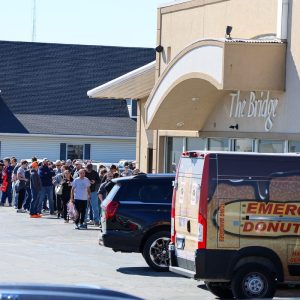
Study shows state food insecurity stats
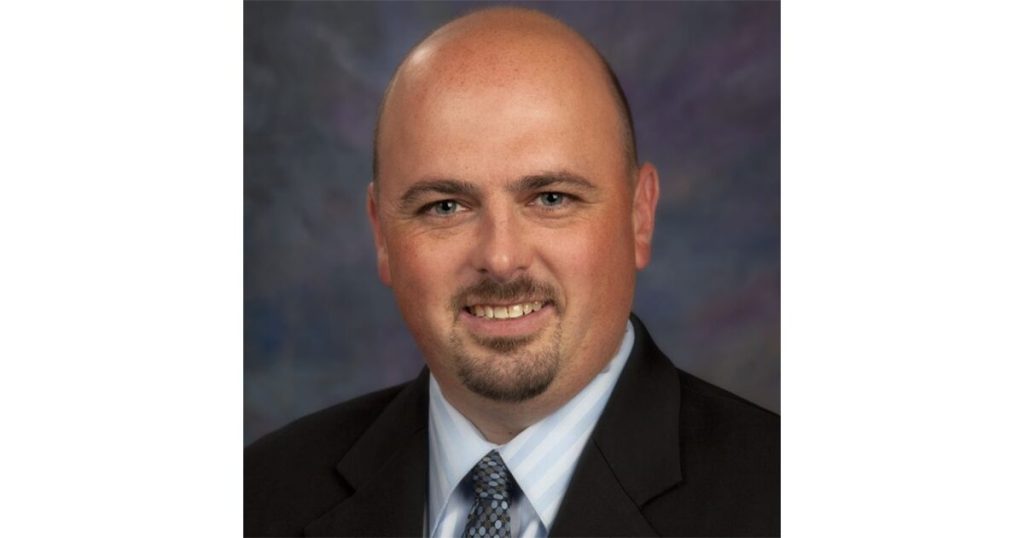
Chad Higdon CEO Second Harvest Community Food Bank
MARYVILLE, Mo. — A recent study conducted by the University of Missouri’s Interdisciplinary Center for Food Security shows statistics for Second Harvest Community Food Bank clients who are struggling with food insecurity.
According to the study Food Assistance & Hunger in the Heartland 2021: State Report for Missouri, 41 percent of Second Harvest program users had to choose between paying for food or utilities last year, 35 percent had to decide between paying for food or medicine/medical care and 26 percent had to choose between purchasing food or paying for housing.
“Overall, I think the story is clear: there are a lot of families that are struggling everywhere,” Chad Higdon, Second Harvest CEO, told The Forum on Tuesday.
Second Harvest serves 15 counties in northwest Missouri, including Nodaway County as well as four counties in eastern Kansas.
Of those Second Harvest serves, 39 percent of households have at least one working adult, 21 percent have a household member who is working full-time, 81 percent have an adult member with a high school degree or higher level of education, 37 percent have at least one adult over the age of 65 and 32 percent have at least one child under 18. Additionally, 79 percent of surveyed clients identify as white, 11 percent identify as African American and 4 percent identify as Hispanic, according to a news release.
Health issues are common among the food bank’s clients, as 60 percent of households have a member with high blood pressure, 62 percent have a member with high cholesterol and 40 percent have a member with diabetes or pre-diabetes. Additionally, 34 percent of households have a member with no health insurance of any kind.
According to a news release, of the families who use food pantries affiliated with Second Harvest, 68 percent experienced food insecurity, 52 percent purchased the least expensive food, 34 percent consumed food past its expiration date and 39 percent purchased food in dented or damaged packages.
“Protein is one of the hardest things to come by,” Higdon said, adding that its high price is one of the reasons it is a scarcity.
Second Harvest sources its food from a wide variety of suppliers, including food distributors and retail stores. Higdon said the food bank does this so it can help as many people as it can.
“Our goal and commitment to the region will always be to reach as many families struggling with food insecurity as we can, and provide them the best support,” he said.
Although assistance exists, those in need do not always utilize resources. Across the state of Missouri, 77 percent of households surveyed have incomes that make them eligible for the Supplemental Nutrition Assistance Program (SNAP). However, only 41 percent participated in SNAP in the previous year, a news release stated.
According to the United States Department of Agriculture Economic Research Service, 11.5 percent of all Missouri households were food insecure in 2020 — which is the most recent year for which data is available — and about 700,000 people in Missouri sacrificed the quality, variety or desirability of their diet or went hungry at times during the year.
A press release stated 66 percent of pantries reported serving more clients in 2021 than in 2020.
Higdon said increases such as this are due to the fact that “it’s harder to make ends meet” as inflation occurs. Families who were already struggling need more assistance as this takes place.
Individuals who would like to help those in need, Higdon said, can donate food and funds, volunteer at a food pantry and make themselves aware of those who are struggling.
“There are a lot of families that are struggling right now and lots of ways to help,” he said.
The Food Assistance & Hunger in the Heartland 2021: State Report for Missouri is part of a larger study that included Missouri, Kansas, and parts of western Illinois. According to a news release, the study involved an online and telephone survey of 344 food pantry directors and in-person interviews with 3,377 food pantry clients conducted on-site at food pantries. Data was collected during the spring and summer of 2021.
For more information on the study, visit foodsecurity.missouri.edu.
Second Harvest logo