County vaccination rate slows, still behind state

2020 In the News
MARYVILLE, Mo. — The Nodaway County Health Department is preparing to offer additional vaccine doses to those who qualify, as first-round vaccination rates continue to lag in the county compared to the state and nation.
As of Aug. 25, a total of 8,489 Nodaway County residents have been fully vaccinated, according to the Missouri Department of Health and Senior Services’ online vaccination dashboard. That’s about 40 percent of county residents, using newly updated Census numbers released earlier this month. About 44.3 percent of county residents — 9,418 — have initiated a vaccine regimen. Missouri overall is at about 44.2 percent fully vaccinated and about 51 percent having initiated a vaccine. Across the country, the Centers for Disease Control estimates 51.6 percent of Americans have been fully vaccinated, and 60.9 percent have initiated a vaccine, as of Aug. 24.
As of Aug. 23, the most recent data released by the health department, 66 cases of COVID-19 were active, continuing the high plateau of active cases that has hovered between 50-80 since mid-July. Four were hospitalized.
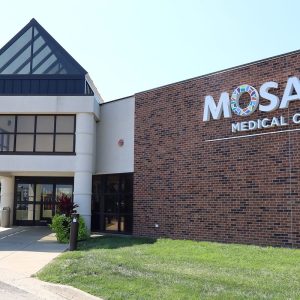
So far, according to data released by Mosaic Medical Center – Maryville, unvaccinated patients hospitalized for COVID-19 have been significantly younger and more likely to be in intensive care than those who have been vaccinated. Results of a new CDC study released this week showed that unvaccinated people were 29 times more likely to be hospitalized with COVID-19 than those who are fully vaccinated, and were nearly five times more likely to be infected in the first place.
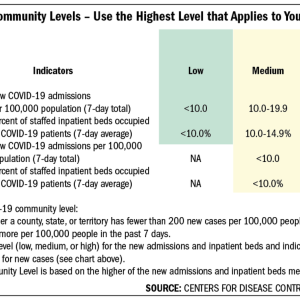
According to data compiled by the Missouri Department of Health and Senior Services, the transmission rate in Nodaway County remains high: the 7-day positivity rate as of Aug. 22 was 12.6 percent, and the 7-day rate of new cases per 100,000 people was at 190.1. The CDC defines an area with high transmission to have a positivity rate of more than 10 percent and a new case rate per 100,000 of more than 100. All counties in Missouri are classified as having a high rate of transmission as of Aug. 24.
In areas of moderate or high transmission, the CDC recommends that all people regardless of vaccination status wear face coverings indoors to help mitigate the spread of the virus.
Third doses
Last week, the health department released guidance in line with new federal recommendations for some immunocompromised people to receive a third dose of mRNA vaccines.
A third dose is not the same as a booster shot. According to the CDC, a third dose is recommended for some people who qualify because they did not build up enough — or any — protection when they first got a vaccination. New data has shown this has sometimes been the case for some people with compromised immune systems, and that an additional dose helps to build more protection. The additional third dose is recommended to be given at least 28 days after the second dose.
A booster shot, on the other hand, refers to another dose given to someone who built enough protection after vaccination, but then the protection decreased over time. The Department of Health and Human Services is developing a plan to offer booster shots to people this fall, but no recommendation has yet been finalized. In a press release last week, federal health officials indicated such booster doses will only be recommended at least 8 months after receiving a second dose.
Currently, the only people recommended to receive a third dose are those who received either the Pfizer-BioNTech or Moderna vaccines. Research on whether additional shots will be recommended for Johnson and Johnson vaccines is still underway, and more information is expected in the coming weeks.
Health officials recommend a third dose for those who completed a vaccination regimen of the Pfizer or Moderna vaccine and have one of the following conditions, treatments or diagnoses:
- Immune compromised due to active treatment for solid tumor and hematologic malignancies
- Immune compromised due to receipt of CAR-T cell or hematopoietic stem cell transplant (within two years of transplantation or taking immunosuppression therapy)
- Moderate to severe primary immunodeficiency (e.g., DiGeorge, Wiskott-Aldrich Syndromes)
- Immune compromised due to advanced or untreated HIV infection
- Immune compromised due to active treatment with high-dose corticosteroids (i.e., 20mg or more of prednisone or equivalent per day), alkylating agents, antimetabolites, transplant-related immunosuppressive drugs, cancer chemotherapeutic agents classified as severely immunosuppressive, tumornecrosis (TNF) blocker or other biologic agents that are immunosuppressive or immunomodulatory
The third dose must be at least 28 days from the second dose, and the third dose will be the same vaccine that was given for the first two doses.
Appointments will be available starting in September at the Nodaway County Health Department. Individuals seeking a third dose will be required to sign an attestation statement.
Appointments for vaccination can be made at the Nodaway County Health Department at 660-562-2755.
Vaccination data note
Starting this week, The Forum has begun using new, more accurate 2020 U.S. Census data in vaccination population calculations. Because the new figures showed a significant decrease in the population of Nodaway County, the vaccination percentages reported by The Forum may be higher than other sources that continue to use the 2019 U.S. Census estimates, including the state data posted to the DHSS online vaccination dashboard.