Tabitha’s place likely a church

Phil Cobb
Karen Fulton First Presbyterian Church Elder
Almost the first thing we learn about Tabitha in Acts 9 is that she has two names. “Tabitha, which in Greek is Dorcas.” Maybe this is a hint of Tabitha’s importance, like Saul becoming Paul but maybe it is a hint of her ordinariness. She, like many of this time has a name in Aramaic (Tabitha) and a name in Greek (Dorcas). The world she lives in is pulled in two directions at once, and she must function in both of them.
In any case, Tabitha is worth a first and a second look. This week, I want to look at her story and next week to look at her impact.
Tabitha’s story is placed toward the end of Peter’s ministry and most significantly right in the middle of a major change in that ministry.
In Acts 9: 32-35, Peter is in Lydda where he seems to be wandering around without much purpose when he finds Aeneas, a paralytic. Without much fanfare, he tells Aeneas “to get up and make your bed!” (How often I have used those same words.)
Peter is then called to Joppa where he will interact with Tabitha’s congregation. In Acts 10, Peter will be called to Caesarea by Cornelius and his vision there opens the church to the gentiles, to everyone, to us. It is no longer just a movement of the Jews.
In between, we have the story of Peter, Tabitha, and the church at Joppa. The very first thing we learn about Tabitha is that she is a disciple — “Now in Joppa there was a disciple whose name was Tabitha.” What a strong word to describe this woman. If we have thought of the disciples as chiefly male, here unequivocally is a female disciple.
Unlike Aeneas, she is past suffering; she is dead. People from Joppa journey to Lydda to tell Peter to come “without delay.” She is important enough for Peter to do just that. He leaves immediately.
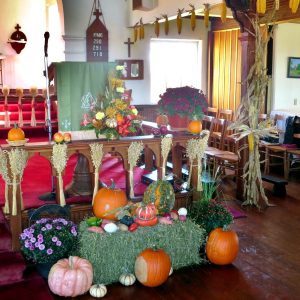
When he arrives, they take him to an upper room of a house where Tabitha is laid out. Is this room in her house? Most probably. And is her house, like Lydia’s a home church? Almost certainly. There is no reason that a body would be moved into another location. And Tabitha’s standing in the community indicates that she, like Lydia, is leading a congregation.
Peter clears the room and says “Tabitha, get up.” There is no command to “make your bed” attached. Is this a mark of her standing? Peter then shows the resurrected Tabitha to those waiting in the outside room. The exact words are “he showed her to be alive.”
This miracle becomes known throughout Joppa and converts many people.
There are only five people (other than Jesus) brought back to life in the New Testament: the widow of Nan’s son, Jairus’ daughter, and Lazarus (by Jesus), Tabitha (by Peter) and Eutychus (by Paul). To be raised from the dead is the most miraculous of miracle and confirms the power of God over death.
Tabitha has been beyond the bounds of human life and comes back to join the living. Next week, Tabitha’s impact, living and resurrected.