
My Word: A cherished tradition
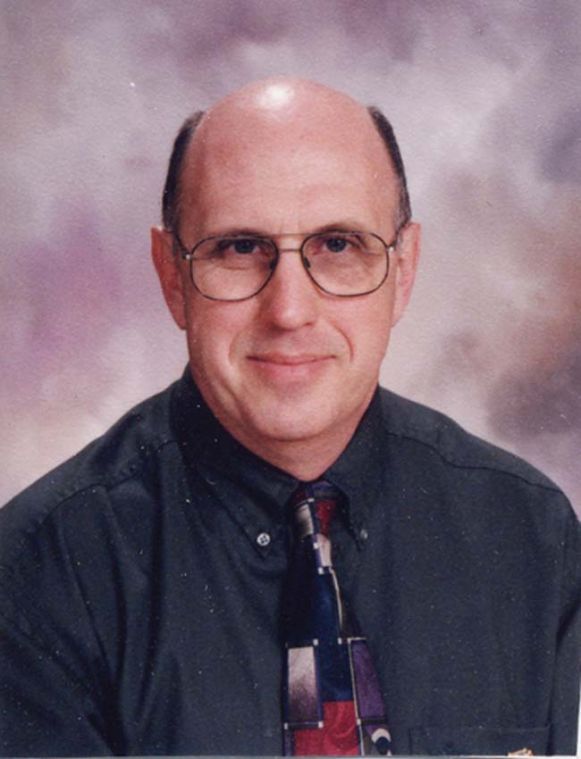
Larry Anderson
We tend to view significant historical figures as icons, partly because they are larger than life and partly because time tends to heal reputations.
What sometimes gets lost is those dedicated to political service are human and, therefore, flawed.
Also, the best of intentions can be crushed by criticism and misunderstanding, and even the wisest can be labeled as foolish.
In 1795 special envoy John Jay returned to America from Great Britain with a new treaty in hand that came to be known appropriately as the Jay Treaty.
I think John Jay, a capable man and a patriot, believed he had negotiated a good deal for his new country, but he was soon unpopular with many citizens for what was construed as an agreement that was better for the kingdom than for the United States.
Protected by a newly minted First Amendment, Americans let their feelings be known, and Jay took the brunt of all kinds of attacks including this colorful one scrawled on a wall near Jay’s home in NYC: “Damn John Jay. Damn everyone that won’t damn John Jay. Damn everyone that won’t put up lights in the windows and sit up all night damning John Jay.”
Not bad for 1795. Scratchy sarcasm with a dash of bitterness.
I suspect Jay got the point which is in politics one is damned if one does and damned if one does not. Those who don’t serve condemn those who do to hell with regularity and relish. It’s tradition.
We are left with the sense that someone else could always do better than the one who stuck his neck out for slicing. If only we had elected someone different, all would be well is the underlying insinuation, but that goes safely unproven.
The 1795 scribbler was flexing a new verbal bicep. In that time such bold words could send one to jail in many parts of the world.
Today one dare not state such a thing in China since communism is dictatorial –totalitarian – intolerant.
Criticism isn’t an eye-opener but a threat to be dealt with. It’s different here and far better thanks to men like John Jay.
America had newspapers before the Revolutionary War, but the industry flourished afterwards because it was constitutionally protected.
Many newspapers quickly became partisan; that is, they either supported the Federalists (later Democrats) or the Republicans.
As such they became political arms and were often accusatory, gossipy and fraught with rumors rather that facts or news.
This is a cherished tradition still within big media. Observe MSNBC some time.
From all this, springs a pair of axioms: No good deed goes unpunished, and you can’t make everyone (or anyone) happy, notions John Jay had no trouble conceptualizing.
At times it’s difficult to see who is satisfied with political performance, but politics isn’t based on contentment and never was. It thrives on perpetual conflict, the resolution of which isn’t required.
Newsworthiness determines weight.
In 1795 the American brand of politics and its accoutrements were new.
John Jay wanted to do right by his country, but he was an earnest statesman, not an experienced politician in the modern sense.
He didn’t get everything everyone demanded as is the nature of quid pro quo and was politically condemned for his best effort.
In politics, price can be more evident than reward. Happily, history has been kinder to Jay.
The treaty he negotiated accomplished much, even though it lacked perfection.
In 2020 we render judgment with similar civility as over two centuries ago.
Ask President Trump, that devil who hasn’t done enough fast enough to please all those who could do so much better.
Those who offer unlimited criticism but nary a solution. Those who condemn but don’t get the writing on their own wall or even the context from which they judge.
Larry W. Anderson is a retired educator.



