Mosaic prepared for COVID-19
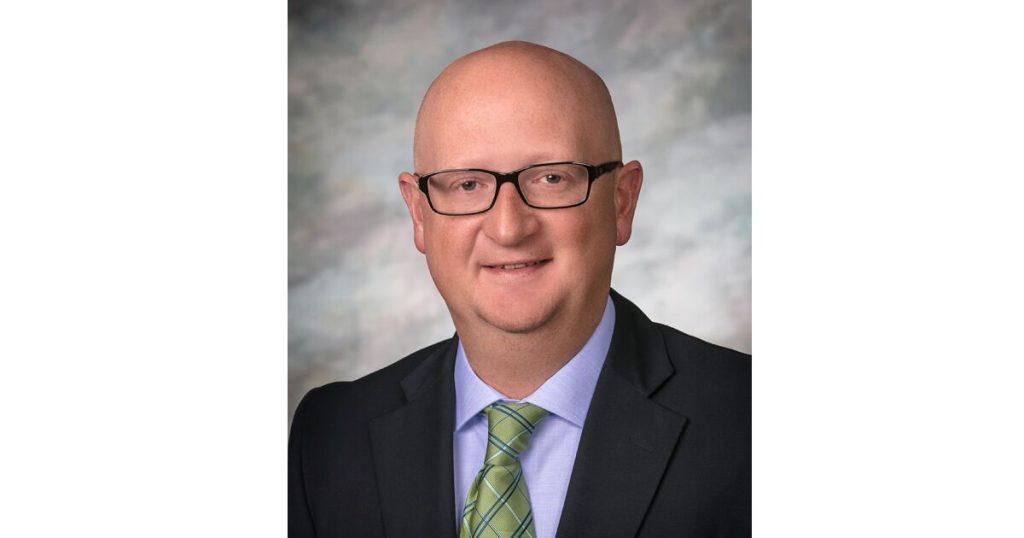
Nate Blackford President of Mosaic Medical Center – Maryville
Testing procedure
According to the Centers for Disease Control and Prevention, if experiencing symptoms — fever, dry cough and/or difficulty breathing — call the doctor’s office or local urgent care center to tell them you’re coming in, so they can prepare and protect staff.
Staff over the phone will try to determine if they believe it is necessary for a person to come in.
If tested, the health care provider will take a nasal or mouth swab, package it in a kit and send it to a laboratory in Jefferson City.
The lab can get results in five or six hours, however, results can take up to a couple days to come back, considering the time it takes to ship, said Nate Blackford, President of Mosaic Medical Center – Maryville.
He explained that calling ahead is extremely important because it allows the screening questions to be handled first and should symptoms be present, a controlled environment to be created for testing.
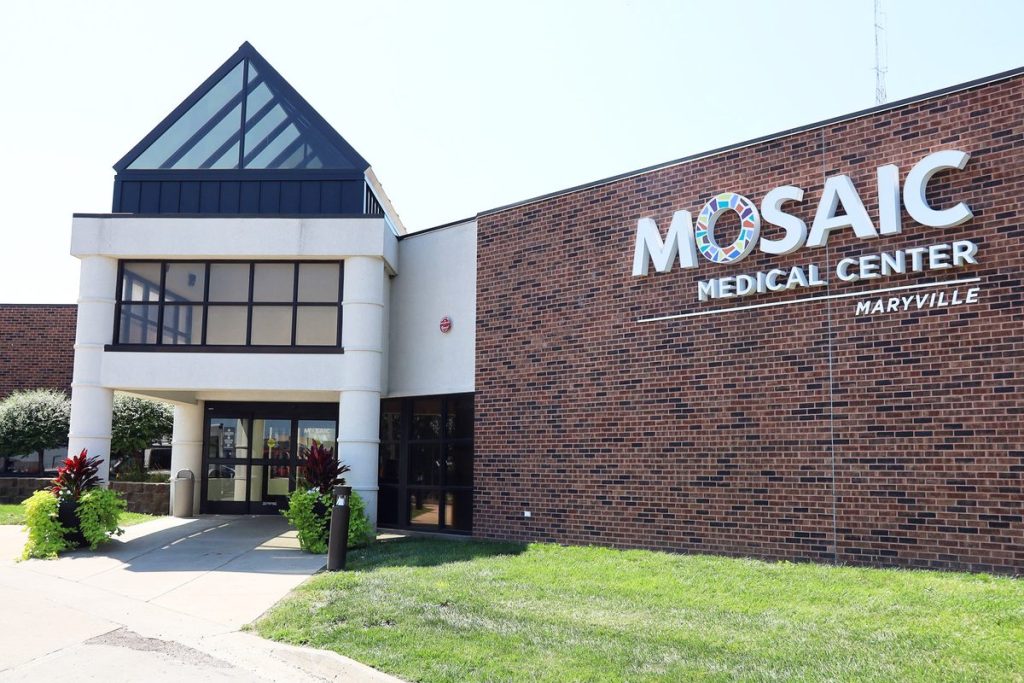
MARYVILLE, Mo. — Nate Blackford, president of Mosaic Medical Center – Maryville, said Monday that the hospital system is well prepared for the Coronavirus, COVID-19 pandemic.
He stressed the need for social distancing and personal responsibility to help get the community through this crisis.
“This is a public health, population health challenge that will require more than just the four walls of the hospital to address,” he said. “We’re learning more every day. There are still things we don’t know yet, but we are preparing for every eventual outcome that we perceive, that we anticipate. … I feel like we are well prepared for what we anticipate is to come.”
With community members heading out to stores to stock up, schools closing, events being canceled and people working from home, Blackford said he believes the community is taking the situation seriously.
“I really feel in my heart of hearts that most of what you’re seeing is out of an abundance of caution, with the expressed intent of flattening the curve,” he said. “If we can flatten the curve, unlike in what we’ve seen maybe in other parts of the country or certainly other parts of the world, then we will have the resources available to address Coronavirus as it comes. … I do feel like we are integrated as a community and are taking a community approach to this.”
Blackford met with Gov. Mike Parson on Monday in St. Joseph and was part of the conversation about public institutions and commercial laboratories that are increasing their ability to perform tests.
“We expect, over the course of the next two to three weeks, there will be enough capacity to be able to begin to change the requirements for testing,” he said. “We’re hopeful that by the first week of April it will be such that you only have to meet … two basic criteria to be able to receive the test. (Currently) You have to meet quite a few requirements in order to qualify.”
There have been zero cases confirmed in Maryville, Nodaway County or the Mosaic Life Care system, Blackford said. The Mosaic system has run 17 tests, a handful of which are outstanding, but none that have been processed have been positive. That includes one negative result from a test taken here in Maryville.
Testing
According to the Centers for Disease Control and Prevention, if experiencing symptoms — fever, dry cough and/or difficulty breathing — call the doctor’s office or local urgent care center to tell them you’re coming in, so they can prepare and protect staff,
Staff over the phone will try to determine if they believe it is necessary for a person to come in.
If tested, the health care provider will take a nasal or mouth swab, package it in a kit and send it to a laboratory in Jefferson City.
The lab can get results in five or six hours, however, results can take up to a couple days to come back, considering the time it takes to ship, Blackford said.
“We’ve had a handful, but I have to be honest — and I’ll give our population credit here — we have not had that many. We have not been overrun by any stretch of the imagination,” he said. The Maryville hospital has had fewer than 10 people expressing a concern and wanting a test. He believes people are listening to the CDC guidelines.
“If you do feel like you do need a test and you have the symptoms, we would highly encourage you to call ahead,” Blackford emphasized.
He explained that calling ahead is extremely important because it allows the screening questions to be handled first and should symptoms be present, a controlled environment to be created for testing.
If a person were asked to come in for testing and “critical in nature,” they would be asked to enter through the emergency room and be quarantined there. If someone is asked to come in for testing, but in a stable condition with no symptoms presenting, Blackford said testing could even occur outside the hospital.
“Most likely, we could even do that in your car,” he said. “We would test you outside the four walls outside of the hospital.”
Should the hospital deem it necessary Blackford said it has a tent that may be erected behind the hospital. Though at this point, it will not be installed.
Should the tent be needed, patients who present symptoms with the intent to go to the emergency room, would be screened in the parking lot and depending on their symptoms, they would go around to the tent for respiratory tests.
For all other emergency room issues — heart attacks, strokes, seizures — they would go into the emergency room.
The hospital would also set up a separate radiology capability for chest x-rays and other types of x-rays on patients who are exhibiting Coronavirus symptoms so they would not come in contact with the general population of the hospital.
“With any population-health-type of event or pandemic in this case, we all have personal responsibility for working to flatten the curve,” Blackford said. He went on to explain that the hospital has a finite number of resources available in terms of number of beds, nurses, physicians and ventilators.
He said that the more everyone can do to keep the curve of cases below the line of resource capacity, the better the hospital will be able to provide those resources.
“There’s an accountability and responsibility that we have in the hospital to make those resources available, but there’s also an accountability that we have as individuals in the community to do what we can …” Blackford said. “… to do the social distancing, to acknowledge symptoms, to quarantine when necessary, when prescribed, to ensure that we have the resources available to treat.”
Blackford said that the only reason the hospital will quarantine someone is if they’re exhibiting symptoms and has risk factors.
“We would put them in a room here and quarantine while we completed the testing, but that’s if they’re having the physical symptoms,” he said. “If they’re not having physical symptoms and we do not feel that they’re contagious, then they would just be asked to self-quarantine at home or wherever.”
He explained that currently self-quarantining is all voluntary at this point.
Supply chain
Blackford said the Mosaic system leadership team meets two to three times per day and Monday the group met to discuss supply chain, taking inventory of supplies and beginning to cultivate relationships with suppliers to be able to backfill.
“We feel very confident at this time that we have the supplies immediately available to us, and that we could order, that will absorb what we anticipate coming into the system,” he said. “The reality is that there are a lot of unknowns, but we feel very prepared … to address what we see coming down the pike.”
He again stressed that social responsibility will play a key role in keeping supplies on hand.
“Again, we have the finite number of resources, if we get that spike, that’s bad,” Blackford said. “If we can flatten that curve, then we’re able to address the demand of the virus.”
He said the hospital is measuring its supplies in weeks, not days, but also not months.
“Because of the supply issue we have to put our gloves, our gloves and our masks, behind the counter to hand them out as needed,” said Rita Miller, Mosaic Medical Center – Maryville community relations manager. “We used to have them … all at the front door, but we’ve had to move them. We had some missing, that got walked off … masks specifically.”
Facilities
As a part of a health care system, Blackford explained pooling resources is possible and will be utilized should a local outbreak occur.
“So, when we talk about respirators or ventilators or any of the respiratory aid systems that are available, we are not at the mercy of what we just have available here. We have the added benefit of being able to share as a system,” he said. “We have multiple ventilators available to us if we needed them and we’d be able to access more if we had to.”
“I feel like we have laid the groundwork for the ability to flex, if required to flex, and to be able to weather the foreseeable storm.”
– Nate Blackford
President Mosaic
Medical Center – Maryville
While no patients have been transferred from Mosaic Life Care in St. Joseph to the Maryville hospital, Blackford said along with medical equipment and medical professionals, the Maryville location is set up to accept patients to alleviate any patient capacity issues in St. Joseph.
“Whether this ends up taking on a greater demand in Maryville or Albany or St. Joe, we do have the ability to transfer patients to not only the appropriate level of care, but to where capacity may allow,” Blackford said.
The Maryville hospital has 52 staffed beds, and a number of rooms are being outfitted for isolation, including negative pressure.
“So, the air particles, they’re sucked out of the room instead of remaining in the room,” he said. “We’re scaling up the number of negative pressure rooms that are available.”
In St. Joseph, the hospital has two units with 48 negative pressure rooms, Blackford said. Albany has one negative pressure room.
Blackford said the hospital has begun discussions about where the hospital would go for additional capacity should it be required.
“We have initiated, as of (Monday), a system labor pool that we will be able to share with one another,” he said.
He said the hospital has established relationships with contract nursing and physician partners to be able to ramp up and allocate resources appropriately should it be required.
“I feel like we have laid the groundwork for the ability to flex, if required to flex, and to be able to weather the foreseeable storm,” he said.
He said if the pandemic hits in this region, the hospital will have plans to allow for nurses and staff members to still have time off for rest and also be able to take time off to recover should they contract the virus.
Regional readiness
On Wednesday, the Mosaic system is hosting a regional call with area hospitals to discuss collective readiness as a region. One goal of the call is to widen the availability of resources to treat anything that might hit the northwest Missouri region.
He said regional hospitals will be participating in the call including Community Hospital in Fairfax, Clarinda Regional Hospital, Mosaic, Community Medical Center of Falls City and Harrison County Community Hospital of Bethany.
The hospital also has been in close — almost daily — contact with area nursing homes, school districts and Northwest Missouri State University, Blackford said.
“We actually have somebody who’s been reaching out proactively to every single one of the nursing homes and partners to take audit of their readiness and share what our readiness is to ensure that we can work together as things continue to progress,” he said. “Those calls started today.”
Public services
“I think it’s important to understand that we are evaluating the collective services that we offer,” Blackford said. “We’re doing that on a tiered system.”
From cafeteria services to visiting hours, he explained that the hospital will shift as the need arises and some of those services may close to the public.
Currently the hospital has released new guidelines for visitors at all patient care facilities, but they may change further as the situation evolves.
“They start with normal business operations to the higher degree of a public health crisis,” he said. “We are very early in that tiering.”
Blackford gave a brief description of the tiers: preparing for a case, testing someone with symptoms, having a confirmed case, having multiple confirmed cases and potentially having a public health concern.
“This isn’t an on-off, it’s thinking about them in the various tiers,” he said. “We may at some point have to close our cafeteria to the public, but we’ll do that based on these tiers. We may have to choose to stop operating the day care center, but that’s going to happen in tiers.”
Elective procedures
Blackford said elective procedures are difficult things to define, because for patients seeking procedures, they’re suffering in some way. The hospital hasn’t taken a global position with regard to continuing those scheduled procedures.
“We’ve left that up to the patients, to their doctors, to the families to make that decision,” he said. “We don’t want to turn away those patients who need relief from suffering.”
For more information about the Coronavirus visit the CDC’s website at cdc.gov/coronavirus/2019-nCoV/index.html
Editor’s Note
COVID-19 has been declared a pandemic by the World Health Organization. To help our community combat the outbreak, we are providing this content for free. Please consider supporting our efforts in providing local coverage by subscribing to The Maryville Forum.
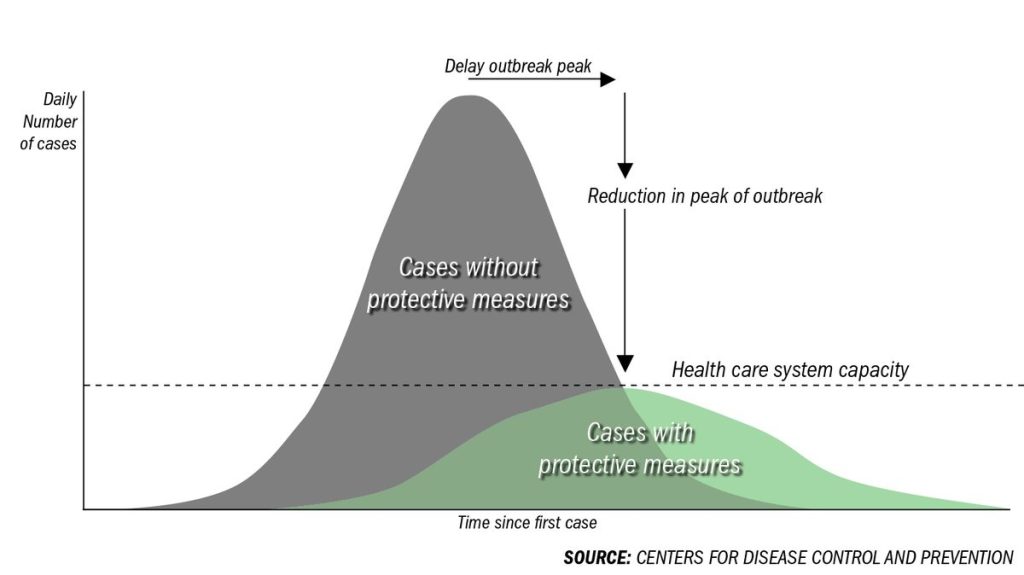
3-19-20 Coronavirus Mosaic Flatten the Curve.jpg
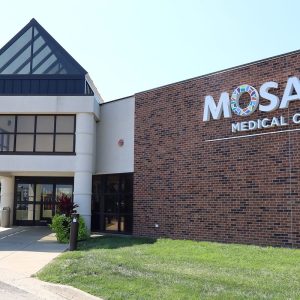
3-19-20 Coronavirus Mosaic building.jpg