Scams on the rise in county
SKYE POURNAZARI/THE FORUM
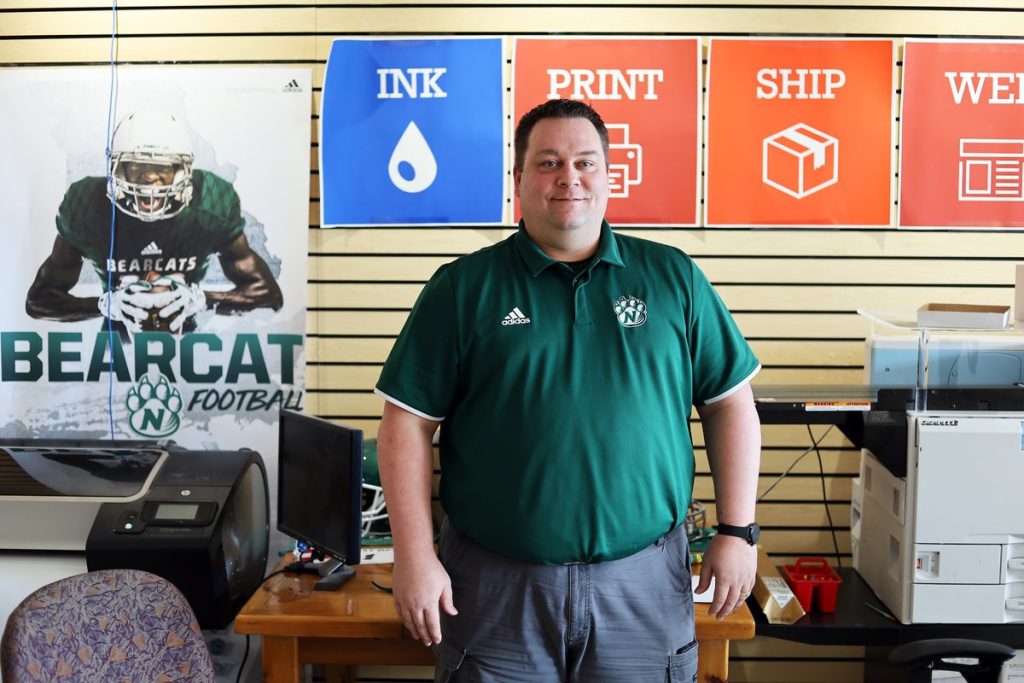
Matt Gaarder, owner of Rapid Elite in Maryville, and his staff have caught numerous instances where cash was being shipped to a scammer. As the only location locally that offers FedEx and UPS shipping, the business has seen an uptick in attempts to ship cash.
MARYVILLE, Mo. — Reports of scams are not new in the United States, but in Nodaway County the uptick is measurable, according to local business owner Matt Gaarder and local law enforcement.
“We’ve seen four in the last two months,” said the owner of Rapid Elite, a local printing and shipping store. “It’s frustrating because the people just don’t realize what thought process to go through when they get contacted.”
Gaarder said his staff has helped get back roughly $70,000 to people in the region who have wanted to use FedEx Express Shipping to overnight cash.
Because Rapid Elite is currently the only place in town offering FedEx and UPS shipping, Gaarder says he thinks that’s part of the reason they’ve noticed the uptick. Some of the recent stops have been people from outside of the county or even in Iowa.
Each shipment caught at the store has amounted to thousands of dollars, between $3,000 and the biggest one they caught (an IRS scam) was $38,000, he said.
For the first two years after the business began shipping FedEx and UPS, he said they saw two or three scam packages. Now they’ve seen four or five in the last year and a half.
“Those are just ones we’re aware of, there could be more,” he said. “These guys are sophisticated.”
From “spoofing” phone numbers to make it look like they’re calling from a government office to faking dating profiles, a scammer will go to great lengths to make you believe they are who they say they are.
“I don’t think people realize that if they say they’re from the IRS … the IRS isn’t going to call you, they’re going to send you certified mail,” he said. “There’s nothing wrong with, if you don’t know them, asking a couple of questions.”
One similarity in the shipments he and his staff have stopped at the store is that it involves a single person who hasn’t discussed this shipment of a large sum of money with anyone else.
“Talk to somebody, because several of these packages, people will ship them and then talk to a relative about it and the relative will … call to have it rerouted,” he said.
Even if it’s not the police, talk to a relative before sending cash through the mail or shipping.
Another way to be sure before sending money, is to slow the process down by asking for a callback number. Gaarder said if it’s someone genuinely attempting to collect a debt, they will be more than willing to give you a callback number. A scam artist won’t.
Gaarder also suggests using Google Maps to research the shipping address. He said they do it when they have a package they suspect is part of a scam. Sometimes the address shows just a house out in the middle of nowhere, where it wouldn’t be logical to send funds.
“What these scammers are doing is sitting across the street watching the FedEx truck drive up and as soon as the truck drives away they go grab it off that vacant porch and it’s gone,” he said.
Gaarder said he along with others in the shipping process are looking out for them, but that asking questions when any suspicion arises is the first step to not being scammed.
From banks to shipping locations and even the shipping companies themselves all have standards in place to help identify red flags with regard to scams. UPS and FedEx have returned packages to Rapid Elite because the address had been flagged in their system.
“We’re trying our hardest to do what we can, but we can only do so much,” Gaarder said. “It’s just like fishing. Where you throw out that huge net and you just pull on that string and see how many will get caught as it closes up. … It breaks my heart.”
Law enforcement moves fast
“I’ve never seen it this bad,” Nodaway County Sheriff Randy Strong said. “It’s prolific … Now they’re calling people’s homes on a lot more regular basis,” he said. “What we’re seeing is they’re now convincing people to go purchase some sort of card and then they call them in and give them the numbers. It’s virtually impossible to track unfortunately. It changes every day,” he said.
Strong described their most recent scam case where an elderly couple received a phone call stating they had won a Publisher’s Clearing House prize of $1 million, but they needed to pay the taxes on it. So the scam artist told them to go buy prepaid credit cards and call in the numbers.
“They’re very convincing,” he continued. “When it was all done, the couple lost thousands of dollars.”
They reported it after the fact, but by then it was too late to recover the money.
“I guarantee you that the majority of our elderly people in our community are getting these phone calls,” he said. “They’ve all gotten them.”
He suggests adults with elderly parents should have conversations with them about these scams. Ask them to call when they receive one that sounds too good to be true.
“They just need to be suspicious if they’re told to … buy prepaid cards and call them back with the number, because really no one does business like that.”
Any high pressure situation can lead people to make quick and sometimes bad decisions. “They’re very brazen,” he said.
Through social media and presentations at the Nodaway County Senior Center and local senior living facilities, Strong said he and deputies often share information about scams in hopes of helping the public.
“It’s just so prevalent,” he said. “These people are really good at hitting your emotions … It breaks your heart.”
Big and small scams abound
Maryville Public Safety detectives Ryan Glidden and Adam James said they’ve spent a lot of time dealing with scams in the last several months, a few dealing with large sums of money, but also many small ones.
“In the last 12 months we have recovered somewhere between $50,000 and $100,000 in cash,” said Glidden.
James said MPS is fighting to get $30,000 returned from New Jersey. He explained that this recent dating scam involved an intense ploy involving an online dating site for active seniors.
“They swoop in and start feeding off their emotions,” James said.
Glidden explained that sometimes the people being scammed don’t live in the county, but because the funds come out of local banks or is being shipped from here, MPS gets involved.
“They’re citizens just like your mother, your brother, your aunt, your uncle it can be anybody,” he said. “People who are sharp and good with their money are falling for these scams.”
One of the trickier challenges he said is a lot of these scams span multiple jurisdictions. Because the call took place in one jurisdiction, the funds were removed from a bank in another and possibly shipped in a third, it adds additional difficulty for the person being scammed to find the right person to help. This slows down the process to stop the money from being moved.
Glidden said the person who gets the call about a scam has to take action quickly, otherwise the chance of saving that money is gone.
A scam caught in December involved a woman from another county whose package was stopped after a family member was notified and Rapid Elite was called.
“We got $47,000 out of that box,” he said.
He said her scam involved fear. The scam artist who called her had her believing that she was going to be in all kinds of legal trouble and criminal charges were going to be filed against her.
“They kept her on the phone for right at eight hours nonstop, manipulating her,” Glidden said.
He continued saying the scammer stayed on the phone even when she went to the bank to withdraw the money, telling her what to say.
“They are master manipulators and extremely controlling,” Glidden said. “It’s probably the best I’ve ever seen.”
A different tact taken by scammers involves “tugging at the heartstrings,” said Glidden. A woman received a call stating that her granddaughter was in jail and $40,000 needed to be sent to an address in order to have her released.
“We wouldn’t have known, but she came in here,” James said. After dropping off the money at Rapid Elite, she stopped by Maryville Public Safety, requesting a nonexistent officer and wanted her daughter released.
After a brief discussion the package was collected before it was sent. Still not believing her granddaughter wasn’t in jail, James said they had to ask her granddaughter to come down to the station.
“They manipulated her so well, that her granddaughter was right here,” Glidden said, but the victim was still asking if she was OK.
Not all scams involve such large sums of money. Glidden explained that in this area there are a lot of people who have lost small amounts of money buying cards; taking pictures of them; and sending the photos to whoever is on the phone.
“Anytime the caller keeps you on the line and won’t give you a second to breathe or tells you ‘Don’t disclose this. You need to keep this private from your family.’ You’re being scammed,” Glidden said.
Red flags
Because there are so many different types of scams, it’s difficult to pinpoint all the details, but a major red flag Glidden said people can watch out for is the speed someone wants to have cash shipped and also wants the tracking number immediately.
“They’re getting scammed if that’s happening,” he said. “They can get online and reroute it. … The power company will never call you and want you to go get iTunes cards and give them the number off the back or a prepaid card. … No court system is going to do that. The IRS does not want iTunes or cards. They don’t function like that.”
He said scam artists prey on emotions.
“If it sounds too good to be true, it is,” Glidden said.
Banks can also be allies
“People just need to realize that if it’s too good to be true, it’s probably fraud.”
– Karen Maslanka
Citizens Bank & Trust
Karen Maslanka sees a lot of romance, sweepstakes and work-from-home scams in her line of work as a corporate security officer at Citizens Bank & Trust in Kansas City.
“Different age groups kind of fall for different types of frauds and schemes,” said Maslanka. “We do everything in our power, obviously, to stop somebody from being scammed.”
She said Citizens Bank & Trust does watch for large withdrawals or other suspicious activity.
“Time is always of the essence,” Maslanka said. She continued that should someone be scammed, they shouldn’t be embarrassed, but should contact the authorities or the bank as quickly as possible.
She suggests that anyone who has been scammed file a complaint on ic3.gov, the website for the International Crime Complaint Center, monitored by the FBI.
By doing so, a larger amount of data can be collected and more crimes can be linked together to be used during extradition processes for international scams.
“Even if they’ve been approached, it should still be reported,” she said. “It’s never easy to tell someone my hands are tied.”
She said the Citizens Bank & Trust website offers tips for anyone seeking information about fraud. It also provides resources.
“People just need to realize that if it’s too good to be true, it’s probably fraud,” she said.
SKYE POURNAZARI/THE FORUM
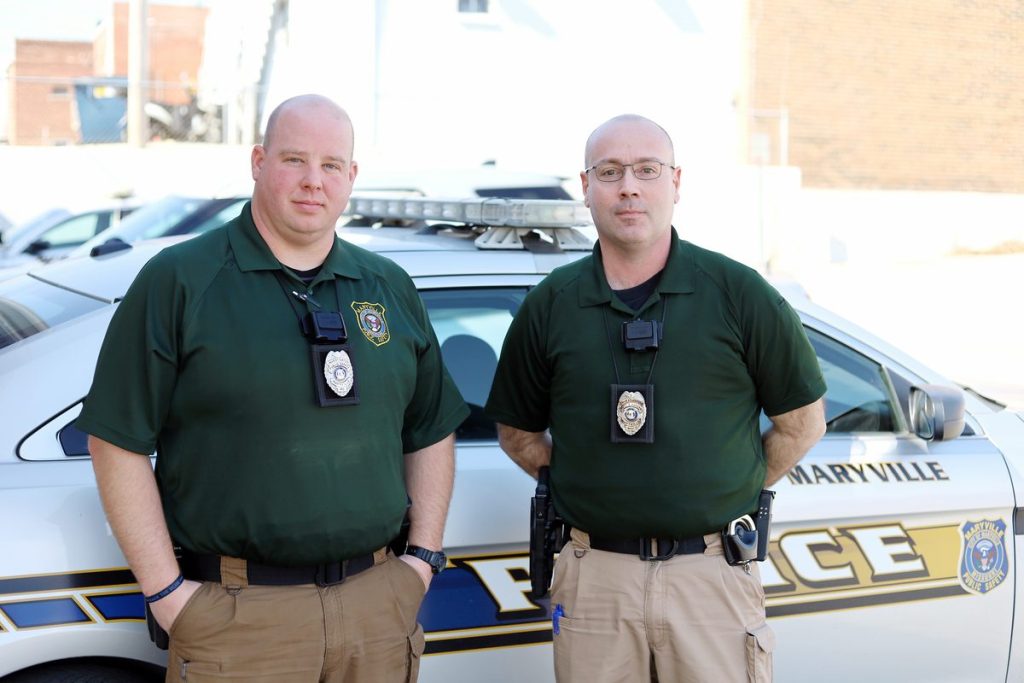
Maryville Public Safety Detectives Adam James and Ryan Glidden have worked to help recover around $70,000 scammed from individuals in and around Maryville. They warn that when a caller on the phone is in a hurry to receive cash or gift cards its likely a scam.
SUBMITTED PHOTO
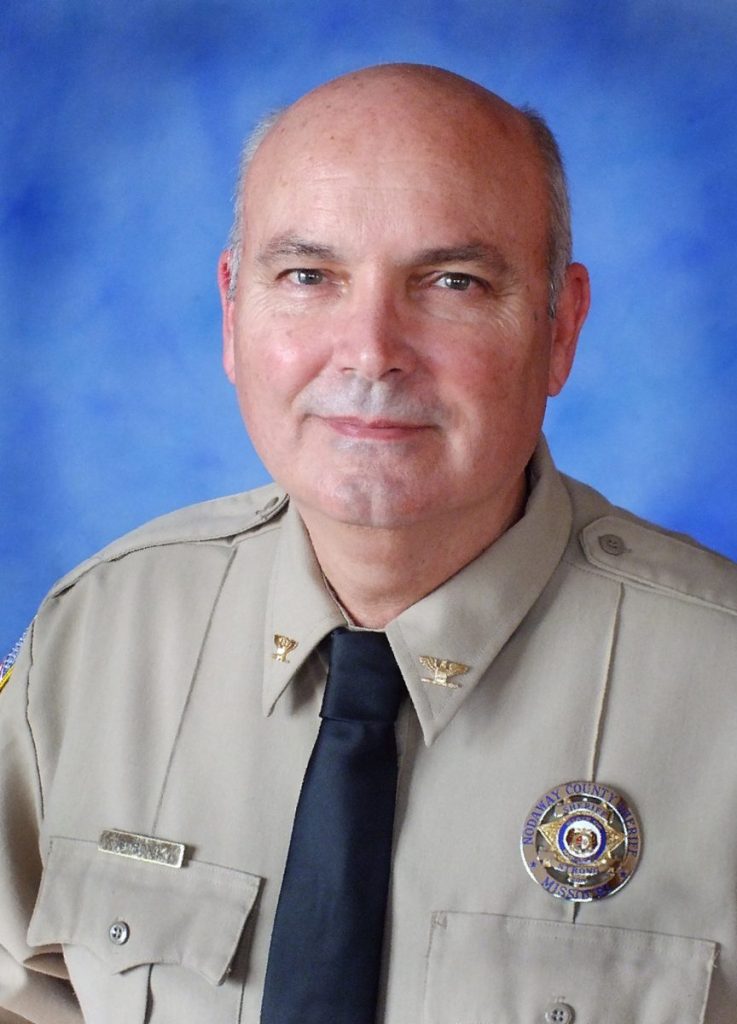
Randy Strong Nodaway County Sheriff