Local officials prepare for coronavirus
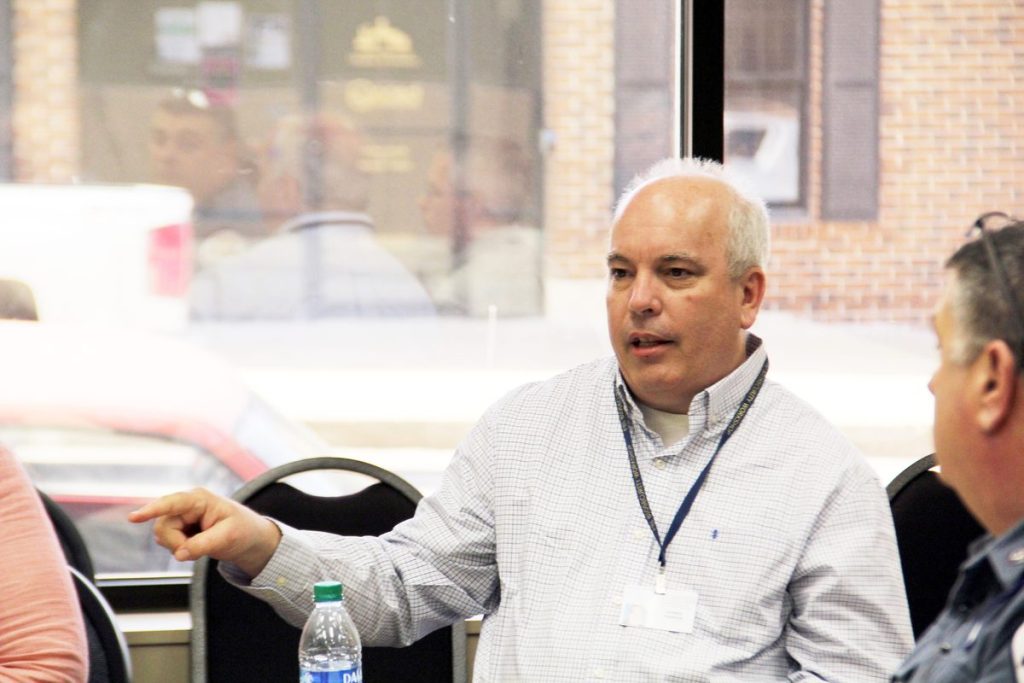
GEOFFREY WOEHLK/THE FORUM
Patrick Franklin, who works with the state health department’s Bureau of Communicable Diseases and Prevention in the northwest Missouri region, was one of several local and state officials who met Wednesday at the Nodaway County Administration Center to discuss readiness for the coronavirus.
MARYVILLE, Mo. — Nodaway County emergency management officials met Wednesday to discuss readiness and response plans for the coronavirus pandemic.
State health officials, who have been in constant contact with local officials across the region, briefed emergency responders and emergency management representatives from the city of Maryville, Mosaic Medical Center – Maryville and Northwest Missouri State University at the Nodaway County Administration Center Wednesday afternoon. The agencies exchanged information and discussed how to deal with people suspected of having the COVID-19 disease, and how to keep health care workers and emergency responders from getting infected themselves.
“We’re likely to have (a case),” said Tom Patterson, administrator of the Nodaway County Health Center, at a health center board meeting on Feb. 19. “We have people that travel in China and other areas of the world. So what we’ll do is, we’ll contact them and we’ll educate them about what we’re doing.”
The Centers for Disease Control is monitoring travelers who are coming from or have been to China, and will evaluate their risk before sending any potential carriers back to their home states and counties.
Anyone deemed a high risk would be quarantined by federal officials.
“Our job will be, if the state health department contacted us and said there was somebody coming back that was a medium or low risk based on the CDC assessment, we would contact them, and we’ve already put a little kit together for them,” Patterson said last month. “It’s got a thermometer and information in it, and masks.”
After two weeks, health officials should know whether someone will manifest symptoms of the disease.
“We’re going to have you check your temperature twice a day and report to us, and then we’ve got to list the symptoms that they report,” Patterson said at the February board meeting. “You know, (do you have a) runny nose, fever, coughing … the whole list of symptoms that are associated with this disease. … And then after two weeks, if nothing develops, we’ll just turn them loose.”
But Patrick Franklin, who works with the state health department’s Bureau of Communicable Diseases and Prevention in the northwest Missouri region, said Wednesday that only travelers from China are being automatically monitored, not ones from other countries that have seen outbreaks, like South Korea or Italy. He said that makes it very important for local health officials to be prepared to respond to possible cases of the virus.
Franklin said that testing is done at the state level, and it’s limited right now to people who are showing symptoms of the disease.
Anyone who has recently returned from an area that has had cases of the coronavirus and is showing symptoms should self-monitor and self-isolate, Franklin said, and notify the local health department if they start to feel sick. Before seeking any treatment, it’s also important to notify the provider — the doctor’s office or hospital — of the possibility of coronavirus infection so they can take the proper precautions to limit exposure to others.
Hospitalization, though, isn’t necessary in most cases. Franklin said about 80 percent of cases are mild. Most at risk are the elderly and people with weakened immune systems.
“Kids, who we’re all concerned about, have not been hit hard at all,” he said. “That’s not to say there won’t be any cases, or any deaths, but kids are in really good shape. … So that’s really important and different from many diseases.”
Health officials said at Wednesday’s meeting that the best way to combat the spread of the disease is to practice good hygiene habits like covering up a cough and washing hands.
In all cases, since there is no vaccine yet, anyone suspected of having the disease should stay isolated from others, which Patterson said last month he knows can be a lot to ask of someone with a full-time job.
“Sometimes people complain about it, but that’s … part of the whole process of preventing diseases, is to stop the transmission, and with some diseases, transmission is through contact with other people,” he said in February. “So how do you do that? You limit contact with other people. So for a couple of weeks you might have to do things a little different.
“If we had to, if we had someone (under observation for COVID-19), we would talk to their boss, the place where they work (about staying home for two weeks), and say … is there anything we can do to help make that happen? If we had to go help them do something, if I have to go pay a water bill for them, I’ll go pay a water bill for them, you know? We’ll do things to help. If that helps them isolate so they don’t have to go out and contact other people, we’ll do what we can to help them. … And like I said, we will provide masks, so if they do need to go somewhere, they can wear a mask.”
Such protective face masks have been in short supply and high demand across the country as health departments prepare to deal with the pandemic. But health officials said the general public shouldn’t buy up the supply because they won’t be especially effective unless the mask is on the person who is spreading the disease, or specially fitted. Instead, they would be more useful to health care professionals who may deal with patients infected by the virus.
All officials present at Wednesday’s meeting agreed that such equipment is in short supply locally. Some supplies are available through the state health department, but they will be distributed based on need as they come up. And some regional agencies can pool supplies to help with immediate shortages. Other supplies, like hand sanitizer and disinfectant wipes, are rapidly being emptied from store shelves, they said.
As of Wednesday, no cases of COVID-19 have been confirmed in Missouri.
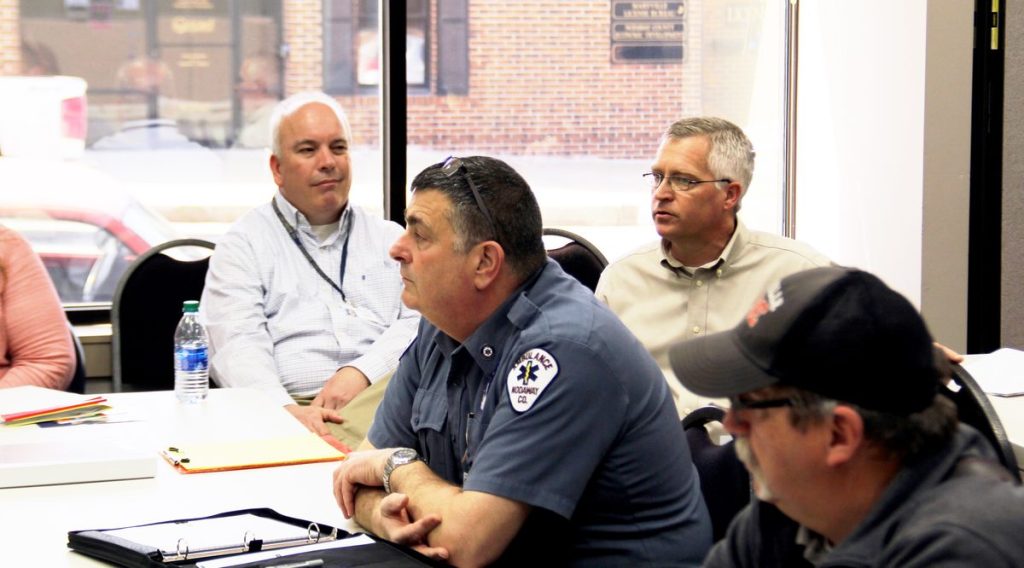
GEOFFREY WOEHLK/THE FORUM
Emergency responders, health care professionals and other local officials discussed availability of supplies and what they’re doing to minimize the chances that a potential case of coronavirus goes undetected. The group met Wednesday in Maryville.
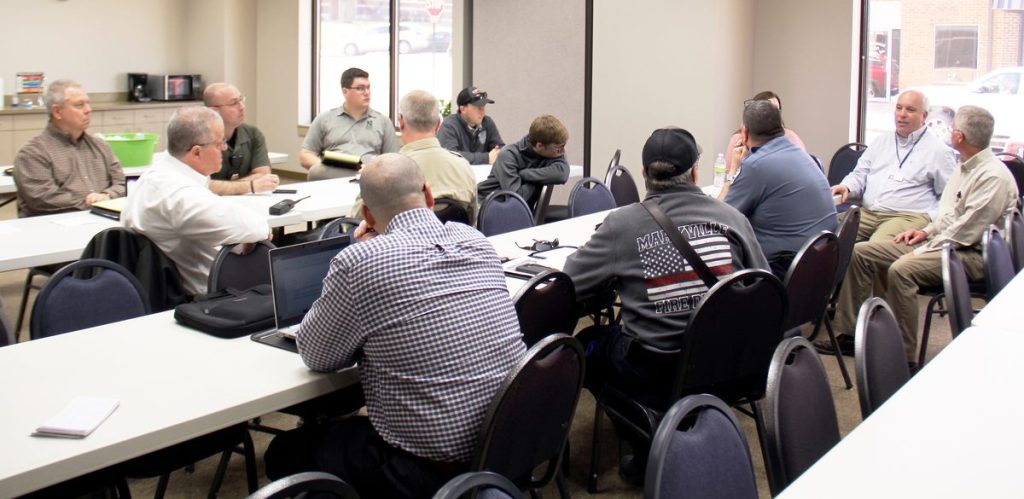
GEOFFREY WOEHLK/THE FORUM
Health officials say anyone who has been to an area with a coronavirus outbreak recently should self-isolate and notify the health department if they feel sick. Health department officials will check in over the next two weeks to see if any symptoms manifest and treat accordingly.