CAFO ordinance could be on hold indefinitely

ANTHONY BROWN/THE FORUM
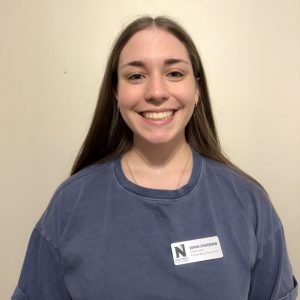
Tom Patterson Administrator of the Nodaway County Health Center
MARYVILLE, Mo. — The Nodaway County Health Center board of directors on Wednesday voted once again to table the passage of an ordinance dealing with concentrated animal feeding operations, and may not approve the ordinance until a court case makes the effect of a state law clearer.
In August of last year, a new law — referred to by its senate bill number, SB 391 — took effect that prevents local authorities like counties and local health boards from enacting any ordinances regarding CAFOs that include stricter requirements than the ones set out by the Missouri Department of Natural Resources at the state level. Whether the law applies to local regulations already on the books, though, is still an open question — one that will be answered once a lawsuit against the state wraps up.
The plaintiffs in the suit, which include the Cedar County Commission and the Cooper County Public Health Center, contend that the Missouri Constitution does not provide for laws to apply retrospectively by default.
Senate Bill 391 did not include a specific provision to apply retrospectively, which the local authorities say means any ordinances that were on the books prior to the law taking effect on Aug. 28, 2019, remain in effect even if they are more restrictive than the state standards.
Nodaway County’s CAFO ordinance went into effect in 2006.
At a Nodaway County Health Center board meeting in November, several members of the public offered comments on the proposed ordinance, and it has undergone revisions based on that feedback over the past few months.
Wednesday, the latest version of the ordinance was reviewed, but the reading of that version — which will be the fourth — was tabled until the May meeting when the full board will be in attendance.
However, Tom Patterson, administrator of the Nodaway County Health Center, said during the meeting that although he recommends another reading in May to make sure the language of the ordinance is clear, he does not recommend passing any such ordinance until it’s clear if revising it is required by law.
Patterson said the stricter ordinance currently in place does a better job of protecting the health of Nodaway County citizens, and took issue with agricultural interests — including the Missouri Farm Bureau, Missouri Cattlemen’s Association, Missouri Pork Association, Missouri Soybean Association and the Missouri Corn Growers Association — which have all described efforts by local health departments and governments to keep local control as driven by “sowing fear rather than following science,” amid an agenda pushed through “fearmongering by activist opponents.”
“With more information (about SB 391) … it directly corresponds with more concern. As people are informed, they’re more concerned,” Patterson said. “That’s why the industrial ag people don’t want you to be educated, they don’t want you to research it. They call it ‘weird science’ or ‘fake science” … and ‘don’t believe everything you read’ … it’s overwhelming.
“I don’t even know how you take that position, really. It doesn’t even make common sense to me. And I feel like I’m pretty open-minded about it. And … I’m not some activist marching in the streets.”
Patterson took aim at the health effects of CAFOs on streams and drinking water. Not unlike the nutrient pollution that is the primary cause of the cyanobacteria outbreak at Mozingo Lake, CAFOs produce nutrient and waste pollution that under state regulations, would have less oversight and be allowed closer to water sources than under the current county rules.
“We’re a public health (agency), and that’s why we have the ordinance, and that’s why we’re going to hold onto it as long as we can and do what we need to do,” Patterson said. “(The current regulations) are well-documented, they’re well-researched, there’s good science, it’s not some phony fake stuff.”
Although Patterson indicated he did not support passing the ordinance until the court case is decided, no board member indicated one way or the other. The board is slated to hold its fourth reading of the ordinance at 10 a.m. on May 20 in the health center, 2416 S. Main St. in Maryville.
“In the meantime, … our job is to promote policies and to protect the public health of people that live and work in Nodaway County,” Patterson said. “So, we’re going to do that until the ship can’t hold water anymore.”