Bishops purchase rights to Abbey works
SUBMITTED PHOTO
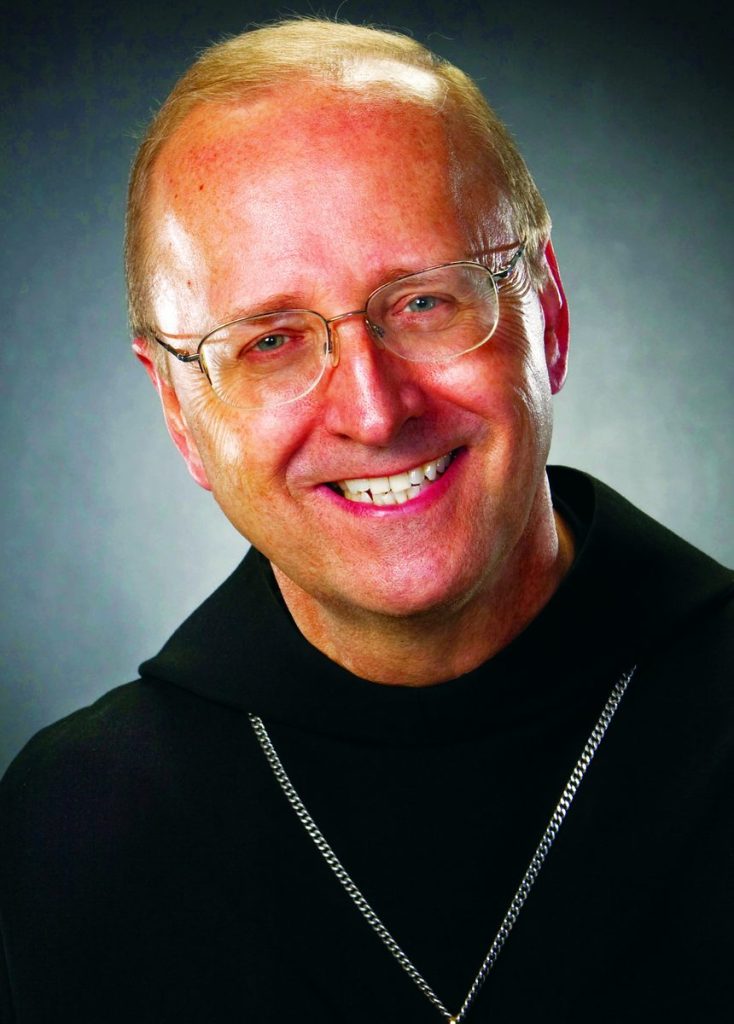
Abbot Gregory Polan
WASHINGTON — The United States Conference of Catholic Bishops has announced its purchase of the copyrights to the Revised Grail Psalter and the Old and New Testament Canticles as set forth in new English translations by the monks of Conception Abbey, a Benedictine religious community in eastern Nodaway County.
Both texts, titled together as Abbey Psalms and Canticles, are to be gradually incorporated into the church’s official liturgical books used by English-speaking Catholics worldwide.
Most significantly, those books include the Roman Catholic Mass Lectionary and the Liturgy of the Hours, often called the Breviary. Combined, the Mass and Breviary constitute the heart of the church’s public prayer life. In addition, the Liturgy of the Hours forms the basis of prayer within the tradition of Christian monasticism.
The Psalter contains versions of 150 hymn-like poems that make up the Book of Psalms in the Old Testament of the Bible, while the Old and New Testament Canticles contain other song-like scriptures such as The Magnificat, or Song of Mary, which is found in the New Testament’s Gospel of St. Luke.
According to a USCCB release, the bishops voiced a need for new English translations of both works from the original languages — primarily Hebrew and Greek — more than two decades ago. As a result, beginning in about 1998, the Conception Abbey monks began working to create new versions under the leadership of Abbot Gregory Polan.
Now abbot primate of the Benedictine Confederation, Polan served as abbot of Conception Abbey for nearly two decades.
Brother Michael Marcotte, the abbey’s choirmaster, said Polan’s goal was to create translations of these key worship texts that were both singable and accurately rendered from the ancient tongues.
The USCCB initially approved the monks’ translation of the Psalter in 2008. Subsequent approval by the Holy See in Rome came about two years later.
American bishops approved Conception Abbey’s translation of the canticles in 2015 and gave a final nod to the Psalter in 2016. Both works were accepted by the Holy See as definitive in May 2018.
“It is my sincere hope that this translation of the Psalms and biblical canticles will be a source of spiritual nourishment for the liturgy and the private prayer of all who use them,” Polan was quoted as saying in the USCCB release.
Since 2010, the bishops stated, a number of composers have created musical settings for the new English translation of the Psalms for use in the liturgy. In addition, several recently published liturgical books have incorporated Polan’s work.
In purchasing the copyrights, the bishops followed guidelines set forth in 2001’s Liturgiam authenticam, a document issued by Rome calling for translations to reflect the original languages, word for word, as closely as possible.
Liturgiam authenticam requires that translations of liturgical texts and scripture be prepared “in the most exact manner, without omissions or additions in terms of their content, and without paraphrases or glosses.”
This instruction is in contrast with the principle of “dynamic equivalence,” a broader sense-for-sense approach to translation adopted following Vatican II, an ecumenical council convened in 1962 by Pope John XXIII to address the relationship of the Catholic Church to the modern world.
The formerly accepted English translations of the Psalter and canticles were written in the 1960s and ‘70s.