New pastor has passion for community
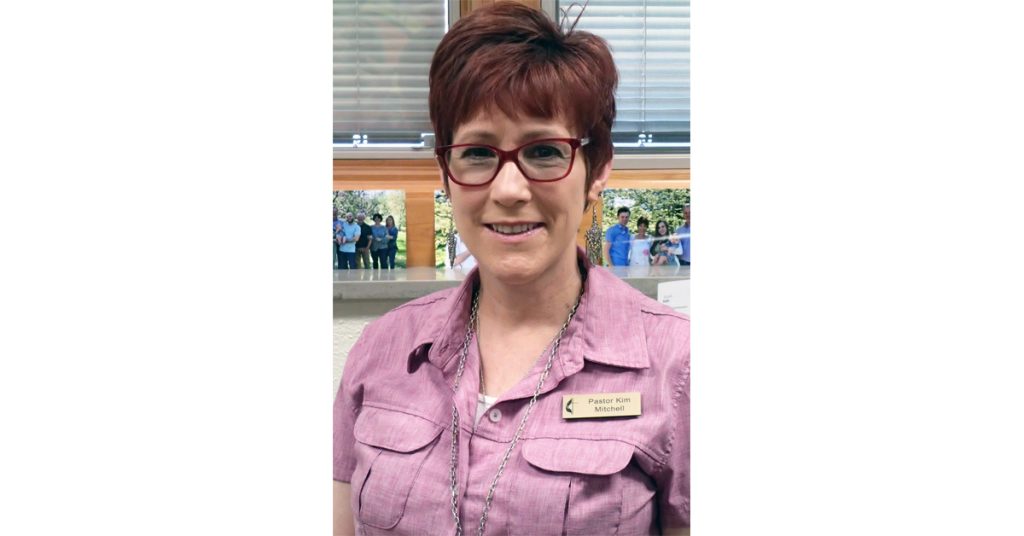
ANTHONY BROWN/THE FORUM
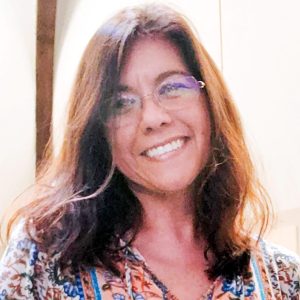
The Rev. Kim Mitchell
MARYVILLE, Mo. — After a decade — and following the retirement of the Rev. Scott Moon — there is a new face behind the pulpit at the First United Methodist Church of Maryville.
The Rev. Kim Mitchell became the congregation’s new lead pastor on July 2.
Mitchell, 54, most recently pastored three small, rural churches in southeast Missouri, all located less than an hour’s drive from Cape Girardeau.
Born in Texas, her family moved a lot when she was a child, but she considers Tulsa, Oklahoma, her hometown and graduated from high school there before going on to earn a mass communications and advertising degree from Southeast Missouri State University, where she met her husband, John.
The couple has two grown children and one newly arrived grandchild.
Before entering part-time ministry as a “pulpit supply” preacher nearly 20 years ago, she had a secular career in mass media, working first in radio, newspaper and television sales before joining an advertising agency as a media buyer and production assistant.
Her move toward Christian ministry, Mitchell said, began while she was attending a worship service.
“God started talking to me in 2000,” she said, “and he told me in my heart that he wanted me to do more than sit in a pew.”
That revelation, Mitchell said, led to years of bi-vocational ministry as she continued her business career while moving through the involved United Methodist Church process leading to full ordination.
Mitchell achieved that goal in June of this year after completing graduate studies at Asbury Theological Seminary in Wilmore, Kentucky, and becoming a UMC provisional elder in 2017, when she entered full-time ministry.
In Maryville for less than a month, Mitchell said she has already discovered a “special spirit in the community” embodied by a shared experience of cooperation and neighborliness.
“We have found Maryville to be warm and welcoming,” she said. “It’s a place where people work together, play together and experience life together. There is a spirit of willingness — willingness to show caring, concern and compassion. Not all communities are like that, and it makes a pastor’s job exciting.”
Mitchell comes to FUMC of Maryville during a time of conflict and division within the international denomination, which traces it roots to 18th-century England but was founded 1968 following the union of The Methodist Church and the Evangelical United Brethren Church.
Last February, during the UMC Special General Conference in St. Louis, a majority voting bloc composed of conservative delegates from the United States and Africa were able to implement regulatory teeth that strengthened the church’s longstanding restrictions applied to LGBT Methodists, which ban gay, lesbian, bisexual and transgender members from getting married within the church or serving as clergy.
The vote deeply divided the UMC, which many observers predict will soon split into two or more new denominations.
While acknowledging the emotional and spiritual pain of the divide, Mitchell said her responsibility in leading a local congregation is to encourage inclusiveness while continuing to emphasize ministry and outreach to people in need.
“I think there is a misconception,” she said, insisting that, for local churches, the focus remains on “ministry and mission.”
Mitchell added that FUMC Maryville is in the process of forming an exploratory team “to keep the conversation going” on how to encourage a welcoming ministry that reaches out to all members of the local community regardless of sexual orientation.
The challenge, she said, is to “minister to the needs of this community while showing that we are inclusive, because everyone is a child of God.”
While emphasizing that she plans on abiding by the UMC Book of Discipline, which prohibits her from performing gay marriages, Mitchell said gay couples, including those who are married, are welcome to join the local congregation and participate in ministry and leadership roles short of ordination.
“We are inclusive,” Mitchell said, “We have a call to care for everyone.”
On other fronts, Mitchell talked about the challenge mainline denominations such as UMC face in terms of steadily declining membership.
While the local church has about 400 members, she said, only about 200 people, in total, attend one of three services FUMC holds each Sunday. That’s a far cry from the packed pews typical of mainline churches during their heyday in the 1950s and ’60s.
In the face of declining numbers, Mitchell said local Methodists may have to change their perceptions about what church looks like by concentrating on small study and worship groups and external ministries that reach out to people who may or may not attend services regularly.
She said she wants her congregation to be “freely engaged wherever God is leading them” and to practice Christianity “24-7 and 365” by seeking “the will of God in this moment in all aspects of their daily lives.”
The practice of faith, Mitchell said, is not so much about formal church worship as about the impact believers have on their community “beyond Sunday morning.”
“Jesus,” she said, “was all about community. … We want to create new places for new people, because church can go on in a lot of places besides just a sanctuary.”
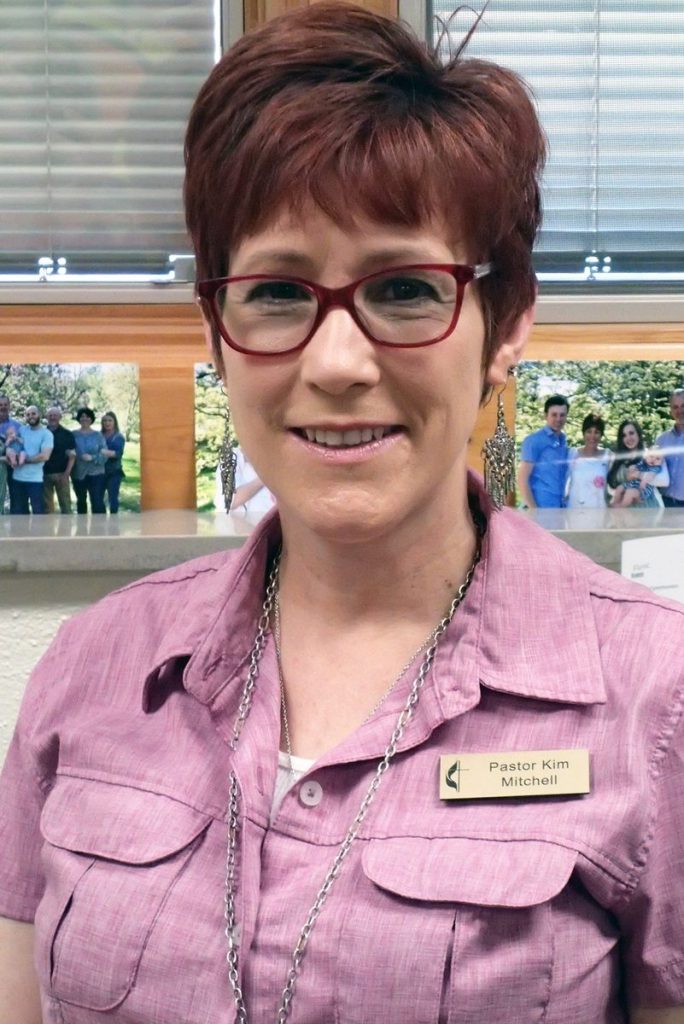
ANTHONY BROWN/THE FORUM
The Rev. Kim Mitchell