Revitalization effort yields new construction
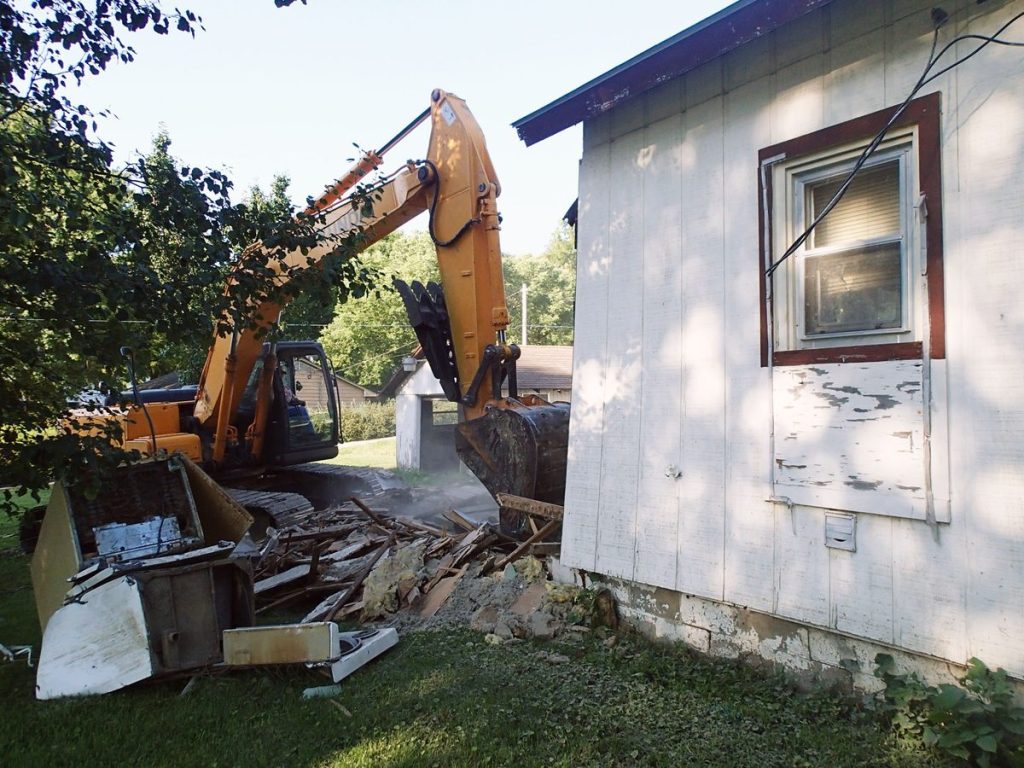
TONY BROWN/DAILY FORUM
A Nodaway Contracting heavy equipment operator demolishes a vacant house on East Second Street last week. The demolition was one of several carried out over the past six months under the Revitalizing Maryville 2016 initiative, which ended Sunday. The program provided incentives in the form of municipal fee waivers, including the reduction or elimination of debris dumping charges at the municipal solid waste transfer station. As of Sunday, the station has been leased to a consortium of local waste haulers who plan to run it as a private business.
Though its life was short, about six months, the impact of City Hall’s Revitalizing Maryville 2016 initiative has proved significant
The program provided incentives to developers and property owners to tear down substandard buildings, especially derelict houses, and replace them with new development, particularly single-family residences.
Envisioned back in February as an outgrowth of the Campus Town Redevelopment Incentive Program (CTRIP), an effort to spur residential construction in aging neighborhoods to the east of Northwest Missouri State University, Revitalizing Maryville expanded renewal incentive eligibility citywide in the months before the city’s solid waste transfer station was leased to a consortium of private haulers.
That lease took effect Sunday.
The key to both initiatives was the city’s willingness to waive construction permit charges for eligible redevelopment along with “tipping fees” at the solid waste station for the dumping of construction debris.
Now that the city is no longer running the station, it faces a 360-ton limit on the amount of waste and debris it can deposit there without getting charged for it. But between the time the deal was struck with the haulers early this year and the time it was implemented this week, City Manager Greg McDanel and his staff sensed opportunity.
In expanding CTRIP, the city essentially turned one incentive program into four.
The first portion of Revitalizing Maryville applied to all residential, commercial, and industrial properties in the city. Eligible property owners received a discount on tipping fees from $48 to $32 dollars a ton at the transfer station along with fee waivers for all demolition and construction permits.
A second component applied strictly to single-family residential development and waived all tipping and permit fees to developers seeking to demolish blighted structures and replace them with “entry-level” homes priced under $150,000.
The third area of the CTRIP expansion pertained to downtown, an area defined in the city’s comprehensive plan as running north to south from Seventh to Jenkins streets and east to west from Vine to Fillmore. Property owners in those blocks were able to build new structures and remodel existing buildings without paying either debris disposal charges or permit fees.
Now that the program has run its course, the results are in.
A total of seven Revitalizing Maryville projects were approved, meaning that seven substandard structures have been demolished with an equal number of new buildings either planned or currently under construction.
Aside from the aesthetics involved, the new development will add significantly to the city’s bottom line.
An estimated $710,000 in current or planned construction will raise the prior assessed value of those properties from $36,430 to $352,168, according to figures released by McDanel last week. Annual property tax revenues on those same properties will therefore increase from just under $3,000 to $23,500.
In return, the city invested a little less than $8,000 in the program in the form of waived charges and fees.
This doesn’t count a number of new and ongoing projects in the Campus Town special overlay district east of the Northwest campus, where fee waivers remain in place in accordance with the original CTRIP program.
Under the terms of the deal with the haulers’ consortium, continuing CTRIP will likely carry some increased cost, but, at least for now, McDanel and the City Council believe the tradeoff in new construction and increased property values is worth it.
Municipal waste volume, including construction debris from unsafe structure demolitions, typically exceeds the 360 tons allowed for disposal at the transfer station under the new lease. However, city officials estimate that paying for the overage will cost only about $1,000 a year.