
Bed tax proposed to help pay for athletics complex
COURTESY CITY OF MARYVILLE
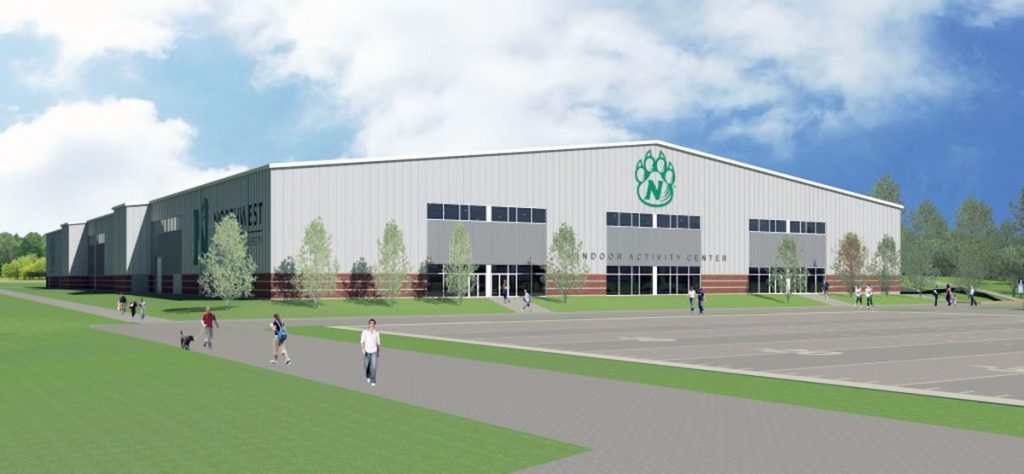
This computer-aided image shows the exterior of the proposed Northwest Multipurpose Complex that, depending on voter-approval of a 5-percent tax on hotel bills, could be constructed next year on the Northwest Missouri State University campus. Revenues from the so-called “bed tax” would provide $3.45 million over 23 years for the facility, which carries a total estimated price tag of $20 million.
In a dramatic unveiling at Monday night’s City Council meeting, City Manager Greg McDanel and Northwest Missouri State University President John Jasinski proposed a city-campus partnership for construction of a $20 million “Northwest Multipurpose Complex” that would accommodate a wide range of campus and community activities from football to trade shows.
Northwest officials have been talking about the possibility of building such a facility for years, and plans for the complex were included as part of a recently completed Campus Master Plan.
In a written report released to the Daily Forum in advance of Monday’s regular session, McDanel stated that the city intends to contribute a total of $3.45 million for the complex over 23 years using proceeds from a proposed transient guest tax that is to go before voters on the Nov. 8 general election ballot.
A simple majority of all votes cast by Maryville residents would ensure passage.
The levy, commonly referred to as a bed tax, would add a 5-percent surcharge to local hotel bills, and, like the multipurpose center itself, is not a new idea.
Maryville voters rejected a bed tax in June 2003, when the measure failed by a mere 21 votes.
Since then, according to McDanel, the taxing mechanism has become far more common, with hotel-bill levies being collected by at least 72 Missouri cities or counties.
According to the report, 140 governmental entities in Kansas have instituted a transient guest tax along with 170 counties and municipalities in Iowa.
Traditionally funds from such revenue streams are earmarked for the promotion of tourism and economic development, and that would also be the case in Maryville, officials say.
“The city intends to utilize transient guest tax revenues to advance tourism and economic development through assisting with the construction and operation of the new multipurpose facility at Northwest Missouri State University and through additional community marketing and special events,” the report stated.
“Thousands of visitors each year will participate in a wide range of university and community activities at the facility, generating additional sales to local businesses and increasing community pride. Remaining revenues will be used by the city, Chamber of Commerce, and Nodaway County Economic Development to market Maryville as a destination by supporting advertising and special events.”
As further justification for channeling possible city bed tax revenues into a campus multipurpose complex, McDanel and Jasinski both pointed to a recent economic impact study that set Northwest’s regional economic footprint at $617.5 million in added income, or the equivalent of nearly 9,500 jobs.
If passed, the tax will generate an estimated $215,000 annually and add an estimated $3.82 to the average hotel bill, which currently stands at just under $77. Of that yearly total, $150,000 would go for the complex, leaving about $65,000 for additional tourism and marketing initiatives.
Comparable partnerships have led to the completion of similar facilities in Pittsburg, Kansas, whose Pittsburg State football Gorillas are a perennial Bearcat rival, and Birmingham, Alabama. Missouri Western State University in St. Joseph has an indoor athletics complex as well.
Once completed, the mammoth structure — envisioned as embracing 137,250 square feet — will feature a 100-yard artificial turf practice field, a 300-meter indoor competition track, spectator seating and meeting rooms, and a removable flooring system for use during exhibitions, graduation exercises, concerts, trade fairs, large conferences, and other special events. The building is to be located to the north and west of College Park and Bearcat Stadium on a large tract of open land currently containing practice fields.
Such a building would be an obvious boon for Northwest’s intercollegiate athletics programs, enabling practice sessions for baseball, softball, soccer, track, football, and other sports to move inside during bad weather. University officials also see the facility as an important recruiting and retention tool.
McDanel said Maryville residents will have significant access to the multipurpose complex as well, claiming that the center will be available to youth and high school athletics programs, Maryville Parks & Recreation patrons, and for use as an all-weather exercise venue.
Plans call for a group of local leaders known as the University-Community Collaborative to create a tourism committee that will make decisions regarding the facility’s use. The panel is to include university and municipal staff, community members, and Maryville Parks & Recreation personnel.
Basic priorities for the facility have already been set. They include: promoting health and wellness for Northwest students, faculty and staff, and the Maryville community; providing a competitive advantage for Bearcat intercollegiate athletics teams; enhancing Northwest’s ability to recruit and retain students; and creating enhanced opportunities for university and community partnerships with regard to tourism and economic development.
An architectural and engineering study for the multipurpose complex is to take place between now and December, and a package of schematic drawings has already been completed.
Should the transient guest tax pass, McDanel said construction of the facility could begin as early as July 2017 and last less than a year.
Now that the proposal has been made public, it will return to the City Council on Monday, August 22, for a vote on whether to place the issue on the November ballot.
If it becomes a reality, the multipurpose complex will embody an unparalleled level of cooperation between Northwest and the city.
While Maryville and the university have experienced their share of “town and gown” conflicts in the past, such rifts appear to have largely healed in recent years, which has given rise to an increasing number of cooperative initiatives embracing administrative teamwork and shared funding.
Examples include the $2 million Fourth Street pedestrian corridor paving and streetscaping project, efforts to rebrand and regionally market Mozingo Lake Recreation Park, and completion of the Watson 9 youth golf course.
COURTESY CITY OF MARYVILLE
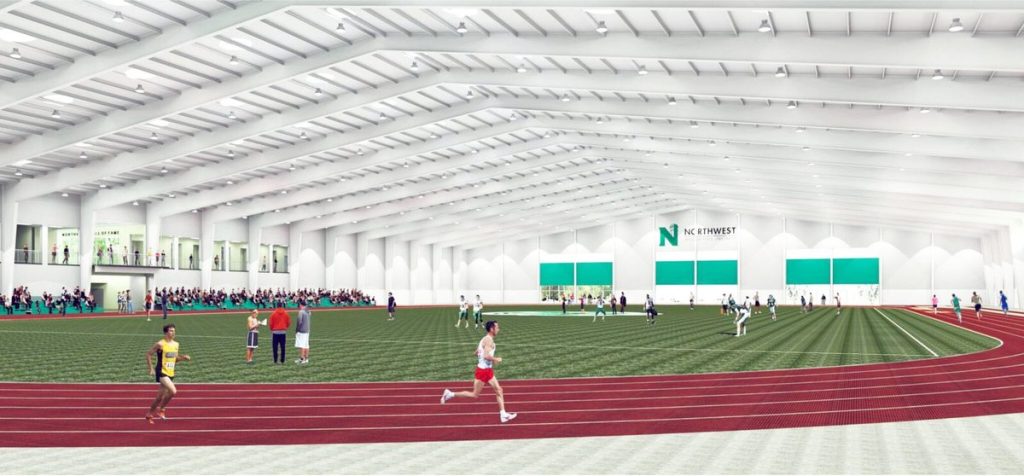
This image shows what the inside of a proposed multipurpose center on the campus of Northwest Missouri State University might look like. Once completed, the mammoth structure — envisioned as embracing 137,250 square feet — will feature a 100-yard artificial turf practice field, a 300-meter indoor competition track, spectator seating and meeting rooms, and a removable flooring system for use during exhibitions, graduation exercises, concerts, trade fairs, large conferences, and other special events.
COURTESY CITY OF MARYVILLE
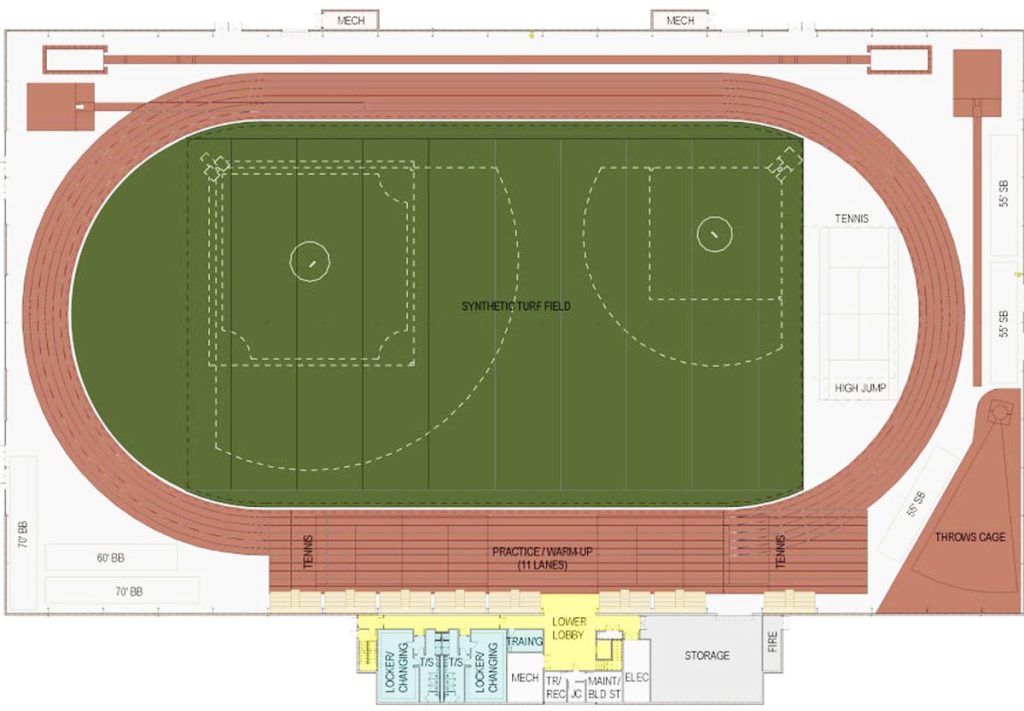
This schematic shows the layout of practice fields and other facilities for football, softball, baseball, and track as envisioned in preliminary plans for a $20 million multipurpose center proposed at Northwest Missouri State University. Because municipal revenues in the form of a 5-percent hotel bill tax would be tapped to help build the facility, the complex is to be available for youth and high school athletics, Maryville Parks & Recreation activities, and use as an all-weather exercise venue in addition to intercollegiate sports programs.




