
Community Services Inc. holds poverty simulation
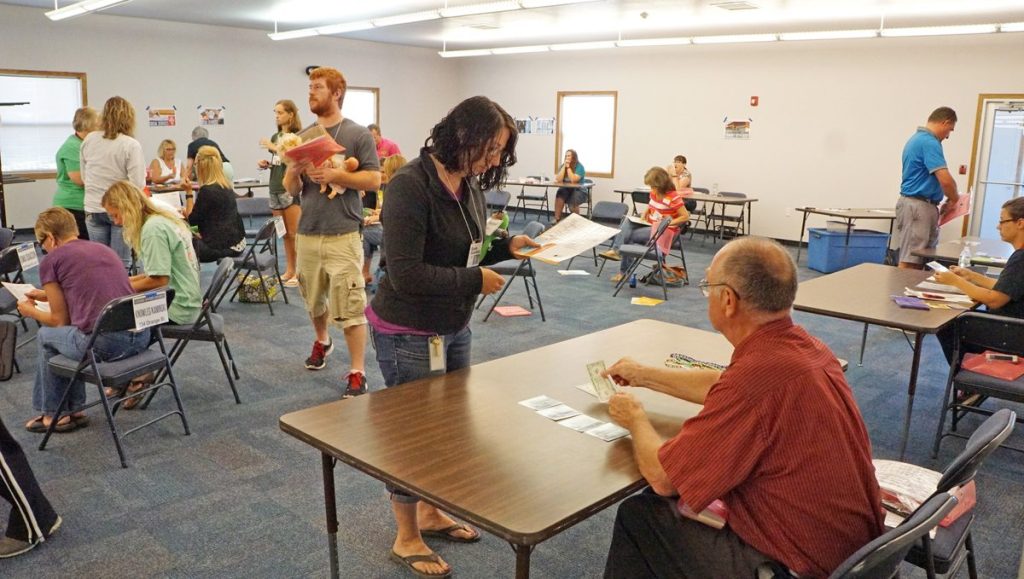
Maryville teacher Tara Wilmes was one of several area educators who took part in the poverty simulation yesterday at the Northwest Technical School. Wilmes pawns off a few items during the simulation to pay for food and bills. The simulation is set up for people to experience firsthand what families in poverty go through on a daily basis.
The Maryville Community Services, Inc. office put on a poverty simulation yesterday for area educators to experience first-hand what poverty-stricken families go through.
“The poverty simulation is something we like to do whenever we can because it’s difficult for most people to comprehend what poverty looks like and the struggles that come with it,” said Community Services Inc. Special Projects Coordinator Norma Eckerson. “This simulation helps people to relate and walk a mile in the shoes of people in their community who live in poverty.”
Eckerson said the simulation is especially effective for teachers and school administrators since problems in the home life of children often carry over into issues at school.
Yesterday’s simulation was brought on because a school in Iowa requested that Eckerson and her staff bring their simulation up in August for their district to experience.
“I requested that they contact their local community service office to see about conducting the simulation,” Eckerson said. “But they called me later to say they have the supplies, but no longer conduct the simulation.”
So to prepare themselves for the Iowa school district, Eckerson wanted to conduct a dry run with individuals in the Maryville community. She reached out to Maryville R-II Assistant Superintendent Steve Klotz, who forwarded the invitation on to the entire district.
Several Maryville staff members attended the simulation, along with members from a few other area districts.
The simulation starts with an introduction of various services one would find in most communities including the school, supermarket, social services, community services, bank, utility company, law enforcement, childcare, and the mortgage company. Other portions that most don’t interact with were included in the simulation, including a quick loan company and a pawn shop.
Individuals are then split up into couples or by themselves and given a packet explaining their “family” situation including their monthly bills and income. Each family must then live according to their situation in a life-like version of Monopoly-meets-life.
“I had been a part of one of these a few years ago, so I knew what to expect,” Eugene Field Elementary Principal Brian Lynn said. “No matter how many times you’ve done it, though, you always walk away with a different perspective. You understand why people do the things they do sometimes and why their priorities might not look like the rest of ours.”
Lynn said that when the simulation started he figured his income to bill ratio was good enough for his family to make it. But when things like school field trips, unexpected events, and emergencies come up, he found out the expenses get out of hand quickly. Lynn said that even though he and his “wife” both had incomes, it wasn’t enough to live off of. He even said that it wasn’t until the end of the simulation that he stopped to consider how his “children” were doing in school.
“The last thing you think about is how your kids are doing in school,” Lynn said. “You are in survival mode just to make sure you have a home and food on the table.”
In the simulation, people are offered the opportunity to sell drugs or to steal.
“Sadly, more times than not people in the simulation commit those crimes out of disparity to provide for their families,” Eckerson said. “It’s no different in real life. Most people don’t know what it’s like to go hungry, or watch your children go hungry. You find yourself doing things to provide for your family you never thought of before.”
Only adding to the stress, families had the added stress of mortgage lenders threatening foreclosure, bad landlords demanding rent or threatening eviction, banks looking for payments on bad debt, all while working to put food on the table.
In all, the simulation lasts a little over two hours, but Eckerson hopes the impact lasts much longer.
“You hope this instills a little empathy and compassion in people,” she said.
Jenny Haile, who worked as the community supermarket in the simulation, talked about her own feelings toward poverty and how her experiences changed them.
“I know a lot of people just think that people in poverty are out there just looking to take advantage of the system or whatever,” she said. “And you do have those that do that. But until you spend time in places like the ministry center where a woman breaks down out of shame because she can’t buy food for her family, we’ll never understand what they’re going through.”
Lynn said he hopes the simulation is something staff in the Maryville school district can continue to be a part of.
“I think we know poverty exists in our community, and we sometimes see it come through our door,” he said. “But this was experiencing some of the challenges they face on a day-to-day basis. It has allowed us to gain perspective and see why families do what they do, and hopefully we as educators can help in those situations instead of add to their burdens.”
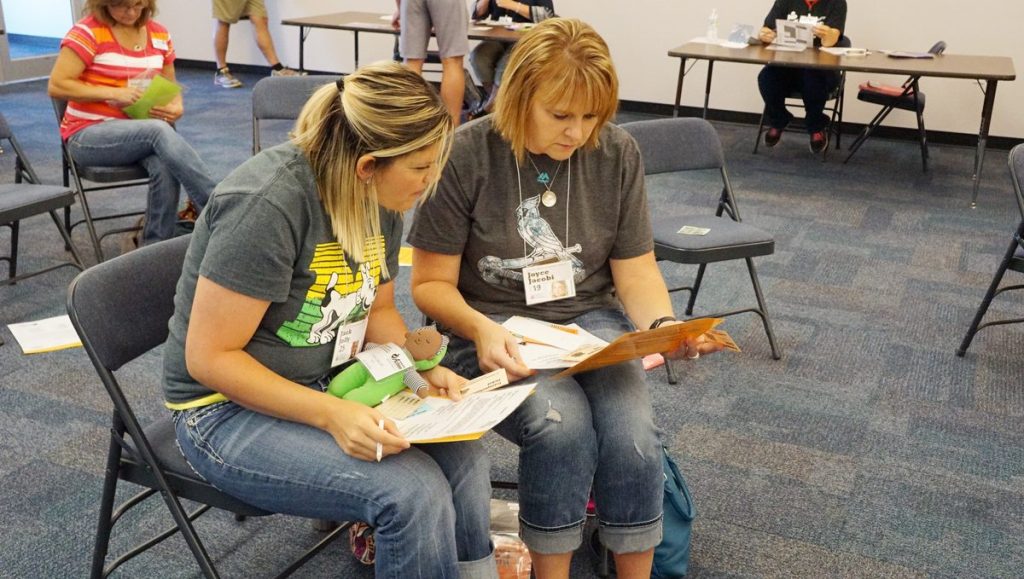
Maryville educators Jamie Backman and JoAnna Baker work together as husband and wife in the poverty simulation to figure their expenses for the month.
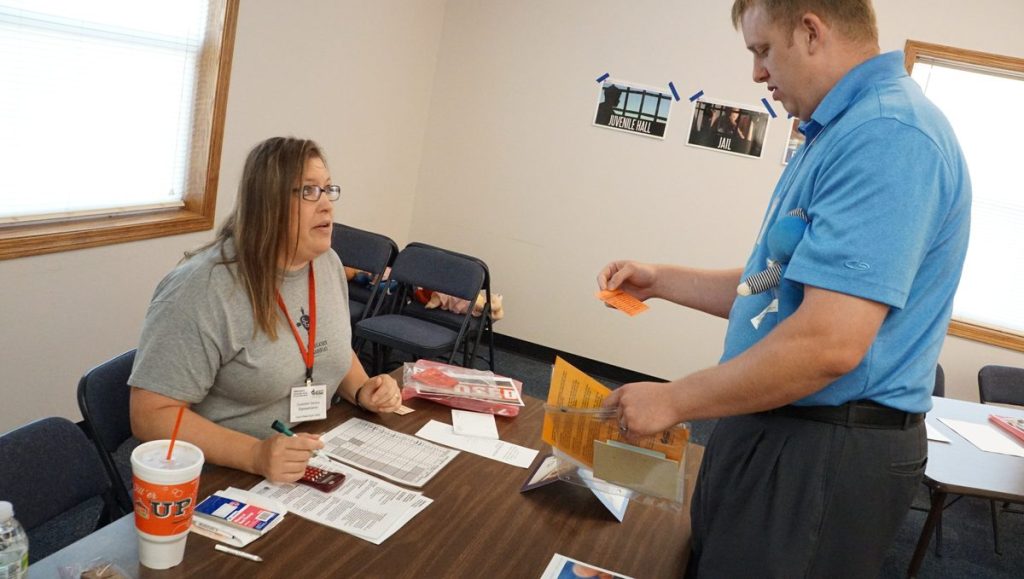
Volunteer Jenny Haile was the supermarket during the poverty simulation, telling a customer they don’t have enough money for everything on their grocery list.
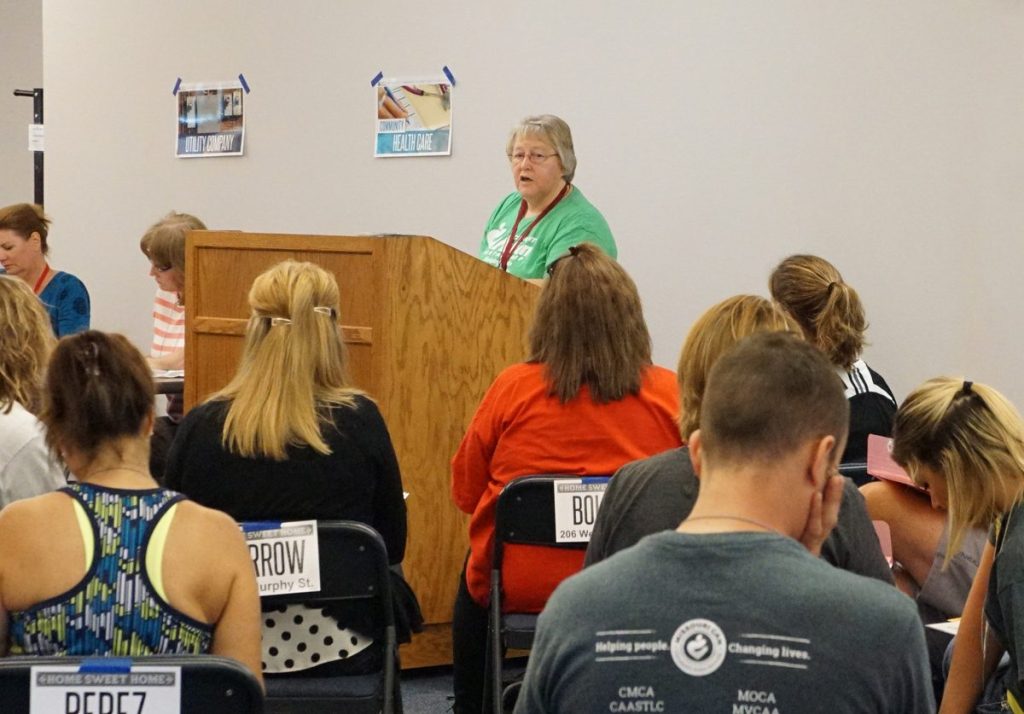
Community Services Inc. Special Projects Coordinator Norma Eckerson talks to a group of educators before yesterday’s poverty simulation at the Northwest Technical School. The simulation provides an opportunity for people to walk a day in the life of individuals facing poverty.