Education priorities

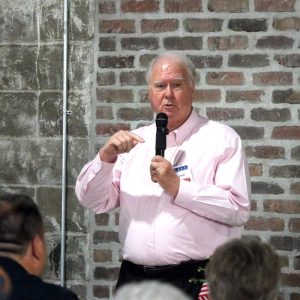
Richard Fulton
What ever happened to the notion that education should be a high priority of the American society? Where did we get off the track?
In building the American education system history shows support blossomed from the local communities then seeped up to eventual support of the state and national governments.
People thought education was worth fighting for, sacrificing for. Public school systems grew out of the felt need for young people to know more than the basics of literacy. As our society became more and more complex, support for more sophisticated educational goals grew with that complexity.
Local public schools exploded from rural one-room school houses to structured curricula and more professionally trained teachers. I had a group of great aunts when I was young who had taught in one-room school houses.
They believed in education and used the materials at hand to maximize the growth of the multi-grade children under their care. Younger students were tutored by the older kids, to become part of the scant resources available.
My aunts went through tenth grade and were able to get a certificate to teach lower grades. No extensive training, only experiences of their own education and a belief in learning shared by their local communities.
Urban public school systems grew as the cities grew. Public education was crucial in the age of expanding economies based upon the industrial revolution.
Higher education benefited from the federal government’s forward views, sponsoring land grant universities with substantial resources. Local communities saw the need for education by creating local community colleges on top of the local schools.
Private higher education institutions began by filling the need for educated clergy and grew to supplying highly educated professions. Local towns, churches, and philanthropic individuals provided the resources.
States began to expand their systems, at first to provide teachers for the expanding public systems. Then, after WWII, the federal GI Bill sent millions to these and other institutions and these universities exploded.
By the time we get to today, there remains a variety of supports for both K-12 schools and public higher education. The federal government helps but states and local school districts provide the bulk of support for public education.
And there is the rub. Enthusiasm for education seems to wane with the competition for public funds from other demands. Money at the state level is short because special interests have grabbed tax breaks leaving budget holes with education the main target for cuts (since it is the largest part of the state budget).
Kansas is the poster boy for special interest tax breaks leading to starving budgets for education at all levels. Even the state supreme court feels it must intervene to save the quality of education in the state. Illinois and several other states are near bankruptcy as well and guess who suffers most? Missouri falls short of its own legal goals for K-12 support.
Higher education can raise tuition, so states slash their support while keeping intrusive regulations and policies and increased administrative reportage. Actually, the same is even truer for K-12 schools.
Teachers and professors are treated like negligent parents—low prestige and even lower pay. Yet they husband our greatest resources.
In a year in which politicians are on the air every night with all kinds of name calling and grandiose plans for the latest pressing issues little is said about the state of education in our land.
Economics and social issues dominate the political conversations. Yet few realize that the core to long term solving of most of the problems in these areas is smack dab within the country’s education system.
We need a serious national dialogue on the importance and thus the priority of the nation’s education system. Instead, we get virtual silence, a useless blame game, pie in the sky schemes, or empty rhetoric.
The future of America is not threatened by ISIS, it is threatened by ignorance.