Running 101: How to avoid injury, stay safe
By JESSICA ALLEN Staff writer
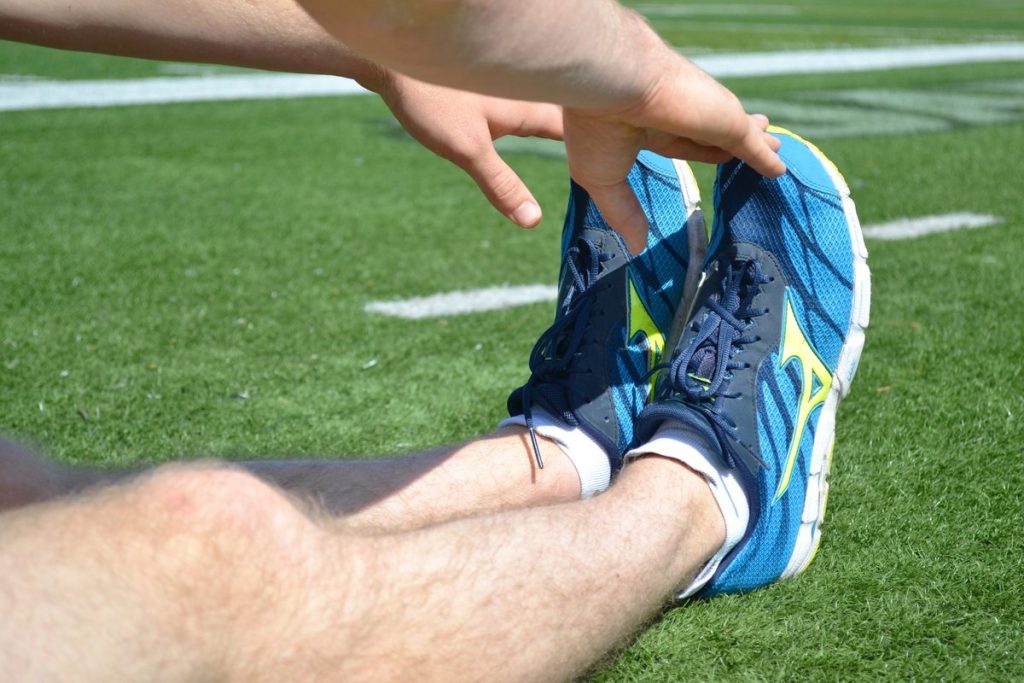
Simple stretches like this sit-and-reach can go a long way toward preventing running injuries. Other measures to avoid getting hurt while running or jogging include staying hydrated, wearing properly fitted shoes, avoiding runs during the heat of the day, and not pushing one’s body too hard too fast.
Squeezing time for physical fitness into a busy schedule is never an easy task, but it is a worthy one.
For most adults, the Centers for Disease Control and Prevention recommends a minimum of two and a half hours of moderate-intensity aerobic activity, such as brisk walking, or one hour and 15 minutes of vigorous-intensity aerobic activity, such as jogging or running, each week.
Because gym memberships and home exercise equipment can quickly rack up costs, those looking to save a few dollars may want to consider jogging or running in the great outdoors this summer.
For those who have never made running a habit, or who perhaps have been inactive for years, starting a running routine may be daunting, but the potential physical and mental health benefits are worth the challenge.
“The appeal of running is that it’s so simple you just have to get out the door and motivate yourself to go,” said Scott Lorek, head coach of the cross-country and track and field teams at Northwest Missouri State University.
Apart from running shoes, there is virtually no equipment involved for the casual runner. However, finding the right pair of shoes is essential to staying comfortable while running and avoiding injury.
Lorek recommends visiting a store that specializes in running gear, since the employees are often experienced runners who can offer beginners advice about what type of shoe to buy.
“There’s so much variety; you can’t just say, ‘Go get Nikes’ or ‘Go get Asics’,” Lorek said. “It really has to do with the shape of your foot and your arches whether you need cushioning or more support, because that can have a lot to do not just with injuries, but with the smoothness of your gait.”
Once a new runner has the proper shoes and has been cleared by a doctor to begin a strenuous exercise routine, it is important not to do too much too quickly, or injuries may develop.
“It’s important to start out with far less than you can handle rather than pushing the edge too early,” Lorek said. “That may be just trying to run down the block.”
He also advises those new to regular exercise to find a level and type of exertion that is enjoyable.
“If it’s drudgery from the beginning, that’s a bad idea,” Lorek said.
For many, it may be best to start with intervals of running and walking with the goal of working up to 20 minutes of continuous activity. Once that goal has been reached, runners can experiment by running for different amounts of time or at different speeds or by tackling more hills.
“Another reason to start slow or start with a combination of running and walking is because there is an adjustment to the pounding in the joints and the shock absorption that people aren’t going to be familiar with,” Lorek said.
Although the coach spends most of his time during the school year working with collegiate runners, he turns his attention to his amateur adult running club for two days each week during the summer.
Lorek said that in his experience working with runners of all ages, he has seen that older runners tend to deal with more muscle issues.
“Especially with older runners, they may have issues with range of motion because their flexibility is poor,” Lorek said. “There’s going to be a lot of soreness in various body parts.”
In addition to starting with light runs, preemptive measures, such as simply doing a routine of basic stretches that target different muscles, can go a long way toward preventing injury.
“One of the best stretches is just the sit-and-reach,” Lorek said. “You should feel the stretch, but it shouldn’t be painful.”
The sit-and-reach involves sitting with the legs straight out in front of the body and leaning forward slowly to try and touch the toes.
“Find that body part that seems to be your Achilles heel or weak spot,” Lorek said, “For some people it’s their back, or maybe their calves — and spend a little bit more time focusing on that.”
He added that if a particularly weak area is not given special attention, other body parts may be affected as the body tries to compensate.
When soreness does occur, Lorek said, a common mistake is applying heat.
“Ice needs to be your best friend,” he said.
Lorek added that runners must be aware of what their body is telling them and not be afraid to rest or try just going on walks if pain occurs.
“Even if your heart and lungs are feeling fine, maybe your knees aren’t,” he said. “Sometimes you have to modify things to let every body part adjust.”
If pain in a certain area persists continuously even after icing and rest, it may be time to consider consulting a doctor.
During the summer, heat and humidity must also be factored into a running routine, as the more a person sweats, the more water they must drink to stay hydrated.
“Run at the right time of day so the weather doesn’t make it a miserable experience,” Lorek said. “Besides it being a risk health-wise, it just kills the enjoyment of the activity. Early mornings or evenings are going to be your best bet.”
Creating a daily routine that includes proper amounts of sleep and a nutritious diet will contribute to the success of any physical fitness program.
“The body always functions better in a routine rather than something erratic,” Lorek said.
Lorek also discusses other aspects of running safety with both his college athletes and adult runners. For instance, he encourages runners to run during daylight hours whenever possible and wear reflective clothing if they must run after dark.
Runners should do their best to know where they are and where they are going if running in unfamiliar environments, and they should wear or carry some kind of identification in case they lose consciousness.
Lorek emphasizes being alert and aware of one’s environment, particularly near traffic. Runners should face oncoming traffic, give vehicles the right of way, and avoid busy streets whenever possible.
“People text while driving, and you can’t assume they’re going to see you,” Lorek said. “It’s a runner’s responsibility to be aware of what’s going on.”
Lorek said running with a partner or group increases motivation to continue exercising because of the accountability and camaraderie. He also recommends setting a definitive goal, such as running a particular race, rather than simply wanting to get in better shape.
Lorek’s summer running club is open to adults at all levels of fitness and ability.
“I’ve got some people that are pretty competitive in road races and some that are just trying to start getting back into shape,” he said.
Runners in the club are given training plans and receive weekly emails to keep them on track with their workouts. They also have the opportunity to train with others at a similar fitness level.
This year, the running club will meet on Tuesdays and Thursdays from June 21 through Aug. 11. Runners can choose between sessions at 6 a.m. or 6:30 p.m., depending on their schedules. Cost to join is $50.
Anyone interested can email Lorek at [email protected].
“The body always functions better in a routine rather than something erratic,” Lorek said.

By JESSICA ALLEN Staff writer
Jogging or running is a relatively cheap, simple way for adults to get the amount of weekly aerobic activity recommended by the Centers for Disease Control and Prevention. Finding a pair of shoes that fit properly is the first step for beginning runners.