A Day in the Life: Part-time farming takes full-time commitment
By JENNIFER DITLEVSON HAGLUND Staff writer
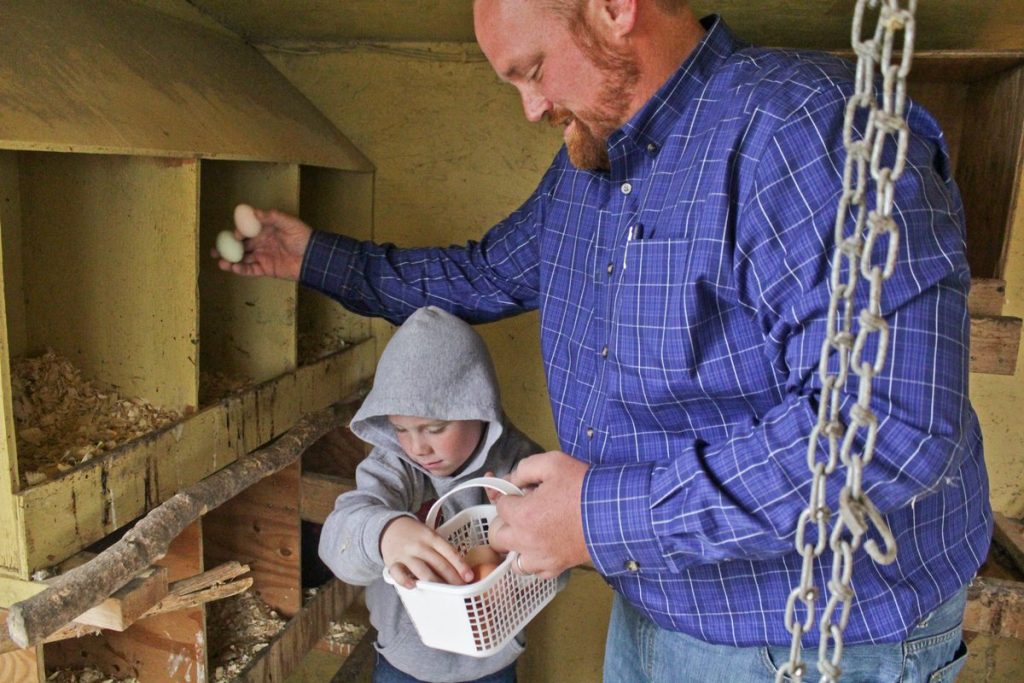
William McCollough, 7, collects eggs from the chickens. Every day, the McCollough boys have chores to do before and after school. Even though the farming is a part-time venture, upkeep easily absorbs most of the family’s time at home.
For Chad and Monica McCollough, farming their 72 acres northeast of Maryville doesn’t pay their bills, but calling it a part-time job isn’t quite an accurate statement either.
“It’s literally from sun-up to sundown,” Monica said.
In the morning, Chad handles the chicken and duck chores while Monica gets their three boys ready for school. Once the boys leave, Monica and Chad go to work. When they return home, they all have to check their gardens, the boys take care of their enormous Bernese mountain dog, Monica takes the evening chores with the chickens, and then they eat dinner.
This doesn’t account for seasonal changes to the schedule during planting or harvesting times, or the extracurricular activities that often come with having school-age children.
Four years ago, the McColloughs decided to move outside Maryville to live closer to the land. Chad kept his day job as the vice president of FCS Financial, an agricultural loan, real estate, and insurance provider. He still works 40 hours a week there, but he said he can’t count how many hours he spends maintaining his small farm.
“But it’s a lot,” he said.
Chad grew up on a farm in north central Iowa, where his father raised corn and soybeans on about 1,700 acres. They also had pigs and a cow-calf operation. Farming is in his blood, but Chad said he’s a product of the ’80s. His father had watched the economic crises affect agriculture to the point where it was almost as bad as it had been during the Great Depression, and he didn’t want any of his children to anticipate earning a living from working the family farm.
“Dad pushed us all to find something else we could do and to get an education,” Chad said. “His farm couldn’t support more than one family.”
Seeking an education brought Chad to Northwest Missouri State University, where he studied agronomy and met Monica, who thought she would enter a career in landscape design. Although they both shared a love of nature, they made an unusual pair.
“On our first date, I remember saying that Maryville was the smallest town I’d ever lived in, and that’s when Chad said Maryville was the biggest town he’d ever lived in,” Monica said.
It wasn’t until Monica went home to meet Chad’s family that she got acquainted with rural life.
Periodically, the couple returned to Chad’s family farm in Vail, Iowa, on the weekends to help in the busy seasons. While Chad worked with his brothers and dad, Monica learned from the real boss — Chad’s grandmother.
Monica laughed as she recalled her entry into farming. In the beginning, she made a lot of lunches and ran errands.
Life circumstances have changed quite a bit for Monica since then.
After 11 years of marriage, she said she’s still asking questions as she observes something new or different on their land.
While the boys are at school, Monica works 20 hours a week at the University of Missouri Extension office in Maryville. Working there connects her to others who teach her about things like canning and planting decisions that weren’t part of her experience growing up in Kansas City.
Networking has also helped Monica with the transition from city to country. Building friendships with neighbors has been invaluable to her, and she said she’s felt very welcome in the community of fellow farmers.
“There are so many things that you learn growing up on a farm that you take for granted,” Monica said. “The rest of us don’t have clue.”
Despite the learning curve, she said she’s glad to have the opportunity to introduce her three sons, Augustus, 9, William, 7, and Tucker, 6, to a life with regular chores and give them an understanding about where they get the food they eat.
“I still can’t believe I went as far as my late 20s and early 30s without knowing much about the food chain,” she said.
Some aspects of learning about the food chain, however, have been less pleasurable than others.
Three years ago, Monica butchered her first chicken. Chad pokes fun at his wife’s involuntary revulsion associated with the activity, but they’re committed to getting the job done together every June.
Raising a small flock of birds gives the family just enough meat, and it puts them in contact with where they got their food.
“And they’re twice as big as the ones you can get at the store,” Chad said.
For Chad, farming engenders a healthy form of competition in him. He said he sees keeping the grounds in good shape and raising exceptional crops as a personal challenge.
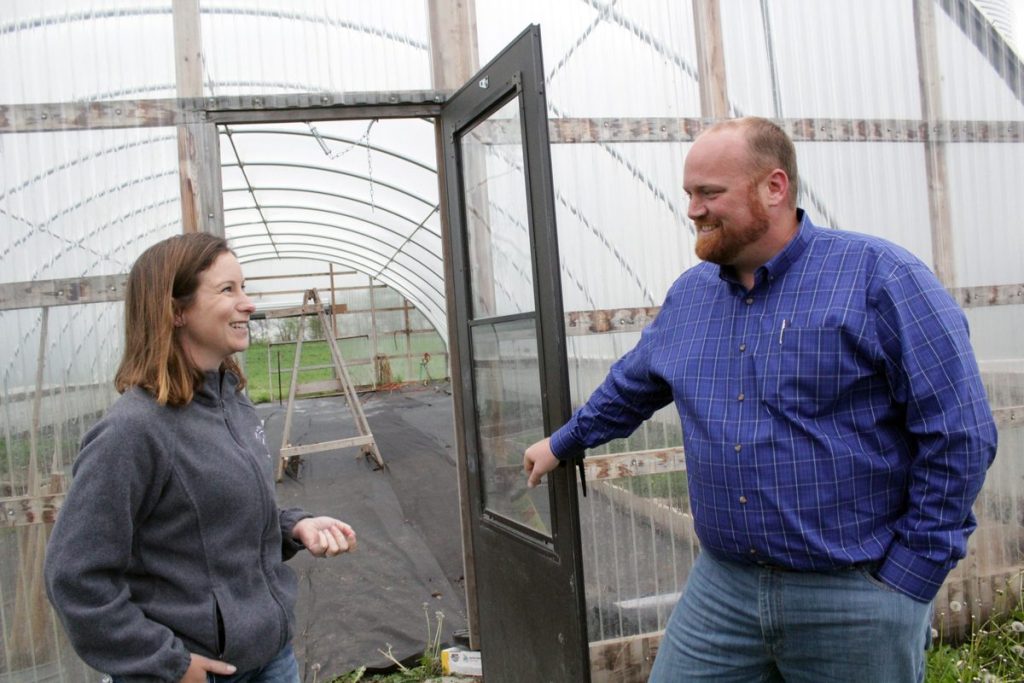
Sometimes, Chad and Monica create a contest between them about who can grow the best garden inside the high tunnel greenhouse behind their home. The high tunnel extends the growing season, and lets the family get produce like herbs, strawberries, and lettuce when they need it.
In the future, the McColloughs would like to add some cattle.
“Not too many, less than 10,” Chad said. “Just enough.”
Augustus has other priorities. He would like a horse.
All of this sounds great, Monica said, but maybe in a little while.
Right now, things are pretty busy with Chad being involved in Agricultural Leadership of Tomorrow. He’s traveling a lot, and in the next two weeks, they have soybeans to plant.
Editor’s Note
A Day in the Life is an ongoing feature written by Daily Forum staff and published weekly. Each story details the daily work of someone in Nodaway County. Readers can submit ideas for subjects to [email protected].
By JENNIFER DITLEVSON HAGLUND Staff writer
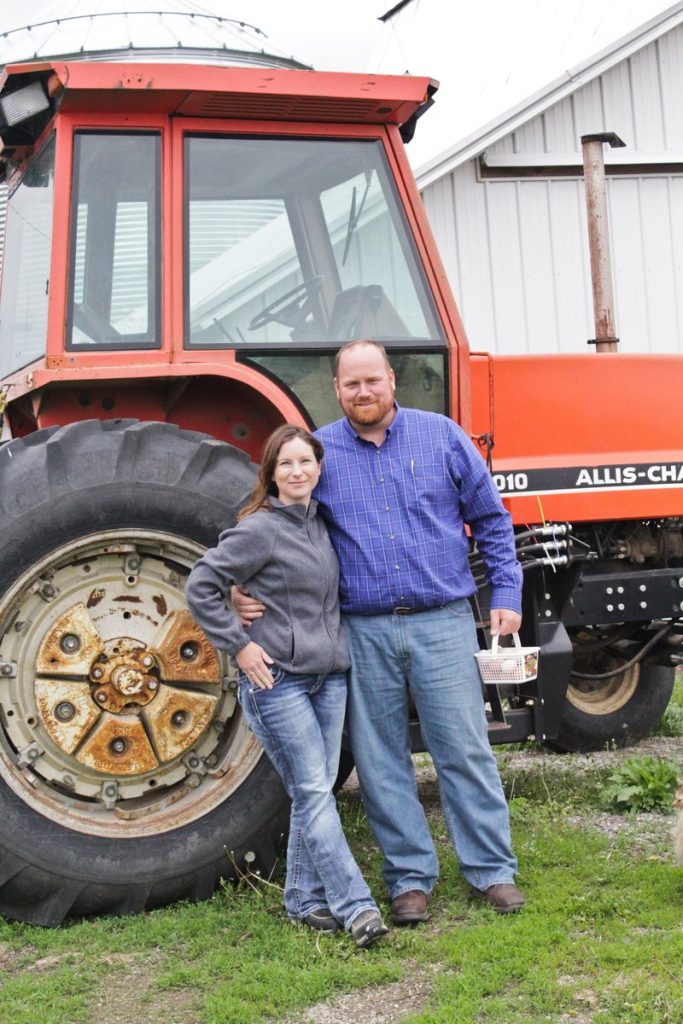
The tractor behind Monica and Chad McCollough has been in Chad’s family since he was working on his father’s farm in north central Iowa. Now he uses it on the acreage in Burlington Junction.
By JENNIFER DITLEVSON HAGLUND Staff writer
Chad and Monica McCollough make a game out of gardening, challenging each other about who can grow it better in their high tunnel greenhouse. They haven’t planted much yet for this year’s growing season, but Monica said they have been gathering lettuce and herbs whenever necessary for cooking.