Quilters made art, cultural artifacts
By JENNIFER DITLEVSON HAGLUND Staff writer
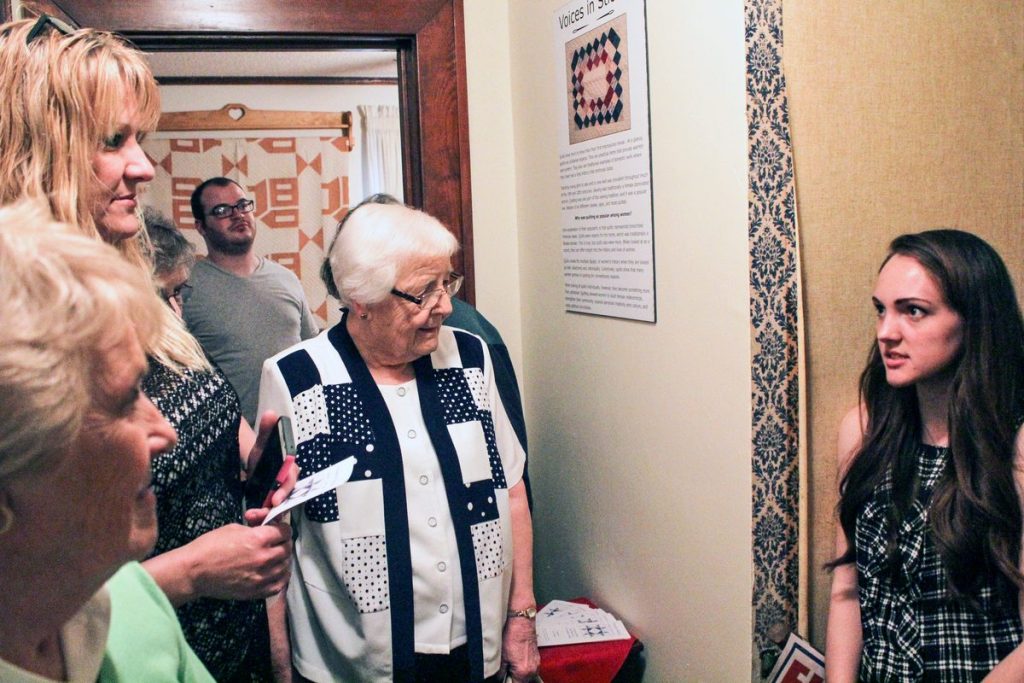
Northwest Missouri State University senior Kasey Solomon researched the history of quiltmaking in Nodaway County for her senior project. Saturday she unveiled her exhibit “Voices in Stitches” at the Nodaway County Historical Society Museum.
Although they look like another one of grandma’s blankets, old quilts might tell a story within its stitches and colorful squares.
Saturday afternoon at the Nodaway County Historical Society Museum, Northwest Missouri State University senior Kasey Solomon of St. Joseph invited community members to think of quilts in a new way. By researching the history of quilting in the United States for her senior project, Solomon discovered that women quilted for a myriad of reasons outside functional motivations.
In the 19th century when women were frequently relegated to the domestic sphere, quilting gave them a chance to build relationships with other women, express their creativity, and voice political opinions.
Going through quilts in the Nodaway County Historical Society Museum collection, Solomon identified different types of quilts popular in the 19th and 20th centuries, arranged them in a second floor room, and created signs to explain their significance.
“I looked at the quilts as more than the practical objects that they are,” Solomon said. “I wanted to give them a second look.”
According to Solomon, the Women’s Christian Temperance Union used the “Drunkard’s Path Quilt” as propaganda. The wavering lines are supposed to create the illusion of an intoxicated person’s crooked gait as well as their wayward morals. Suffragettes also used quilts for banners to promote their cause.
Elyssa Ford, who is an assistant professor of history at Northwest, supervised Solomon’s project and said that women using quilting as a platform were more subversive than a lot of those on the frontlines of first-wave feminism because they were using the domestic space to say what they wanted.
Women brought communities together by gifting their quilts in times of war or disaster. One quilt featured in the exhibit comes from a social club in Guilford made for a woman who lost her home in a fire in 1930. Quilting bees, which are often all-day events, also drew large groups of women together to socialize.
Quilters in more recent years still participate in clubs and fundraising events focused on their craft. Solomon’s great-grandma, grandma, and mother quilted. As of yet, she has helped with quilting projects, but Solomon would like to learn more because she said she knows how much her mother benefited from getting to know women of different ages while learning the craft.
“It’s definitely something that I’m looking forward to doing when I get some more time,” Solomon said.
The museum displays a variety of crazy quilts that feature their makers’ unique styles. These quilts don’t follow a particular pattern, using a combination of stitches, shapes, colors, and fabrics.
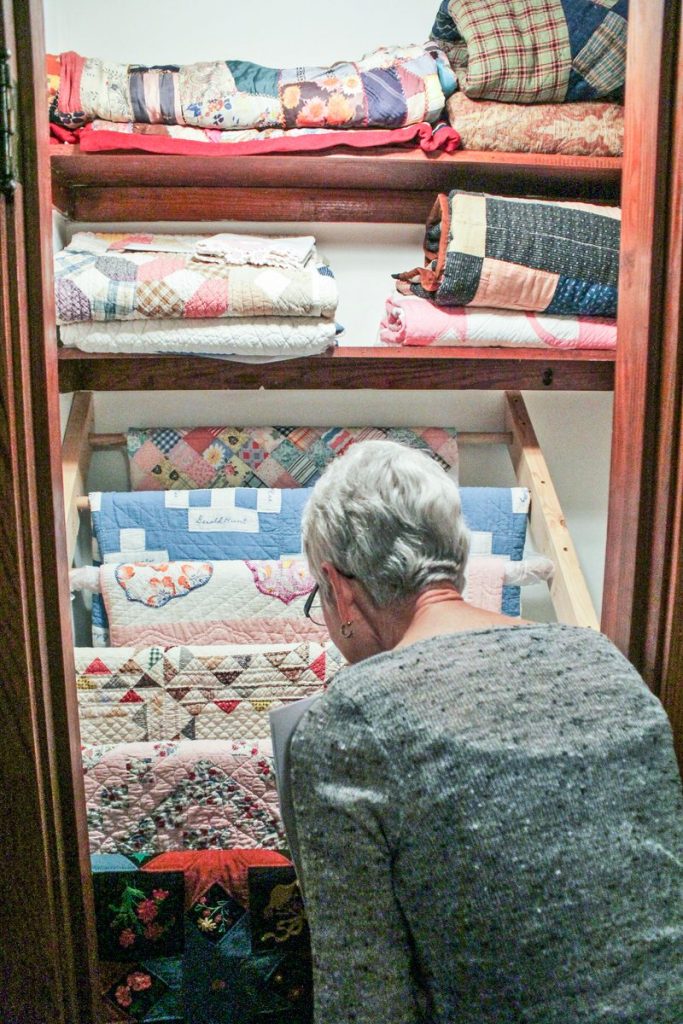
Solomon’s senior project “Voices in Stitches” is currently on display at the museum. Only about half of the quilts in the museum collection are out. Anyone who would like to see more examples of local quilting can ask the volunteers.
By JENNIFER DITLEVSON HAGLUND Staff writer
Voices in Stitches
By TONY BROWN Staff writer
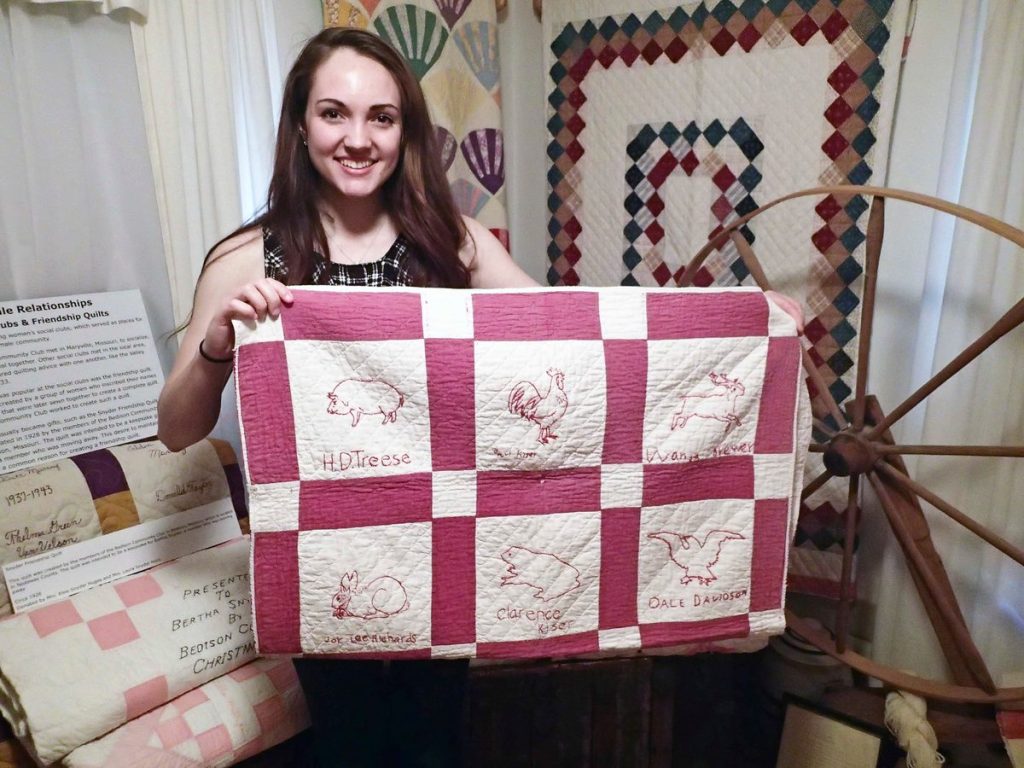
Northwest Missouri State University senior Kasey Solomon holds a quilt donated to the Nodaway County Historical Society Museum by Opal Logan, who taught at the Baker rural school located between Barnard and Bolckow. Logan taught her students to embroider, and each of them contributed a block to the quilt.