‘Little Saints’ make First Communion
By JENNIFER DITLEVSON HAGLUND Staff writer
In the Roman Catholic Church, Holy Communion is the third sacrament that a person receives. Children in the United States who have made their first confession and have been baptized. Usually, the children are in second grade when they receive the Eucharist for the first time.
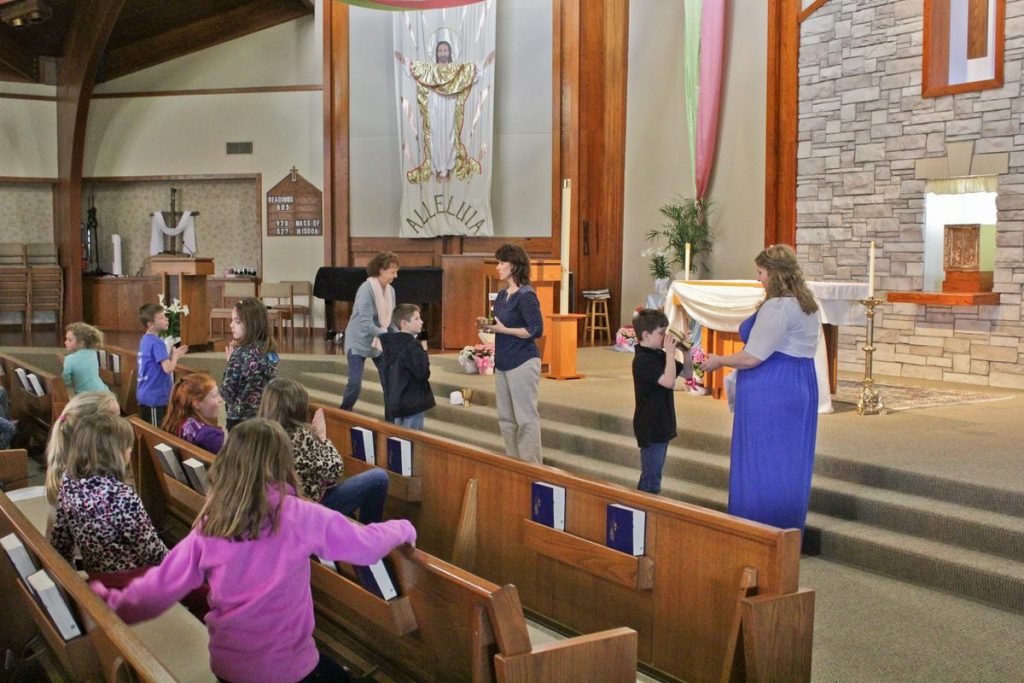
From the front pews, two children from Cari Ramold’s second grade class at St. Gregory’s School couldn’t contain their questions on Thursday. They bounced with their hands raised until Michele Starke, who directs religious education for the elementary school students at St. Gregory Barbarigo Parish, called on them.
This year, 20 second grade students made their First Communion at St. Gregory’s on Saturday.
With only two days until they participated in the Lord’s Supper for the first time, the students had some questions about the sacrament.
“Sometimes you’d be surprised about how deep some of the questions that they ask can be,” said Ramold.
The Roman Catholic Church does not define the age of reason as seven, but this is the common time that young Catholics who have sufficient understanding of the Eucharist can begin participating in this vital aspect of church life.
During Thursday’s preparation period at the church, students questioned their teachers about how they knew what Jesus said if he spoke a different language and what “consecrated” meant. They also showed concern about where to sit, how to hold their hands, and if the wine in the chalice were real.
Ramold, who has been teaching in Catholic schools for five years, said she often draws on her own experience and faith formation to teach catechetical lessons to her students.
“I remember it was a really big deal in my family,” Ramold said. “You watch your family and friends receive Jesus for a long time. When it’s your turn, you’re really excited to get to do that.”
Celebrating communion takes many forms throughout different sects of Christianity. Beliefs about how frequently to observe communion, the methods and rituals regarding its distribution, and who can take it have divided Christians for centuries.
For Catholics, Holy Communion is central to faith in Christ. Catholics practice closed communion, which means that only members who are in good standing with the Catholic Church may receive the Eucharist during Mass. Reason for this stems from the uniqueness of the Church’s theological basis for receiving communion.
Starke and Ramold have been working with the children the entire year to prepare them for this day. Children in the Roman Catholic Church taking communion for the first time don’t have to attend the classes, but Starke said they have to have some kind of preparation.
Of the 20 children who received their First Communion, all but four attend St. Gregory’s. The rest attend other schools in the area. To draw all the young Catholic students in the community together, Starke created a group called Little Saints three years ago. The group meets three of four Wednesdays each month to learn about the Gospel through songs and hands-on activities.
“I want it to be alive for the kids,” Starke said. “It can’t just be sitting there doing a worksheet if they are going to understand it.”
At school, Ramold guided her students through a meditation of the Last Supper where students imagined hearing what Jesus said and that they can experience Christ through the Eucharist. Before the children took the bread and the cup Saturday, Starke and Ramold interviewed the students about the m Starke said, regards what happens to the bread and wine during the consecration.
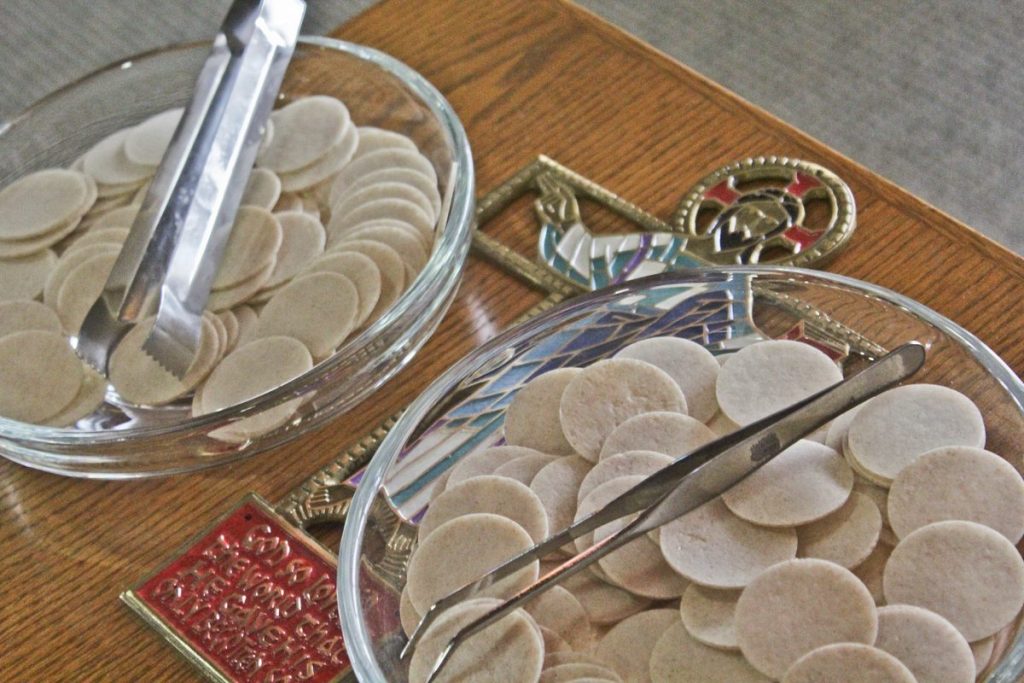
“It’s not just a piece of bread,” said Starke. “It’s truly Jesus. We believe that.”
Transubstantiation, which is when the bread and wine are consecrated during the Mass, become the body and blood of Christ.
“That’s really the crux of it right there,” Starke said.
Ramold said this can be a difficult concept for her students to understand, but she and Starke collaborate to find ways to explain it.
“Part of it is a mystery, and that’s why we have faith,” Starke said to the children Thursday.
Other interview questions cover who the priest represents in Mass and the meaning of the Last Supper. New communicants learn that they must have a healthy soul by going to confession, fast an hour before receiving communion, receive Him well by having the proper posture at the altar, and give thanks through prayer.
By JENNIFER DITLEVSON HAGLUND Staff writer
Cari Ramold’s second grade class at St. Gregory’s School practice to make their First Communion. During the trial run Thursday afternoon, Michele Starke reviewed theological and practical questions about the sacrament with the children while Ramold and St. Gregory’s School Principal Susan Martin gave the students the elements.