
Please vote with eye to future
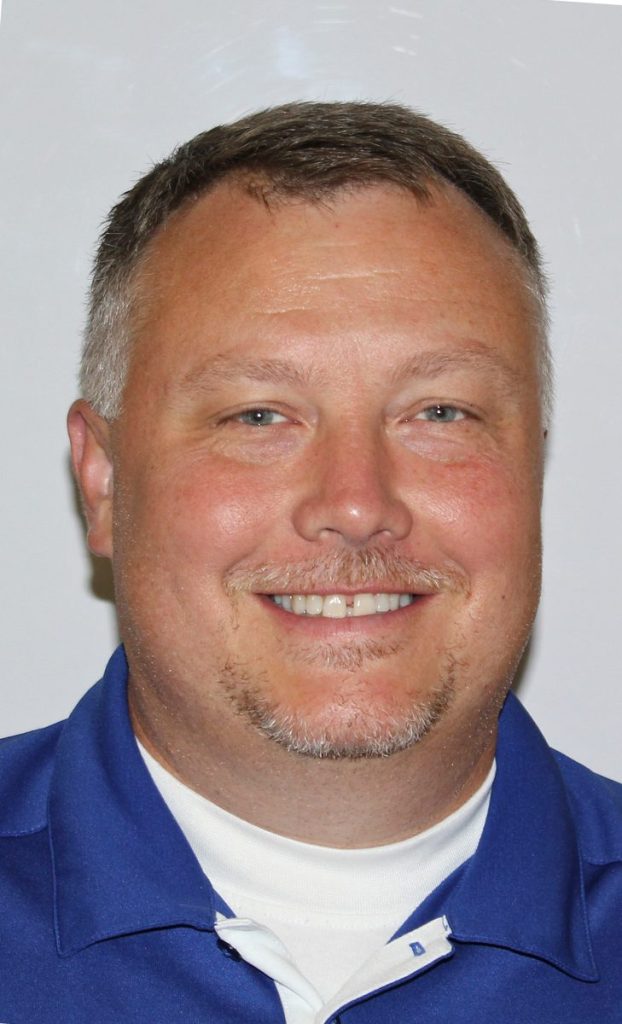
Phil Cobb
It’s an election year, and the general municipal election is Tuesday.
Much ink and airtime has been spent on this bizarre presidential campaign, but there are a couple of local issues that will potentially have a much larger immediate, and local impact.
If you live within the city limits of Maryville, you’ll have the opportunity to vote on a couple of sales tax issues that collectively will ensure the prosperity and longevity of Mozingo Lake Recreation Park, and by association that of Maryville and the surrounding region.
Mozingo has been, and with your help, will continue to be, not only a jewel in Maryville’s crown, but with it’s seemingly endless revenue-generating capacity, a catalyst to make many more things possible.
When issues such as this come in front of voters, there are always the constituents who want to blurt out things like, “Why don’t we fix the streets instead of wasting money on some lake I don’t even use?”
What we need to remember is that fixing streets cost money.
Why should Maryville citizens shoulder all that load?
Let’s capture revenue from the hundreds of thousands of people who visit Mozingo every year, and let them help us maintain our infrastructure.
It’s just smart.
The more people we attract with amenities at Mozingo, the more money will be spent by these visitors throughout our community.
Whether directly or indirectly, everyone benefits.
In a separate ballot question, affecting the Jefferson C-123 school district, voters will have an opportunity to approve a $1.535-million bond issue to build a new gymnasium.
This is the seventh attempt by the Jefferson school board to pass the measure, which they deem as a need, not a want — a necessity, not just a desire.
I won’t be directly affected one way or another by the results of this decision, but I am rooting for it to pass for more than one reason.
I started covering the Jefferson school district for the Tri-County News in 1994, and in doing so for six years, I developed an affection for many of the people there and an appreciation for the level of excellence displayed, not only by its athletic teams, but also academically.
I remember discussions with former superintendents Jerry Archer and Rob Dowis about the district’s being accredited with distinction — one of the highest honors a district can achieve — on more than one occasion. Actually, if I remember right, it became an annual occurrence.
Many of the people I worked with more than 15 years ago are still around today, and I have become acquainted with some of the new faces, as well.
From my vantage point, over more than a 20-year span, I have not noticed any decline in the level of education being provided by that school district.
If anything, it has improved.
I think the common perception is that the little districts should look at the bigger districts to see how to do things.
In my opinion, Jefferson is a shining example of quite the opposite.
If bigger school districts could figure out what smaller districts like Jefferson do to consistently and persistently achieve such success, they would be better for it.
And if the C-123 leaders could somehow bottle and sell that formula, they could easily pay for a new gymnasium.
I have spoken to a few of the current and former faculty, and they have me convinced that this is not just a way to get a nicer, newer gym for the basketball teams to play in.
It would, indeed, achieve that purpose, but what’s most important is that it would alleviate scheduling stress currently being put on the existing gymnasium.
The current gym is not just a gym, it’s also an auxiliary classroom, performing arts center, weight room, playground, and more — for not just the high school, but for kindergarten through 12th grade.
I’ve been told by teachers that it is not uncommon to see students sitting on the hallway floors as supplemental classroom space because the gym and all other classrooms are full.
The most selfish reason I have to root for the gymnasium bond issue is because one of my key employees wants to raise her family in that school district, and she would like to be able to send her soon-to-be-born child to the same school for his, or her, entire primary and secondary education, the same school her husband attended and was graduated from.
I’d like her to be able to do that because I’d like her to continue working here for many years to come.
I certainly don’t want her to have any reason to relocate.
Everyone knows who I’m talking about, and they won’t mind if I use their names, so I will.
Matt and Kaity Holtman represent an important — maybe the most important — segment of Nodaway County’s population.
They represent the 20-something-year-old married couple demographic, desiring to start and raise a family in rural Missouri, close to their roots.
These are college-educated young people who have chosen — not out of necessity, but out of desire — to make their home here.
Aren’t they the ones we talk about when we are always asking, “Why don’t young people ever stay around here?”
I believe we are living in a key moment in history for these smaller communities.
Decisions that are made now are most certainly going to determine how long some of the smaller schools throughout the state survive.
I will be surprised — no, shocked — if Nodaway County has seven public school districts 20 years from now.
Quite frankly, the survivors will be those that put plans in place with the future in mind.
Those that sit on their laurels, hoping things will always remain the same, will be the ones that fade away.
I know that’s hard to listen to, but those are the facts.
I can’t vote for either of these ballot issues because I don’t live in the Maryville city limits, or the C-123 school district, but I will be affected to varying degrees by both.
For those of you who do possess the opportunity to vote on these two important issues, please ask yourself this question: “Where would you be today if the people who came before you hadn’t made decisions, and sacrifices, with the benefit of the future in mind?”
Wouldn’t it have been easier for them if they would have just left things the way they were?



