Cancer survivor promotes early detection
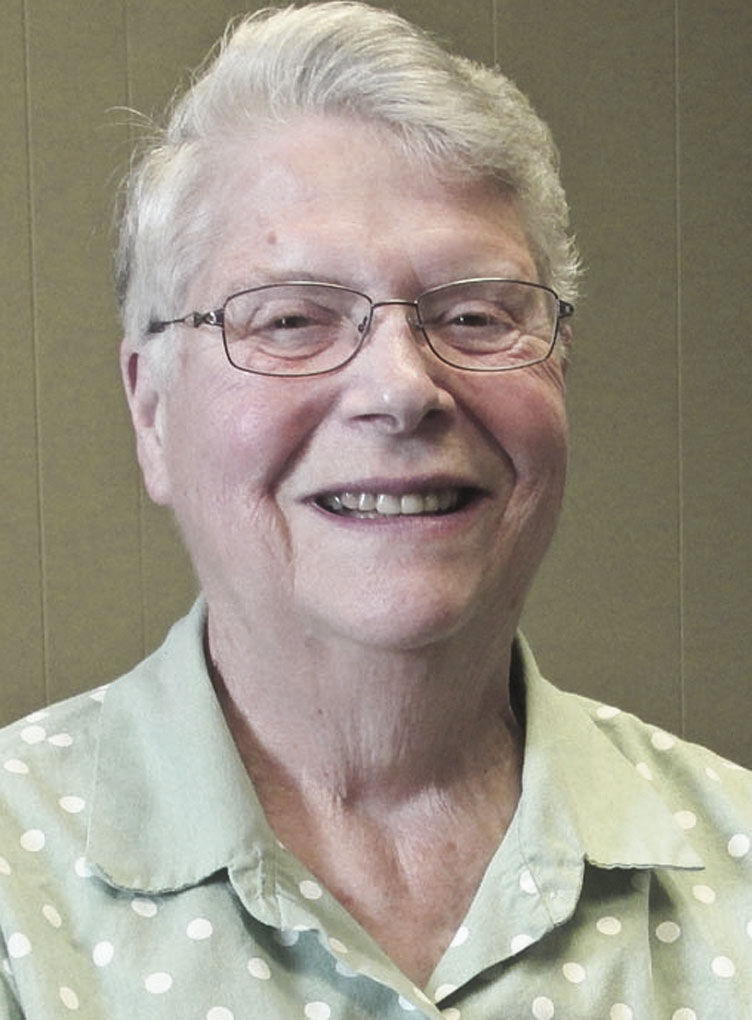
JENNIFER DITLEVSON HAGLUND/DAILY FORUM
Wally Gray is a breast cancer survivor since 1996. Gray said she considers it a reward that she gets to watch her grandchildren grow, and she looks forward to becoming a great-grandmother in 2016. She attributes her survival to early detection and urges women to face their fears of preventive screening.
Thinking back to her options for breast cancer treatment in the mid-1990s, Wally Gray said she didn’t like either of them. She made a choice not all women would make, and she’s never regretted it.
“I have always been very proactive and mouthy, and it’s my body,” Gray said. “It’s a decision that I had to make that was right for me, and it wouldn’t be right for nine out of 10 people, but it was right for me.”
When Gray was diagnosed with breast cancer in 1996, her doctor told her she had two choices, a lumpectomy with chemotherapy and radiation, or a mastectomy.
She opted for a bilateral mastectomy. The carcinoma in situ was found in her left breast. After the breast was removed, doctors identified cancer in her right breast, which was removed as well.
Gray has a sense of humor about it. Mastectomies often leave women with poor body image, but Gray was never fazed by the change in her appearance. She never wanted reconstructive surgery. In fact, she said the mastectomy gave her less to worry about.
“To be real truthful about the whole thing — and the doctor thought I was a little bit wacky — but when I said I want the other breast checked, I was a 44D. And I would’ve walked very lopsided if I only had one removed.”
According to Gray, about seven years after the operation her doctor informed her that the treatment protocol at the time would not have required anything but routine surveillance checkups. Her biopsy revealed that she had Stage 0 cancer.
Almost 20 years ago, Gray was ahead of her time in taking charge of her treatments. Back then, patients with cancer diagnoses were told what to do. More recent research is exploring how to prevent exposing people to needless toxicity.
“As a nursing home administrator, I saw a lot of people go through treatments for cancer that left them with no quality of life,” Gray said.
Gray said she based her decision on her love of family and work at Parkdale Manor Care Center. After seeing people suffer through the disease, Gray wanted to take the shortest and surest route to recovery.
“I just knew I wanted to do whatever I could to just get it gone and be done,” she said.
The time from her diagnosis to the end of her recovery period was short. Gray said it took no time at all. It was about a month and a half in total.
Gray stressed the importance of early detection in fighting breast cancer. Because she knew she had a history of breast cancer in her family, Gray never missed mammogram appointments.
After watching a good friend who had breast cancer die, Gray said she was convinced about getting a second opinion from a doctor who had more advanced screening equipment at the time.
She doesn’t belong to any support groups or promote breast cancer awareness in an organized way. Still, Gray said she insists that women take action in prevention.
“[I] slap everybody up side of the head and say, ‘Go get a mammogram. Do it now. Don’t wait,’” Gray said. “To anybody who says, ‘ooh, I hate to get a mammogram,’ I say, ‘Don’t be such a wuss. Go get it done.’”
Breast cancer ranks third (11.6 percent) in the incidences of cancer in Nodaway County, according to the Missouri Cancer Registry. In 2013, only lung cancer accounted for more cancer deaths in women than breast cancer nationwide.
Sue Gille, who has worked with the Nodaway County Crusade Against Cancer since 1998, said that despite the decrease in local incidences of breast cancer in the last couple years, too many cases are found later than they should be.
“We can’t control our heredity, but we should screen early to detect it,” Gille said.
Gille also noted that people can decrease their risk of being diagnosed with all cancers by maintaining a healthy weight, exercising, and avoiding smoking and drinking alcohol.
“With early detection, breast cancer is not a life sentence. There are some that are.” Gray said.
Women do not need to wait for referrals for breast cancer screening. For women older than 40, all marketplace health plans must cover in-network mammography screenings every one to two years without charging a copayment or coinsurance, even if the insured person has yet to meet the yearly deductible.
Men can also get breast cancer and should be screened for the disease if they are concerned about their risk.
For more information about breast cancer diagnosis, treatment, and support, visit the National Cancer Institute and the American Cancer Society websites at www.cancer.org and www.cancer.gov.