Purse strings tighten for city in 2016
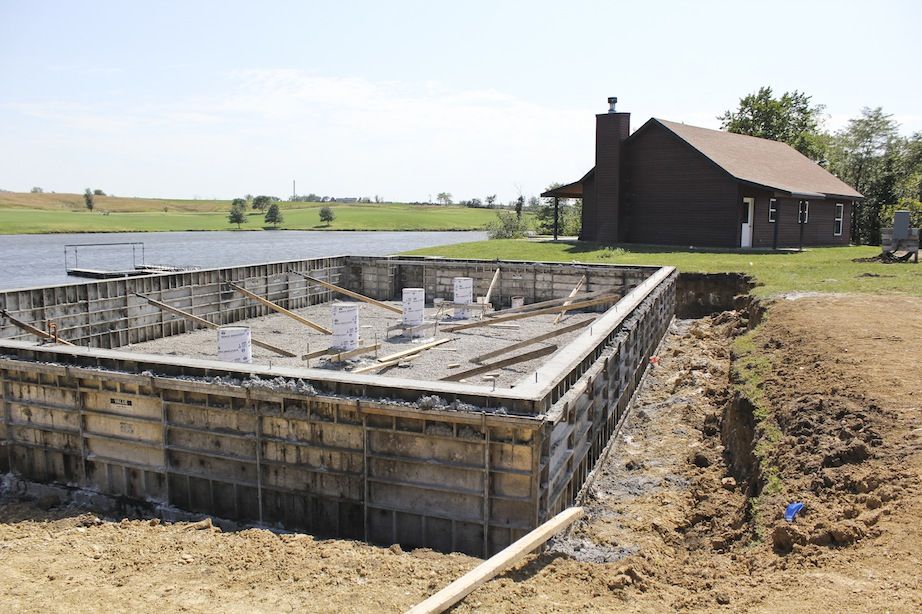
PHIL COBB/DAILY FORUM
A new rental cabin at Mozingo Lake Recreation Park being constructed by Northwest Technical School building trades students is among the capital projects currently underway by the City of Maryville. The City Council this week reviewed the proposed fiscal 2016 budget, which in addition to park projects includes $473,000 for lining underground sewer pipes and $250,000 for repaving North Main between 16th Street and the north city limits.
Money was at the heart of lengthy Maryville City Council deliberations this week as the governing board worked its way through staff presentations and a thick stack of documents related to a new municipal budget scheduled for adoption during a special meeting set for 5:30 p.m. Sept. 21 at City Hall.
During a budget workshop prior to its regular Monday session, the council listened to a presentation from City Manager Greg McDanel that summarized proposed spending from the city’s three main fiscal pools, the General Fund, the Water/Sewer Find, and the Mozingo Lake Recreation Park Fund.
Taken together, the three funds account for approximately $18 million of the city’s $25 million balance sheet for the upcoming fiscal year, which begins Oct. 1.
The remainder of the budget consists mainly of fixed costs spread across several other funds set up to account for revenue and spending related to the Maryville Town Center Tax Increment Financing district (Hy-Vee), the city maintenance garage, debt retirement, and Oak Hill Cemetery.
McDanel told the council that for the first time in several years there is a relatively small amount of money available for new capital projects and discretionary spending because non-obligated revenue from the city’s half-cent capital improvements tax, which expires in 2018, is nearly exhausted.
He said that remaining anticipated revenue from the tax will be used to service debt acquired to finance a series of major improvements, such as the reconstruction of South Munn Avenue and Depot Street, asphalt street overlays, purchase of a new fire truck, the Fourth Street Corridor streetscape, and water and sewer system upgrades.
“This is the tightest budget since I’ve been here,” said McDanel, who added that next year’s budget will likely remain on the lean side with voters going to the polls in 2017 to decide whether to renew the levy.
For the first time in three years, McDanel said, budget restrictions will force the council to make cuts in other areas when confronted with proposals for discretionary spending.
One example of the new austerity is a proposed street overlay budget of only $330,000, down from more than $670,000 for the current fiscal year, which included improvements both inside the city proper and at Mozingo Lake Recreation Park.
A single major overlay effort is planned for next year, the two-mile highway-like stretch of North Main Street extending from about 16th Street north to the city limits.
City staff estimates resurfacing North Main will cost around $250,000, leaving only $80,000 for other projects.
Another example of reduced spending is the line item for demolition of derelict houses and other unsafe structures, which will drop from $75,000 to $20,000.
Although the council has made tearing down abandoned houses a priority over the past three years, McDanel said many of the worst structures have been eliminated, and that the City Hall plan now is to shift its focus toward working with property owners in an effort to keep marginal houses in good repair.
A primary area in which the city does plan to spend more money over the next 12 months is related to personnel. Wages for many city workers — especially Public Works maintenance crews and police officers — will rise next year following a market-based adjustment to the city’s salary ladder.
McDanel said the market-driven increase is the first such pay-scale revision in a decade.
There will be no cost-of-living raise for city workers in 2015-16, but some employees will receive 2.5 percent merit pay hikes based on performance.
Bigger paychecks will increase municipal payroll spending by approximately $160,000.
Among the highlights of this year’s General Fund budget is $108,270 earmarked for engineering of proposed pedestrian and traffic-flow improvements along the often-congested South Main corridor.
Design work is expected to continue over the next two years, and the current budgeted expenditure total includes an $86,000 Missouri Department of Transportation grant that has yet to be approved.
Other proposed big-ticket items in next year’s budget, as usual, include a number of projects related to the city’s water and sewer system, including the lining of more than 18,000 feet — nearly three and a half miles — of sewer line in an effort to reduce inflow and infiltration of storm water.
On Monday, the council awarded a $473,845 contract to Wisconsin-based Visu-Sewer, which Public Works Director C.E. Goodall said should be able to start lining the underground pipes in about two weeks. The project is expected to require four months, and Goodall said crews should be minimally hampered by cold weather.
The lining consists of a clay-like substance that is extruded through the pipes to strengthen the pipe wall and then dries like cement.
Goodall said the lining, rated to last up to 50 years, is only about an eighth of an inch thick and will have a minimal impact on pipe capacity.
Other major water-sewer line items proposed in next year’s budget include a $325,000 trunk line replacement and the relining of 100 of the city’s more than 800 manholes at a cost of $225,000.
Five hundred thousand dollars has been set aside for improvements to the city’s southwest lift station on the south side of Route V, but McDanel said the line item, for now at least, is a “placeholder,” since city staff hopes to receive a state Community Development Block Grant to pay for at least part of the project.
The proposed budget also sets aside $250,000 for painting the interior of the city’s main water tower at the terminus of West Edwards Street and $80,000 for installation of a new Mattie Street water line.
Big expenses for the Water/Sewer Fund, coupled with debt service for the newly completed $13.7 million wastewater treatment facility and reduced revenues from services associated with the Nodaway County Public Water Supply District and the closing of the Energizer battery plant, mean that the city will follow through with its previously announced plan to increase water/sewer bills for Maryville residents beginning Jan. 1.
McDanel told the council the rate for the sewer department portion of the bill only will increase by 20 percent with an average cost per household of between $2 and $3 a month.
The city’s third major fund, which covers operations and capital spending at Mozingo Lake Recreation Park, will total about $2 million for fiscal 2016, including $652,000 in capital outlays, a figure that embraces a $390,000 “placeholder” line item for development of a proposed $3 million conference center the city wants to build in conjunction with a privately developed lakeside hotel.
Other projected spending includes $50,000 for an eighth rental cabin and $55,000 for marketing and advertising, including materials for use during the approaching campaign for renewal of the half-cent Mozingo sales tax.
The tax, which expires in 2017, will likely go before voters in April 2016. City officials have said extension of the levy is essential if the park, which is home to two golf courses, one yet to open, is to continue operating at its current level of service.