Big scoop: Grocer hosts Root Beer Float Day
TONY BROWN/DAILY FORUM
Forget the diet for this week. Thursday is National Root Beer Float Day, and the local Hy-Vee supermarket is celebrating by offering free lunchtime floats Thursday in exchange for donations to the Nodaway County Ministry Center’s Backpack Buddies program.
Attention all sweet-tooths. If you thought National Doughnut Day was a high-calorie blast back on June 5, just wait until tomorrow, when the Maryville Hy-Vee supermarket pulls out all the stops for National Root Beer Float Day.
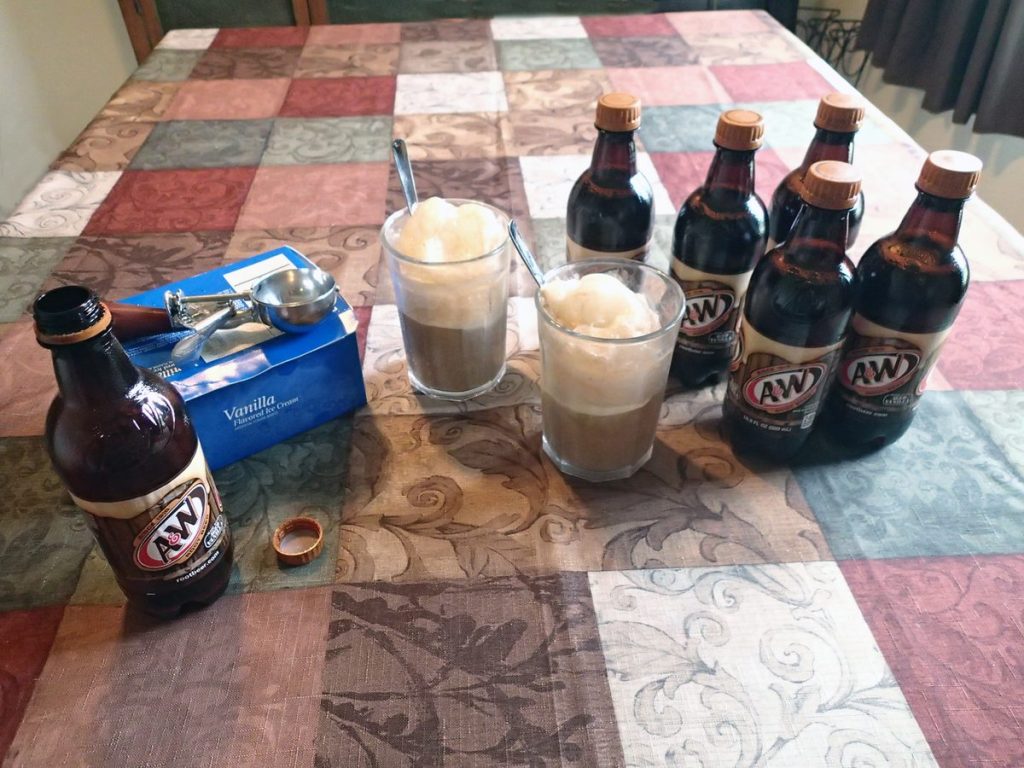
The grocery retailer will be offering root beer floats, or “brown cows” — that’s a glass of root beer with a scoop of ice cream in it — from 11 a.m. to 2 p.m. Thursday. The floats are free, but Store Director Chris Wiltfong said donations are encouraged, with proceeds going to the Nodaway County Ministry Center’s Backpack Buddies initiative.
Supported by private donations, Backpack Buddies provides children from food-insecure homes with healthy weekend meals during the school year.
In addition to the floats, Wiltfong said his store will be serving up All-American Hamburger Meals from 11 a.m. to 2 p.m. both Thursday at Friday for $6 apiece, and that each meal includes a 6-cent fuel saver credit. The lunch package consists of a hamburger, french fries and a 20-ounce A&W root beer.
Other parts of the promotion will offer A&W six-packs of 16.9-ounce bottles on sale for $1.29 while supplies last and 20-ounce A&W singles available at the Hy-Vee convenience store for 99 cents each.
Wiltfong said he’s ordered in a 20-pallet truckload of root beer to meet anticipated demand.
But wait. You didn’t know there was a National Root Beer Float Day? Well there is, and it’s almost here.
However, the origins of this sugar saturated “holiday” are a little fuzzy — or fizzy as the case may be — and seem to have been popularized mostly by — big surprise here — whatever marketing firm handles the A&W Root Beer account.
But with regard to the root beer float itself, there’s does appear to be some bona fide history.
According to the social news platform Newsvine, the concoction was first whipped up in 1893 by a Colorado mine owner named Frank J. Wisner, who also operated a tavern.
If the tale is to be believed, Wisner came up with the idea while admiring snow-capped Cow Mountain in the moonlight.
It seems that the moon was shining down on snow covering the peak above the black mass of the mountain and looked a lot like, at least to Wisner, a big dollop of vanilla ice cream resting on top of a container full of dark liquid.
Inspired, Wisner is said to have hurried back to his bar where he scooped ice cream into a glass and added a few ounces of his best-selling soft drink — root beer.
Wisner supposedly named the confection “Black Cow Mountain,” which customers soon shortened to “black cow” or “brown cow.”
As for root beer, that’s been around for ages. Native Americans were making sassafras beverages and drinking them as medicine long before the arrival of white settlers, who caught on early.
European culinary techniques have been used to make sassafras-based beverages similar to root beer since the 1500s, and the stuff started appearing in confectionary stores well before the Civil War.
According to “Sundae Best, A History of Soda Fountains” by Anne Cooper Funderburg, a pharmacist named Charles Elmer Hires was the first person to successfully market a commercial brand of root beer.
Hires, a strict teetotaler, wanted to call his beverage “root tea.” But he was also eager to sell the product to Pennsylvania coal miners and so settled on the name root beer instead.
Not all root beers were sassafras-based. One of Hires’ early competitors was Barq’s, which began selling sarsaparilla-based root beer in 1898.
Root beer’s big corporate moment came in 1919, when Roy Allen opened a roadside stand in Lodi, California, and later partnered with Frank Wright to form A&W root beer. Allen’s signal innovation, as any baby boomer will recall, was deciding to serve root beer — and root beer floats — in ice-frosted mugs.
The popular beverage continued to evolve after safrole, the aromatic oil found in sassafras roots that gives traditional root beer its distinctive flavor, was banned commercially in the 1960s after tests using laboratory animals linked it to liver damage and various types of cancer.
Fortunately for root beer lovers, the industry was able to develop similar artificial flavors with some manufacturers still using natural extracts from which the safrole has been removed.
After being acquired by a number of corporate parents, Outside Canada, A&W was spun off by Cadbury Beverages as part of the Dr Pepper Snapple Group in 2008.