
Fugitive patriotism: points of qualification
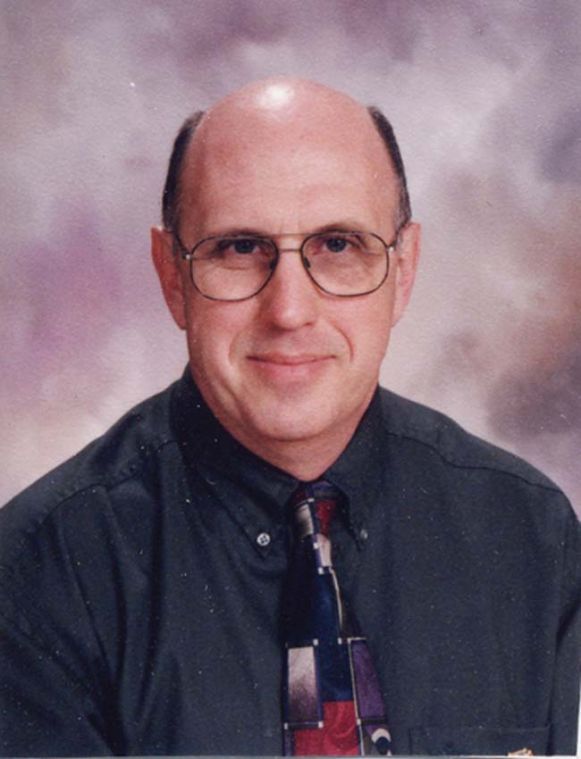
LARRY ANDERSON
Larry Anderson
My policy in writing this column for the past six-plus years has been basic: Write as clearly as possible, document when necessary, and engage the reader with a perspective that might not otherwise be available.
Also, be prepared to back up anything I say, knowing in advance not everyone will agree with my positions, political or otherwise.
Indeed, I don’t want readers to subscribe without analysis or criticism. As a former teacher and as a writer, my goal has always been to provoke and engage.
On May 18, the Maryville Daily Forum published a My Word column entitled, “Qualities For a New President.”
In that column, I identified a few traits I felt were desirable for a candidate seeking that office. These included patriot, economist, educator, pro-military, and constitutionalist.
I also identified honesty and integrity as necessary for credible seekers of that office.
One reader exercised his right of dissent to my point-of-view, notably to “patriot.”
I think he objected most to this comment: “This is a lost ideal in the Age of Obama. I can’t think of one time when this president has spoken emotionally for his love of the country that elevated him to the highest office in the land.”
I was being honest. I couldn’t recall such an instance, nor did I feel compelled to go to another source to refute my impression. My position stands, and I am hardly alone.
The reader went to Google to produce four quotes from the president, ranging in dates from 2004 to 2015.
The first quote supported reasonably well his belief that Obama is indeed a patriot. The other three were not representative of that position.
I will explain.
One of the Obama quotes was this: “The United States has been one of the greatest sources of progress that the world has ever known.”
Well, that’s true, but it has nothing to do with patriotism.
It is an acknowledgment of America’s contribution to national and world progress.
Here’s another quote offered as evidence of Obama’s patriotism: “I believe in American exceptionalism with every fiber of my being.”
That’s better, at least in tone, but it is not a point about patriotism.
The notion of exceptionalism is applicable to racial diversity, economic opportunity, and constitutionally guaranteed freedoms such as the right to religion, speech, and assembly.
If Obama had said, “I believe in patriotism with every fiber of my being,” then, obviously, the quote would have been supportive of the reader’s position.
As it is, it is not.
The word, “patriotism,” did not appear in any of the quotes offered.
Now, patriotism is an abstraction. It can mean different things to different people, and, of course, any discerning person can infer patriotism as part of rhetoric.
Skilled politicians know this.
Language is the tool of politics.
It is also true that a listener can receive a different message than the one attempted.
Patriotism, I think, is felt first, then verbalized.
If it is never felt, sincerity may not come through.
That is the impression I have of Barack Obama. In my opinion, his patriotism is rhetorical, political, and negotiable.
It isn’t sincere.
True patriotism has as much to do with the heart as the mind. Obama has an incredible intellect, but if there is genuine patriotism stirring within him, it lacks conveyance.
Most of what Obama stands for is his interpretation of social justice, redistribution of wealth, and growth of government. Which of those ring with patriotism?
It is illogical to expect in modern times the kind of patriotism in politicians that early Americans found in Patrick Henry or Thomas Paine.
These days are different, but I don’t think it unreasonable for politicians to hearken back to those days in which this country was formed or to the principles that guide it. It is okay to use the word.
Finally, patriotism must be based on the acceptance of the high guiding principles that protect our national integrity. Social engineering and policies guided by the numbing practice of executive order and veto speak poorly to patriotic necessity.
Larry W. Anderson’s novel, I, Eugenius, is available at the Maryville Public Library.



