
Remembering nearly missing military time during Vietnam
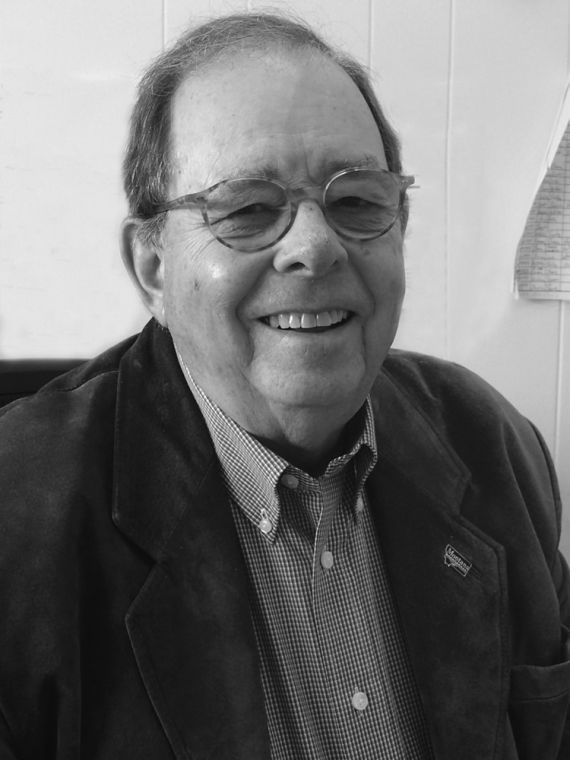
Jim Fall
I was a soldier once, and young.
It is easy now to paraphrase the famous quote from the book of the same name that came to be an icon of America’s involvement in the conflict in Southeast Asia that became known simply as — Vietnam.
Almost six months to the day after my being graduated from the University of Missouri with a freshly minted degree in journalism (with a major in weekly and small daily publication), I received that inevitable letter from my local draft board.
“Greetings, your friends and neighbors …,” the story goes, but I actually do not remember the exact wording.
What I do remember is that my budding career as the city hall/police reporter for the Southern Illinoisan newspaper in Carbondale, Illinois, was about to come to an abrupt halt.
A significant interruption, at best.
On the day I turned 23, I was expected to report for induction into the United States Army.
Having attended Castle Heights Military Academy during high school, I had optioned out of college ROTC. And, I had mistakenly calculated that being married, being employed full-time — and having grown up next-door-neighbors to the “draft board lady” in my hometown of West Memphis, Arkansas, would somehow get me by.
Not.
My actual entry date was delayed by a little more than a month, to Jan. 10, 1960, and I reported, as ordered, to the induction station in St. Louis, with yet another ace in my back pocket. Or so I thought.
During high school, I had been rejected for an appointment to the U.S. Naval Academy because of my eye sight, and I was counting on that still being the case.
(That appointment actually came through one week, to the day, before I would have reported as a new Midshipman, but I turned it down.)
That ace was trumped, too, and Jim was headed for Fort Hood, Texas, for basic training with the 2nd Armored Division, “Hell on Wheels.”
Somehow, I missed getting sent to the 1st Armored for advanced infantry training, and then on to Germany, as most of my basic training battalion was.
Instead, I was ordered to Fort Bragg, North Carolina, for assignment with the Special Warfare School.
Coincidentally, 1960 is the year officially designated as when the United States actually became involved in the conflict that became the Vietnam War.
One of my major assignments during my two-year stint there was working with then Capt. John H. Johns in his capacity as an instructor in the Special Warfare School that attracted U.S. officers as well as a strong contingent of young allied officers.
Capt. Johns taught classes in psychological operations (propaganda), unconventional warfare, and later, counter insurgency at the school. He retired from the Army as a general following several tours of duty in the Pentagon.
At Fort Bragg, I also coached a Little League baseball team and a couple of my players were sons of a Special Forces trooper. We became pretty close friends and I learned more about Vietnam at that point in time than I really wanted to know.
As a result of several personal experiences with friends of my ball players, and an official assignment for a civilian magazine about the 7th Special Forces, I learned that America was pretty deeply involved in southeast Asia for quite some time before it became “official.”
I remember, vividly, my Special Forces friend and his family’s spending a night with us in Carbondale, after I was out of the service and back on the reporter beat.
He had been re-assigned from Fort Bragg to Utah as an advisor with the Special Forces reserve unit there.
I never saw nor heard from him again.
The last I knew, with the help of the former Festival Family folks from Skidmore, who supposedly maintained one of the best sets of records of those who served in Vietnam, was that he was classified as “missing in action.”
That was probably the closest I came to personal involvement with the war in Vietnam.
Other than when I was managing editor of my hometown newspaper, we had a summer intern who was in what became known as the draft lottery.
I still remember him, standing by the old AP teletype machine watching the assigned numbers as they were hammered out.
He dodged the bullet, and was, understandably, relieved, and ready to celebrate.
That attitude changed somewhat when I assigned him to do a story on his feelings as he saw the numbers rolling off the printer. That I had sneaked a photo of him, watching his number be hammered out, proved to be a deciding factor.
I also remember reporting the death of the first soldier, a young Marine, from that county.
I have seen his name engraved on the Vietnam Memorial. The aforementioned Festival Family, featuring Britt Small, played a significant role in that memorial’s dedication.
(The Vietnam Wall is one of my favorite places to visit in Washington, D.C., especially at night. It is just a step behind the Korean War Memorial, also at night.)
Those remembrances are the extent of my experience with Vietnam.
I suppose I was fortunate to have been in the military during a time of comparative peace around the world.
By chance, not necessarily choice.
Granted, I was extended for several months at the beginning of 1962 because of some little goings-on around Cuba, which was also something that was fairly serious in the grand scope of things.
It definitely was to me at the time, but I got over that soon enough.
And now, our country is observing the 40th anniversary of our history in Vietnam, trying to get out of similar problems in the Middle East.
Paraphrasing again: “When will we ever learn, when will we ever learn?”



