Support group reaches out to those in grief
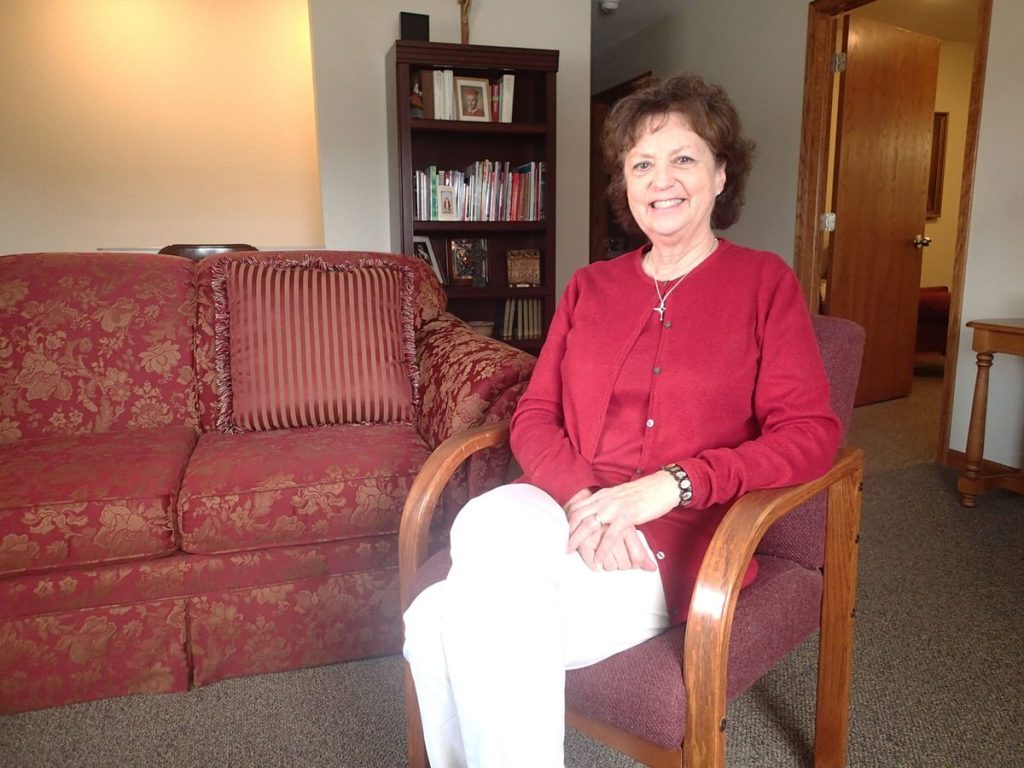
TONY BROWN/DAILY FORUM
Michele Starke, a retired elementary school teacher, is the founder of the Maryville Grief Care support group, which will begin a new 13-week series of meetings at 6:30 tonight in the St. Francis Hospital boardroom.
The death of a loved one is a universal part of the human condition. But even though virtually everyone suffers the loss of someone close, the experience is still almost always fraught with pain, confusion, despair, sadness and anger.
Michele Starke, who back in 2010 founded the beginnings of what has grown into Maryville’s Grief Care support group, has felt all of those emotions, having endured the death of her first husband in 1998.
And now, five years after the program’s inception, she still wants people working through the grief process to know one essential thing. They don’t have to go through this alone.
Grief Care incorporates many of the resources provided by GriefShare, a nationwide network of grief seminars supported by video discussions and other materials.
Starke and SSM Hospice social worker Jeanette Collin will begin leading Maryville’s next 13-week grief seminar tonight, during an opening session scheduled for 6:30 p.m. in the St. Francis Hospital boardroom.
The meetings are open to anyone wishing to take part, including those grieving the loss of a spouse, parent, sibling, child, grandchild or other relative or close friend. Participants do not have to attend tonight’s opening session in order to take part in the remaining gatherings.
In addition to the official support group, Starke said the Grief Care project has also come to embrace more informal gatherings, since many of those taking part have become friends who see value in continuing their dialogue about recovering from deep personal loss.
Though non-denominational, Grief Care is nevertheless a faith-based program rooted in the belief that healing and comfort can be found through prayer and reading the Bible.
Beyond that, Starke said, the group explores a wide variety of responses to grief because there is no “right way” to heal.
There are however, some expectations. Grief Care participants are expected to “be honest,” “be willing to work on your own grief,” “be willing to share,” “be open to the Holy Spirit” and to respect that anything shared during group sessions is offered in confidence.
A retired elementary teacher, Starke moved to Maryville from Kansas in 2006 after remarrying. She said she found a grief support group she joined in Kansas City after the death of her first husband to be very helpful, and was dismayed to find no similar program existed here.
“It helped me tremendously,” she said, “and I realized that there might be a ministry for me, reaching out and trying to help others.”
Starke said about 35 people have participated in the Grief Care support group in Maryville, and that the program has expanded with the formation of a second group of about 20 Maryville teens who have lost one or both parents.
The groups work, she said, because they give people encountering grief a chance to share their thoughts and emotions with others who have faced or are facing similar situations.
“I think a lot of people just need to tell their story,” Starke said, “and tell it perhaps to someone who has been there. It’s an open-sharing time, and there is a sense of trust. People can cry, and they can laugh.”
Starke said she has seen “amazing friendships” grow out of the Grief Care program, and that a number of participants have continued to meet informally long after the 13-week seminar ends.
Meeting new people and forging new relationships, she said, can help counteract the debilitating effects of grief, which include emotional pain, despondence, joylessness and, not infrequently, physical illness.
“That’s actually pretty common,” she said of people whose grief actually makes them ill.
The challenge for those undergoing grief trauma, Starke said, is to “understand and own” one’s grief through talking honestly about the feelings it produces while “finding out you are not alone in this process.”
Grief Care, she said, encourages people to take specific actions to help meet that challenge, such as engaging in prayer, keeping a journal, sharing feelings and accepting feedback.
However, Starke admits, those are not always easy tasks in a culture where serious conversations about dying and death are all too rare.
“In American society we don’t talk about death,” she said. “We don’t know what to do. How do you deal with this? How do you handle it?”
Groups like Grief Care, Starke said, can help provide at least a few of the answers.
“It can give people something to hang on to and know they’re going to be OK,” she said.