
Demolition trend continues inside city
TONY BROWN/DAILY FORUM
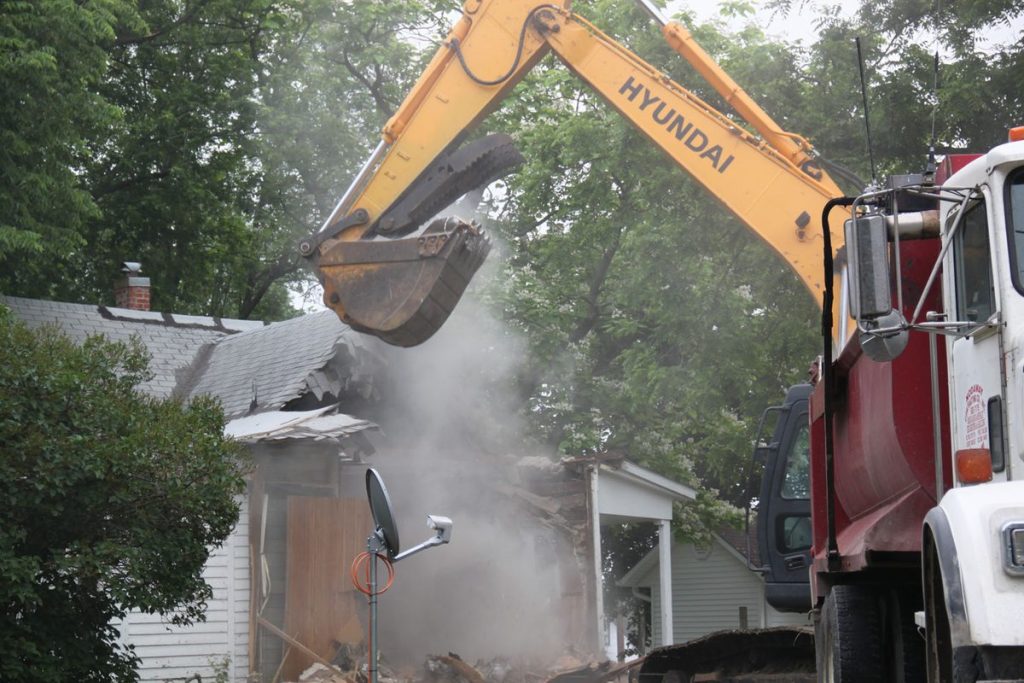
Over the past three years, nearly 50 substandard, unsafe structures, most of them abandoned houses, have been demolished inside the city limits. According to municipal officials, an increasing number of demolitions are being carried out by landowners and developers in cooperation with City Hall, thus avoiding the need for full condemnation proceedings.
Demolitions of derelict houses and other abandoned structures continued apace during 2014 in the third year of an aggressive City Council initiative to rid Maryville of blighted, unsafe buildings.
The council first began setting aside municipal funds for the demolitions in 2012. Since then nearly 50 condemned buildings have been reduced to rubble and the lots cleared for sale or reconstruction. The effort began with the removal of seven houses owned by absentee landlord Thomas Hooker.
City officials say the initiative has been so successful that property owners, realizing that demolitions are inevitable, have been working with City Hall to arrange to have old houses torn down prior to formal condemnation.
In addition to a steady stream of demolitions, clearing away derelict homes has resulted in a spurt of new construction, with at least three new multi-family projects either completed or under way in north-side neighborhoods between Main Street and Northwest Missouri State University.
City Manager Greg McDanel said several of the demolitions carried out by landowners and developers were undertaken through the Campus Town Redevelopment Incentive Program, or CTRIP.
The initiative is designed to encourage landowners and investors to redevelop down-at-the-heels properties inside Campus Town, a zoning overlay district created last year that comprises about 40 blocks just east of the campus.
In exchange for development within the district, which is zoned for high-density, multi-family housing, the city has agreed to waive demolition debris disposal fees and other permit costs associated with installation of water and sewer infrastructure as well as construction, plumbing, mechanical, and electrical work.
In the absences of landowner cooperation, the city’s condemnation process begins with municipal inspectors tagging a structure as dangerous or uninhabitable, which places the building in the pipeline for review by the Board of Code Appeals.
If the board finds that a structure is substandard, it can order the property owner to effect repairs or complete demolition within 60 days. Expiration of the time limit without further action by the owner gives the city the right to condemn the property and tear the building down on its own.
The city typically brings repair/demolition proposals before the board in groups of three. Once a hearing is held, it takes a minimum of 120 days for demolitions to work their way through a series of notifications and appeals, though the time frame more typically ranges between 150 and 270 days.
Under orders from the council City Council to move forward with as many demolitions as possible as quickly as possible, and to include funding for continued removals in the budget as a matter of policy, McDanel has worked with legal counsel to identify procedures allowed under Missouri statute to streamline the condemnation process.
According to city records, a total of 14 structures were torn down in 2014, including eight houses, three garages and three commercial buildings. All of the demolitions handled by property owners with the exception of a house at 322 N. Fillmore, which qualified for the CTRIP program and will facilitate completion later this year of the Fourth Street streetscape project.
Three other structures removed in 2014, located at 1024. N. Mulberry, 314 W. Third and 121 Hester, were removed by the owner as the result of a negotiated agreement with a private estate.
Of the $75,000 budgeted last year for demolition of unsafe and dangerous buildings, only $38,521 had to be spent, a savings McDanel said resulted from property owner cooperation. The excess funds allowed the city to pay $12,000 for the rights to a billboard on Fourth Street, which had been owned by the First Christian Church. The billboard, which does not conform to city appearance standards, is to be removed in late February as part of the Fourth Street upgrade.
A total of $225,000 has been budgeted for demolition of derelict structures since 2012, of which $124,896 has been spent. McDanel said the CTRIP program, which was nominated for a Missouri Municipal League Innovation Award, has accounted for the removal of five dilapidated house trailers and eight residential structures in aging neighborhoods bordering Northwest Missouri State University.
“After two years of strong efforts, last year marked a high rate of property owner compliance and self-removal,” he said.




