Nodaway shivers in icy Arctic blast
TONY BROWN/DAILY FORUM
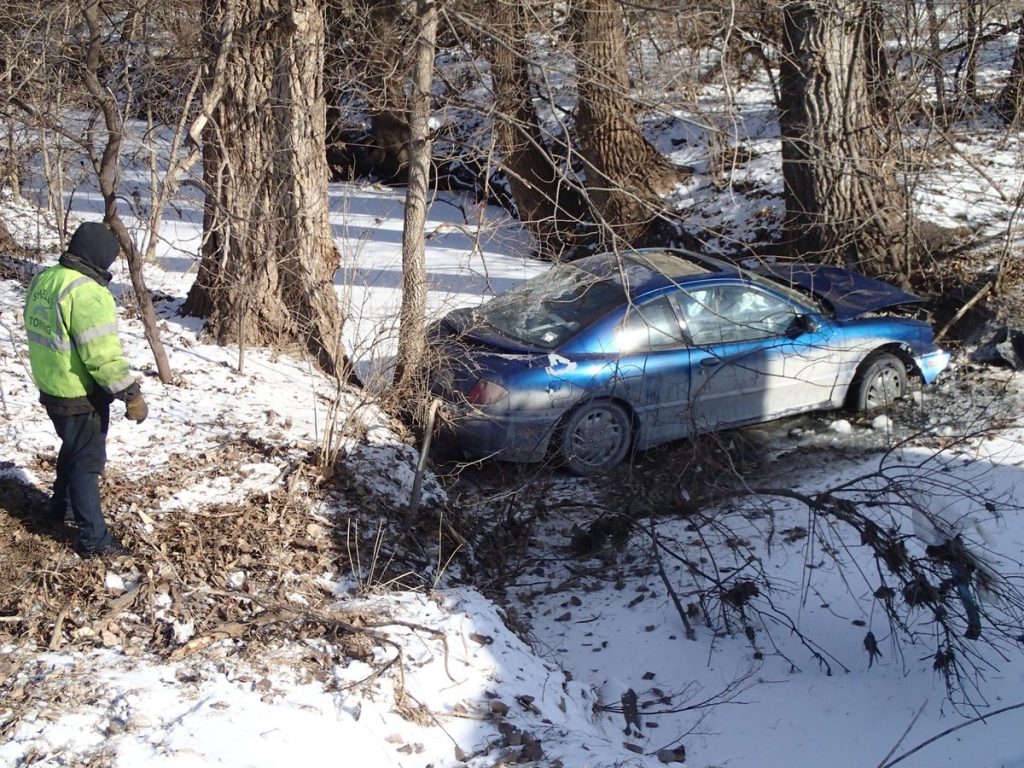
Extreme cold along with snow and ice remaining from last Saturday’s winter storm resulted in at least a couple of accidents Wednesday. Here, Marshall Shell of Shell’s Service in Maryville looks over a car that slid into a deep ravine on South Avenue while preparing to tow the vehicle back to his garage.
A blast of Arctic air rolling out of Canada into the Midwest slammed the deep-freeze door on Nodaway County Wednesday, forcing school closures and leaving motorists and homeowners to contend with dead batteries and burst water pipes.
The good news is that this winter’s third significant cold snap is expected to be fairly short lived. While temperatures were to plunge to around 6 below zero overnight Wednesday, today’s forecast calls for a high of 23 and a low tonight of 4.
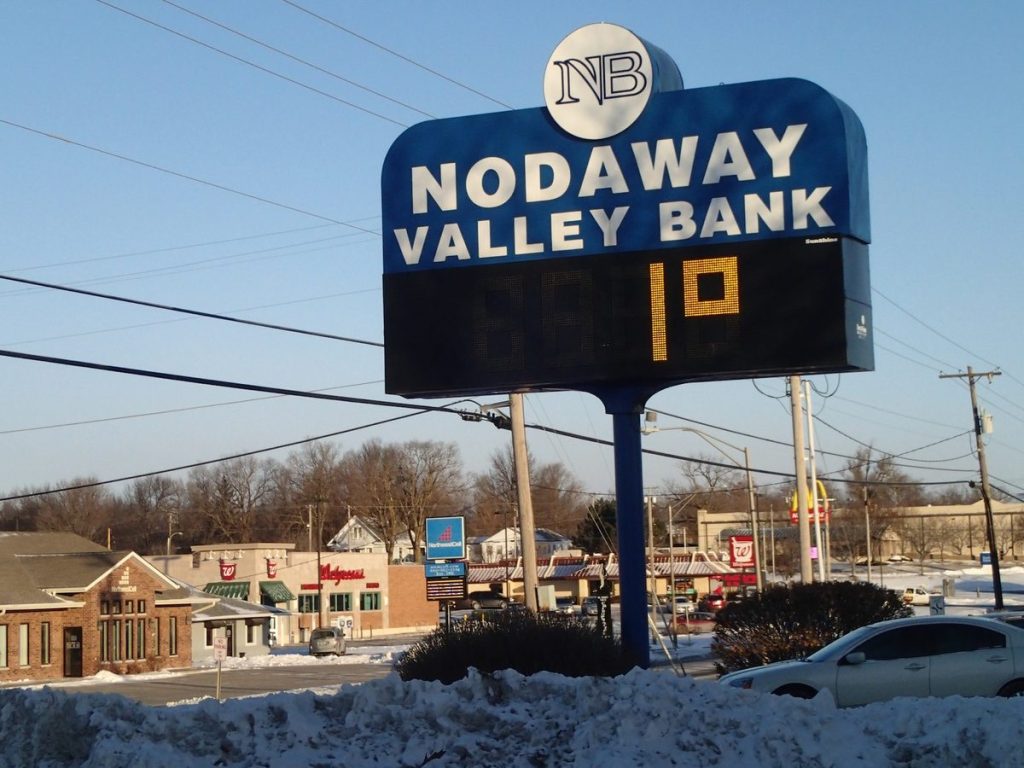
While those aren’t exactly tropical conditions — wind chills are expected to remain between minus 4 and minus 17 with gusts of up to 26 mph — it’s almost balmy compared to Wednesday’s high temperature, which topped out at around 3 degrees.
In this area, the National Weather Service expects deep cold to return on Friday before moderating over the weekend, with a high Saturday near 25 and a low of around 14.
Area roads and highways have proved hazardous with slick spots remaining from Saturday’s 2-inch snowfall and slight amounts of subsequent winter-mix precipitation.
Maryville Public Safety officers responded to a wreck about 10:30 a.m. Wednesday, in which a blue, compact coupe veered off South Avenue just west of the Parkdale Manor nursing home, landing on its wheels in a deep gully. An ambulance was dispatched to the scene, but no serious injuries were reported.
County and Missouri State Highway Patrol officers were summoned to a second accident around 10:40 a.m. Wednesday on Route WW north of Barnard. Kathryn I. Alexander, 72, Barnard, suffered moderate injuries when she lost control of her southbound Ford Taurus on the snow-covered blacktop.
Otherwise, most folks seemed to be coping with the cold, though Nodaway County Sheriff Darren White
warned that this kind of weather frequently results in house fires caused by dirty chimneys, wood stoves and space heaters. He urged residents, especially those living in isolated rural areas, to exercise a high degree of caution.
“In this kind of weather it’s the chimney fires that really get us,” said White, adding that a lot of older houses have inadequate brick chimneys that may be held together by deteriorated mortar.
“There are people who inspect and clean chimneys, and people really need to have that done,” he said. “Also, if you suspect something is going on, call 911. Don’t wait. We’ve had people who see sparks coming out of their chimney and don’t think much of it, and the next thing you know their house is on fire.”
Closed schools probably constitute the cold snap’s biggest impact on families. While most winter school closings are caused ice or heavy snow, Maryville R-II Assistant Superintendent Steve Klotz said Wednesday that once temperatures reach a certain point, student safety becomes a concern.
“The safety of our students is always the primary reason for closing school,” Klotz said. “We want to make sure we are putting our kids in a safe position.”
Cold weather hazards, he said, include stalled cars that can leave teen drivers stranded outside in dangerously cold weather as well as bus breakdowns, especially in rural parts of the district. A worst-case scenario, he said, could force students to remain inside an unheated bus for perhaps 25 minutes before a second vehicle could reach them.
Kids waiting outside for their bus is another potential hazard in freezing cold, Klotz said.
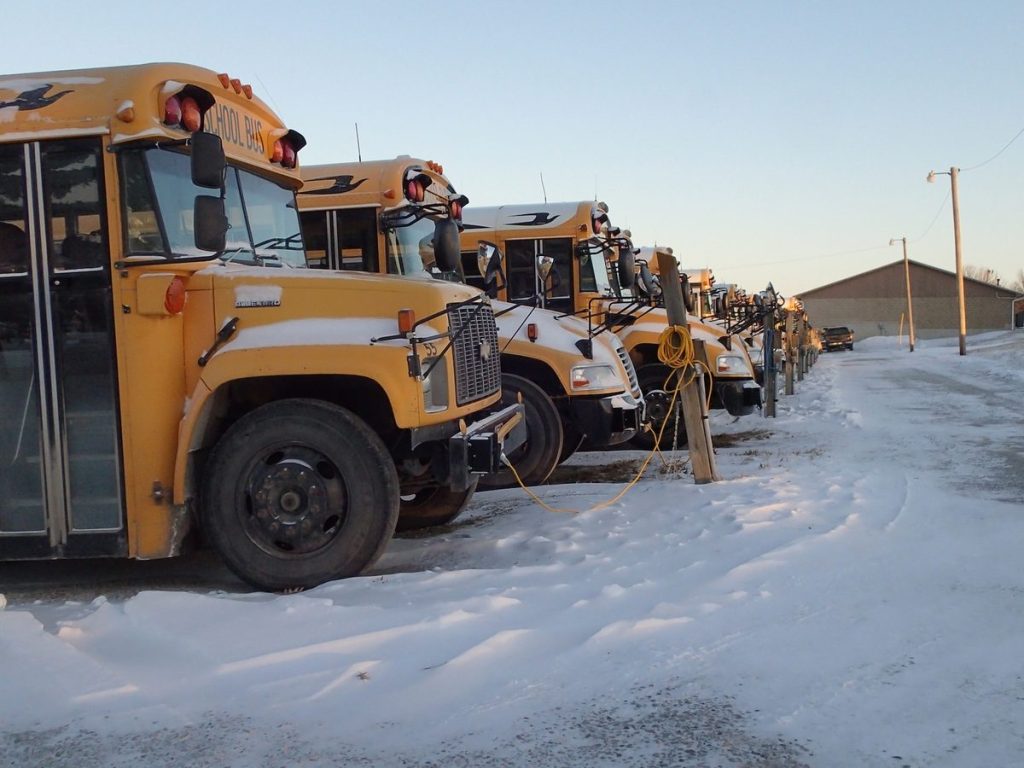
R-II’s bus fleet consists of diesel-powered vehicles that, even when running on “winter mix” fuel, can prove difficult to start. In extremely cold weather, Klotz said, the buses have to be warmed up in the morning for at least an hour before they are ready to hit the road.
Diesel fuel is prone to “waxing” or “gelling” in cold weather, terms that describe solidification of fuel into a partially crystalline state. The crystals build up in fuel lines, starving the engine and causing it to stop running.
In deciding to cancel school, Klotz said district officials made the unusual call of basing their decision on a forecast. Usually when severe winter weather hits, administrators are up in the pre-dawn hours and make decisions based on existing conditions.
This time, however, the forecast for cold weather appeared so certain and so serious that R-II announced the closing on Tuesday afternoon, rejecting the option of a late start since temperatures were expected to remain below five degrees all day long.
Also, Klotz said, calling for a late start during severe weather increases the strain on families in which parents have to be at work by 7 or 8 a.m.
On other fronts, cold snaps such as this one can make life miserable — and dangerous — for people who lack adequate housing. There are no actual cold-weather shelters in Maryville, though the First United Methodist Church at 102 N. Main keeps a small foyer heated and unlocked 24 hours a day during cold weather as a last resort for anyone stranded on the street. The entrance is located on the south side of the church along First Street.
During daylight hours the Nodaway County Senior Center, 1210 East First St., offers heated refuge from 7 a.m.-4 p.m. Monday through Friday. Center Administrator Amie Firavich said Wednesday the center used to close whenever school was called off, however that is no longer the case.
Another daytime cold-weather haven is the Maryville Public Library at Fifth and Main, which is open 9 a.m.-6 p.m. on weekdays and 9 a.m.-3 p.m. on Saturday.
Library Director Stephanie Patterson said people are not allowed to sleep while taking refuge at the library, but that they are welcome to seek shelter there during regular hours.
“We do have people that come in because the library is warmer than their own home,” Patterson said. “Sometimes they are living in a trailer, and I think we may have had people who are living in their car. It’s not unusual to see someone (in that situation) here.”
The combination of poverty and cold weather is not pleasant, and Bonnie Patterson, executive director of Community Services Inc., a local non-profit social services agency, said demand for heating assistance has increased dramatically this week.
Funds, she said, are running short, and only about $22,000 remains in heating assistance for the five-county area out of $105,000 allocated for the 2014-’15 winter season.
Heating assistance from Community Services comes in two forms, both of which are offered through the Low-income Home Energy Assistance Program — LIHEAP — administered through the Missouri Department of Social Services.
The first type of aid, Energy Assistance/Regular Heating, provides help for people who don’t earn enough money to pay their heating bills. Payments are made directly to the utility company and range from $45 to $450 a month.
The second initiative, known as the Energy Crisis Intervention Program, assists families and individuals experiencing a “verifiable energy crisis,” such as receipt of a disconnect notice or a near-empty propane tank. Disbursement of ECIP funds is capped at $800 per household during the period beginning Oct. 1 and ending March 31.
TONY BROWN/DAILY FORUM
Maryville R-II school buses remained hooked up to their engine heaters Wednesday after district officials elected to call off classes to extremely cold weather.
TONY BROWN/DAILY FORUM
The Nodaway Valley Bank thermometer on South Main recorded 1 degree above zero at 8:30 a.m. Wednesday. The high for the day was a bright and sunny 3 degrees.