
New legislative team headed for Capitol
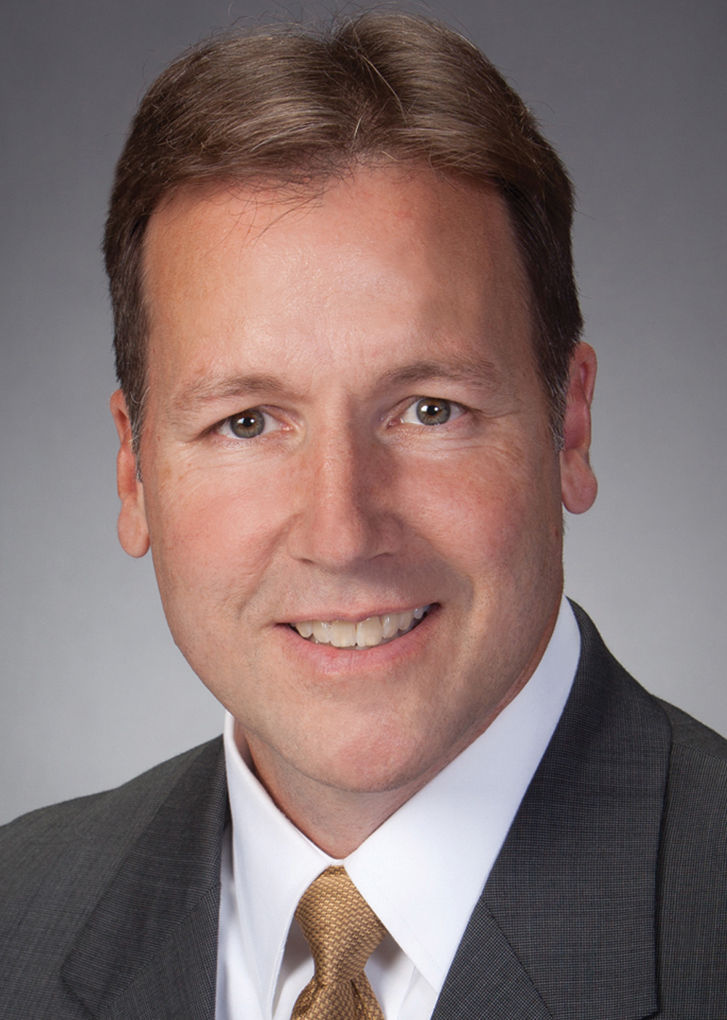
State Rep.-elect Allen Andrews
The campaigns are long over, and the November election is a fading memory. In exactly a week — Jan. 7 — it will be time for Nodaway County’s two new state lawmakers to put on their dark suits, walk into their respective chambers in the Capitol in Jefferson City, and get to work.
Both 1st District state Rep.-elect Allen Andrews and 12th-District state Sen.-elect Dan Hegeman are freshmen, and both are replacing veteran lawmakers forced to leave office under the provisions of Missouri’s term limits law.
State Rep. Mike Thomson, Maryville, has spent the last eight years representing what is now the 1st District, an area encompassing all or portions of Atchison, Holt, Nodaway and Worth counties.
State Sen. Brad Lager moved from the House to the Senate in 2006 and represents a sprawling district that includes Andrew, Atchison, Clinton, Daviess, DeKalb, Gentry, Grundy, Harrison, Holt, Mercer, Nodaway, Putnam, Sullivan, Worth and a part of Clay counties.
Both Lager and Thomson are conservative Republicans who spent their time in office promoting legislation in support of small business, agriculture and education. Andrews and Hegeman, also Republicans, have pledged to do much the same.
Just how they’ll go about it, however, remains an open question. As newcomers the soon-to-be lawmakers acknowledge facing learning curves while trying to fill the shoes of two seasoned politicians who came to wield considerable influence among their peers.
In terms of leaning the ropes, Andrews, a Worth County businessman whose only previous elective office was service on the Worth County R-III School Board, has the steepest hill to climb.
Like most freshman, he says he will likely spend much of his first session observing the system and looking for his legislative niche.
For Thomson, a longtime coach, teacher and administrator, that niche was public and higher education. But while Andrews addressed a number of education issues during the campaign, he appears to have other priorities as well, especially small business and deregulation.
In an interview with the Daily Forum this week, Andrews said he had requested committee assignments — committees being where most of the House’s real work gets done — on the following panels: Small Business, Higher Education, Agriculture, Budget, and Economic Development.
Because the GOP enjoys a conceivably veto-proof majority in both the House and Senate, Andrews is apt to get more of what he wants sooner than freshmen serving in previous eras.
He told the Forum he might even try introduce a couple of measures this year, including a non-binding resolution to the U.S. Congress urging more federal support for small business in addition to assistance for workers “on unemployment rolls for six months or more.”
Andrews declined to provide specifics about the proposed resolution, saying the details were still being gone over by House research staff.
Also on Andrews’ to-do list for 2015 is a right-to-work proposal that would bar labor unions from requiring workers to pay dues as a condition of employment, and prevailing-wage legislation that would lower contractor wages for construction projects undertaken by counties, cities and school districts in rural areas.
Though he’s not officially in the House yet, the work of preparing for the 2015 session has already begun for Andrews, who early in December took the “freshman tour,” a crisscross journey across the state during which rookie lawmakers visit hospitals, universities, military installations, industrial facilities, power plants and other public- and private-sector operations.
“It was very productive, but also a little overwhelming,” Andrews said. “It was sort of like trying to drink out of a fire hose. But you could see that there are a lot of needs throughout our state. At each place we stopped to visit, I tried to think, ‘How do I bring this back home? How does this apply to my district.’”
Now that he’s seen other parts of the state from a lawmaker’s viewpoint, Andrews said he realizes more than ever the need to “fight for our voice to be heard in northwest Missouri.”
As for Hegeman, the first-time senator is a freshman of a sort. But he’s hardly a stranger to the Capitol.
The Andrew County farmer and community affairs manager for Kansas City Power & Light spent 11 years in the Missouri House of from 1991-2002 before being term-limited out and serving five years as Andrew County clerk.
“There is a little bit of change,” Hegeman said of his move to the Senate chamber. “I’ve never dealt with (gubernatorial) appointments before, so it will be new for me to witness that process, and I’m eager to get into that aspect of the job.
He added it may also take a little time to “get back in the saddle” in terms of drafting and moving legislation but anticipates his experience in the House will stand him in good stead.
“I don’t think it will be as steep a learning curve as it was in the House,” Hegeman said. “I remember that I wasn’t really comfortable with that part of it until about four years into being a state representative.”
The senator-elect also said he hopes to play a role in appropriations and has requested membership on the Senate Appropriations Committee in addition to panels charged with legislation having to do with agriculture, local government/elections and transportation.
As for specific bills, Hegeman said he is looking into a request from Sullivan County officials for help in making it easier for rural counties — like Nodaway — to transition away from the township form of government.
Townships are governmental units, subordinate to counties, whose primary responsibilities are collecting taxes and issuing bonds used to pay for the maintenance of rural roads and bridges.
Hegeman said the main challenge for counties seeking to do away with townships is ensuring that those levies and bonding schemes stay in place.
On other fronts, Hegeman said he expects the budget — as always — to be the main challenge for both houses of the General Assembly. While writing the budget is always a battle, he said that this year the governor’s office and the Legislature have already come to a consensus over estimated General Fund revenue growth, which is set at about $300,000.
If the numbers hold, Hegeman said, Missouri should have General Fund revenues for the coming fiscal year of just over $8.67 billion
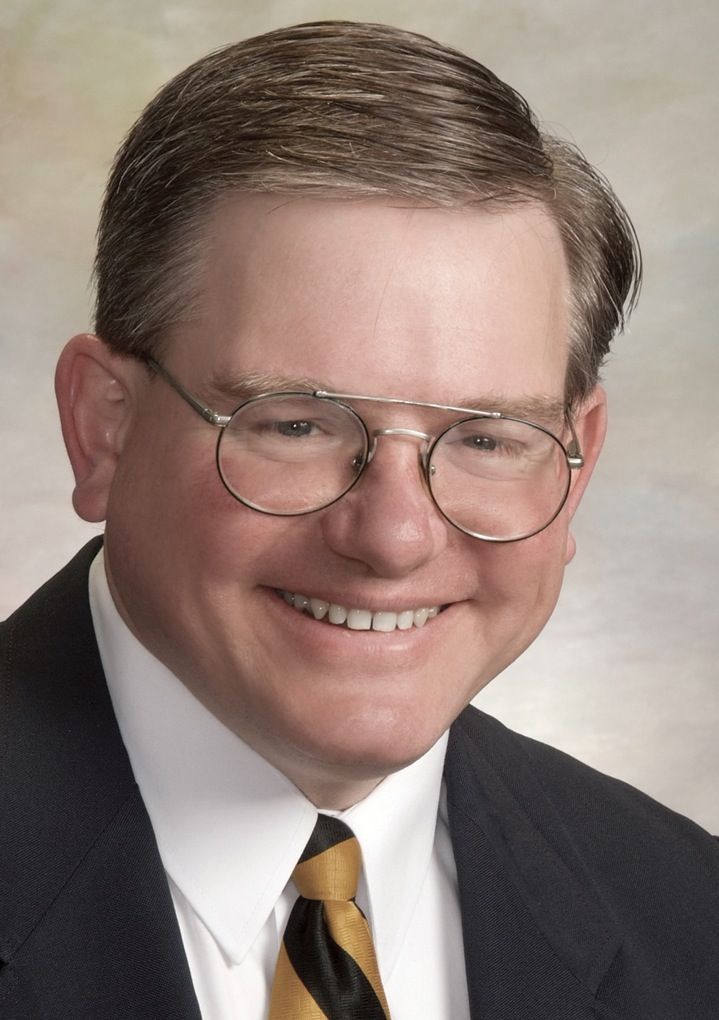
State Sen.-elect Dan Hegeman




