Second review sought in Rouch case
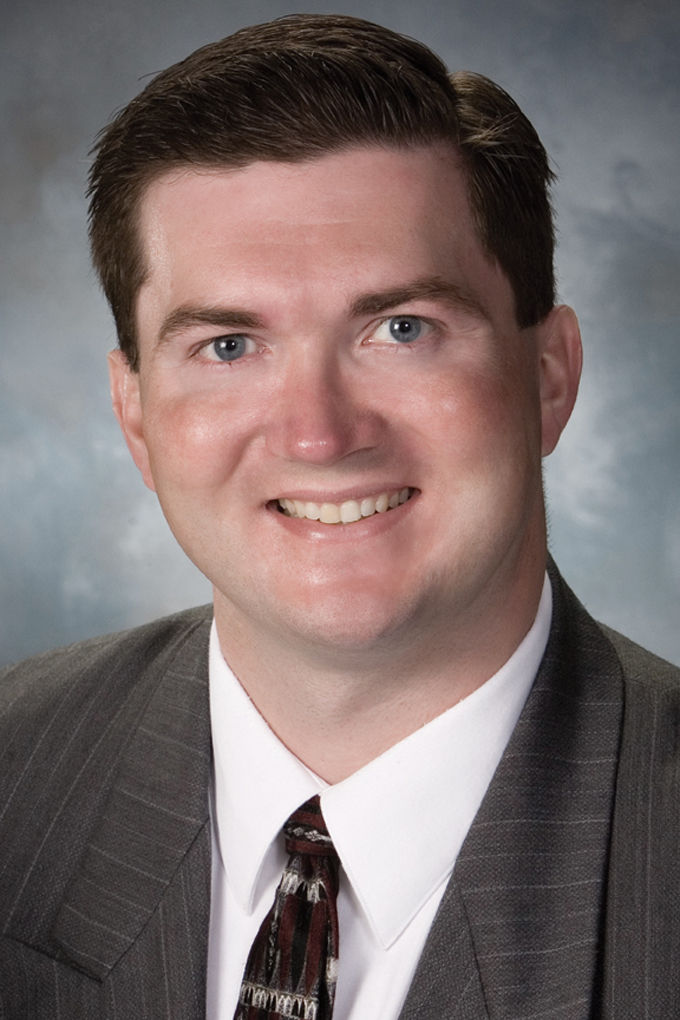
Robert Rice
Nodaway County Prosecuting Attorney Robert Rice said Tuesday he has filed a motion seeking either a re-hearing before the state’s Western District Court of Appeals in the Matt Rouch case or an application for transfer of the case to the Missouri Supreme Court.
Rouch, a former Northwest Missouri State University professor, was arrested in September 2013 on felony charges of cultivating marijuana in his Maryville home.
Evidence collected after a warranted search of Rouch’s home, which Rice has described as crucial to the prosecution, was quashed in 4th District Circuit Court, a decision upheld Dec. 16 by a three-judge Appeals Court panel.
Despite those rebuffs, Rice is now seeking a new hearing before all 11 Western District judges. He said he expects an answer to his motion in about 30 days.
If the motion is denied, and if the state Supreme Court decides not to hear the case, Rice said he would have two remaining options, dismissal or an application for review by the U.S. Supreme Court.
“The chance the U.S. Supreme Court will grant permission to hear the case is small based on the historical statistics,” Rice said. “I don’t know if the Western District will grant a re-hearing or if the Missouri Supreme Court will accept the case. But I believe the court misinterpreted the law and facts, and I feel we investigated this case within the requirements of the Fourth Amendment to the U.S. Constitution.”
The Fourth Amendment is the section of the Bill of Rights that prohibits unreasonable searches and seizures and requires any search warrant to be issued by a judge and supported by probable cause that a crime or other wrongful act has been committed.
And probable cause was at the heart of Presiding Circuit Judge Roger Prokes’ ruling back in July that the search warrant issued in the Rouch investigation — which led to the discovery of an alleged marijuana growing operation in the mass communication teacher’s home — was improperly obtained.
The search occurred following a Facebook post on Aug. 28, 2013, in which Rouch exchanged what was apparently meant to be banter with a colleague about the start of a new school year.
“But yes, that’s the beginning of the semester. I’m always optimistic,” Rouch wrote. “By October, I’ll be wanting to get up to the top of the bell tower with a high powered rifle — with a good scope, and probably a Gatling gun as well.”
After the post was brought to light, Rice initially declined to press charges, saying it was clear in context that the message was intended jokingly and did not, therefore, constitute a criminal act.
So the matter might have ended, except that on Sept. 5 Rouch reportedly told a colleague while both were inside a campus building that he had a bomb in his briefcase. That remark, also found to be made in jest, nevertheless led to Rouch being placed under arrest.
When Rouch told officers he had no weapons in his house other than a “pellet gun,” Rice sought a search warrant “because we wanted to make sure that was true.”
Both Prokes and Appeals Judge Joseph M. Ellis, however, found that police, while seeking the warrant, realized Rouch’s comments were insufficient to create a reasonable belief that he had done anything illegal.
In quashing the evidence — described as marijuana plants and cultivation equipment — Prokes wrote that at the time the warrant was issued officers “knew defendant’s comment was most likely hyperbole.”
Likewise in a 10-page Appeals Court opinion, Ellis stated the prosecution’s assertion that “probable cause existed to search Respondent’s residence after he made repeated threatening statements involving both shooting weapons from a campus monument and possessing a bomb while in a campus building …” to be “wholly without merit.”
Ellis further wrote that it was “readily apparent on the face of the warrant and affidavit that the items subject to the warrant” were not evidence of a crime.
“The clear reason for which the warrant was sought was to assess Rouch’s capability to commit a violent crime in the future,” Ellis wrote. “Indeed, (University Police Chief Clarence) Green acknowledged as much at the hearing. The trial court did not err in finding that the warrant was so lacking in indicia of probable cause as to render the officers’ belief in its existence entirely unreasonable …”