
A Word from Woehlk: Public servants, keep your heads up
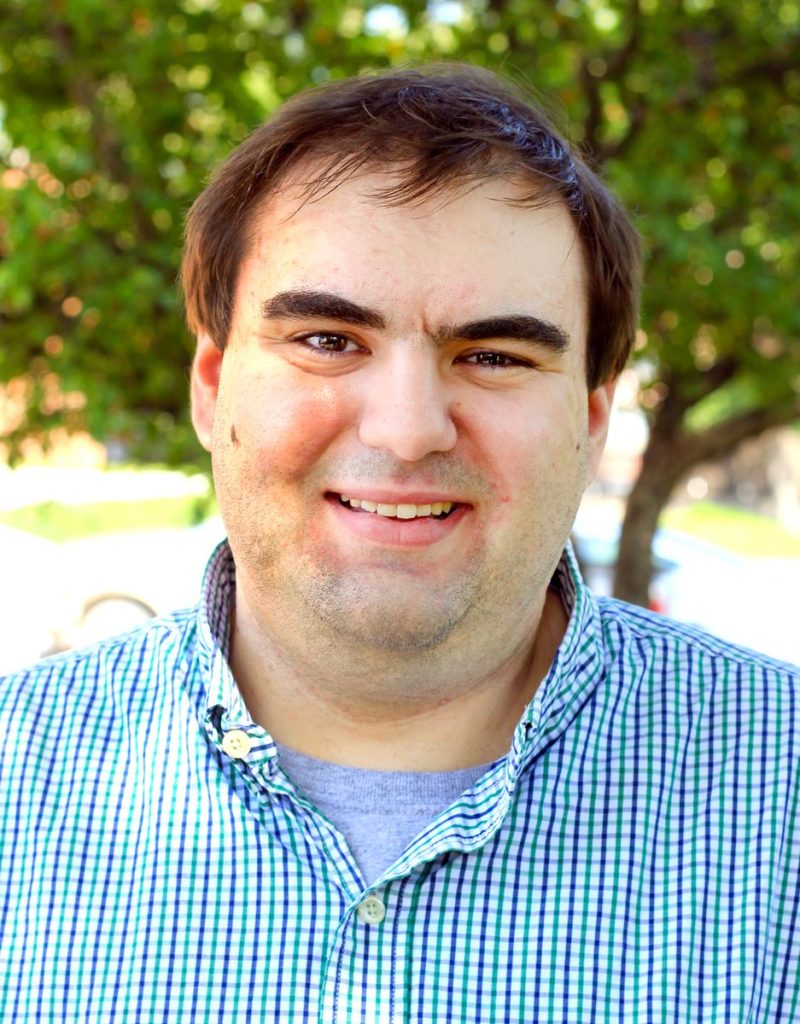
SKYE POURNAZARI/THE FORUM
A Word from Woehlk: Public servants, keep your heads up
A wise woman once told me, “Life’s too short to spend looking at the sidewalk.”
A practical piece of advice, to be sure, especially when, say, trying to cross a street.
At the time, I had — and still have — a nasty habit of looking down at the sidewalk while walking, the better to avert my eyes from nosy, polite passers-by who might want to exchange a smile or a hello, or see how my day’s going.
Yeech.
I’m not really comfortable talking to people — not in person, and especially not on the phone. I’d rather make a speech to 100 people than have to make small talk with one stranger. In fact, other than owning all of Christina Aguilera’s albums as a youth (even though now, yes, we can obviously all agree it was pretty much downhill after “Back to Basics,” but I was young then), it’s probably my defining characteristic.
So, naturally — because I suppose I felt selling encyclopedias door-to-door was too much of a dying industry — I chose to become a journalist, where I spend most days talking with people on the phone, many of whom I don’t know.
And most days, I’m sure I made the right choice.
It wasn’t the seven-figure starting salary, the stock options or the golden parachute that awaits me at retirement that drew me to a career in journalism, though. It’s the public service.
I think that most people who have chosen to spend time serving their communities in some capacity share some common values. Chief among them, I think, is a deep-seated belief in a responsibility to leave a positive imprint in some small corner of the world. Law enforcement officers, doctors, nurses, educators, local government officials, firefighters, EMTs and so, so many more — I think most people in these roles, on some level, share that innate sense of responsibility to the public, a responsibility to and for others.
My first job in journalism was as an assignment editor at a TV station. I set the agenda of what stories reporters would cover, and I was the first point of contact for the public. If you called the newsroom — to give a story tip, find out what the weather was supposed to be or just to complain — you talked to me.
And as anyone who has worked in one of those positions of public service can attest, it was mostly complaints. One man would call every single day to insult what the news anchors were wearing or how their hair looked. Others would call to yell about how horrible a story was or the clear bias of a reporter, and still others would just chime in to let us know the world was a worse place with us in it.
Everyone — every single person, without exception — who has worked in a position of public responsibility knows what that’s like. To be responsible to the public is to invite criticism, is to ask for abuse, is to open yourself up to people telling you that you’re wrong. And that’s OK, because accountability to the public is all part of the deal, and it’s not always pleasant — nor should it be.
No one likes being told they’re wrong or they’re bad — of course not. But it’s what you signed up for, because beneath all of that, you’re leaving an imprint that doesn’t fade as quickly as the insults or the criticisms. Sure, 20 people would call to say how horrible something or someone was, but every once in a great while, there was someone who called because they had nowhere else to turn, because no one else could hear their voice — and here I was with a megaphone.
Understatement alert: 2020 is hard for everyone. And it’s probably never been harder for those who have public responsibilities. Every public servant, in whatever capacity, is facing unique challenges, and has never been under more pressure to meet those challenges for the sake of the people they serve. And at the same time, it’s never been easier to hear the loudest voices in opposition, to be overwhelmed by the frustration that comes from being submerged by a deluge of hate and plain old criticism.
Why on Earth would you want to do this? Why on Earth would you want to be a teacher in 2020? Or a police officer? Or a doctor, or a nurse, or an EMT, or a firefighter? Why would you want to be a health department official, or a superintendent, or a city councilor, or a county commissioner or a city manager?
Amplified by social media, the pressure on our public servants from those they serve has probably never been higher or more suffocating, and everyone deals with it in different ways. Maybe you’ve stopped scrolling through your Facebook feed, or you deleted your Twitter account. Maybe you’ve found yourself holding your tongue when you normally wouldn’t, or passing the buck to someone else, or making decisions with an eye toward an online backlash — best not to poke the hornet’s nest, right? Who needs the conflict, the hassle?
Or, maybe you’ve had enough, and you’re about to call it quits, public responsibility be damned. No one would blame you.
But it’s never been more important for those people who have chosen a path of public responsibility, of leaving a positive imprint, of trying to be a constructive part of a better future, to stick with it, to rededicate yourself to doing what you’re doing, even in the face of pressures and opinions and loud, virtual voices that can breed apathy and fear, if you let them.
It’s so much easier to just forget about the whole thing, to give in or get out, to think that whatever positive impact you may have isn’t worth it, to put on blinders, just keep your head down and hope people stop noticing you.
Though public service may be at its most difficult point, the people who take on that responsibility, in whatever role, have never been more important to us.
So keep doing the work that’s vital. Keep teaching, keep protecting, keep healing, keep informing and keep making the difficult decisions that all add up to a better community for everyone, without shrinking from what the loudest and harshest critics may say, or scream or post. Those will fade. Your positive imprint won’t — even if people don’t always see it, they’ll feel it, and you’ll know it.
In other words, keep your head up and look ’em in the eye.
Life’s too short to spend looking at the sidewalk.
Geoffrey Woehlk is a reporter at The Maryville Forum



