Habits: virtues and vices
Skye Pournazari
Forum Religion Column Art
An old monk at recreation was advising his disciples about vices. They were near a tree farm or nursery area. There were trees of all ages and sizes. To one of the younger members he said, “You see that sapling? Pull it up.” The young monk did so easily, with one hand. Then the elder said, “Now pull up that larger sapling.” The young monk did so with more difficulty, pulling with both hands and swaying back and forth. The elder monk then said, “Pull up that larger one over there.” The young monk obeyed, this time with great difficulty, working and straining over 10 or 15 minutes, perspiring profusely.
Finally, the Elder monk told the younger to pull out a larger tree, hardly a sapling. He strained and tried, then sought the assistance of a confrere, and then another, and they could not budge the tree. The moral, given by the elder: So it is with our evil desires: insofar as they are small to start with, we can, if we want to and try, uproot them rather easily. If we neglect them as mere trifles, they harden and more work is required to get rid of them until they cannot be removed by us alone —but only with the help of God.
This story, recounted by Dorotheus of Gaza, one of the Desert Fathers (monks from the desert), illustrates the value of the culture in which we grow up. If we are allowed to get into habits of laziness or lying or satisfying our desire for pleasure immediately, or if we are taught to be entitled, then we will have a hard time keeping a job and getting along with others. Overcoming those bad habits and attitudes will be a challenge. The longer the bad habit is practiced, the more deeply ingrained, and the harder it is to overcome, like pulling up older saplings vs. younger ones.
If, on the other hand, we are taught good values early in life, things like good work ethic, honesty, self-discipline, the ability to read to learn on one’s own, and other good habits, not only are we capable of winning athletic contests, academic honors, musical awards, and earning a decent living, but we can learn to follow the precepts of the Lord if and when we undergo a conversion. It is a good preparation on the natural level to live on the supernatural level, so both society and religion can benefit from such training.
Both vices and virtues are habits: vices are bad habits which often enslave one in addiction, and virtues are good habits which make one freer to make choices. One of the most important things we can do as a community is to promote virtuous habits in our residents, especially our youth. It is to the benefit of all of us, religious and nonreligious.
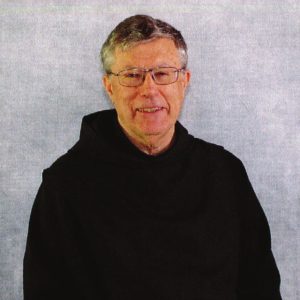
Father Albert Bruecken, OSB