Partnerships stimulate local economic growth
ANTHONY BROWN/THE FORUM
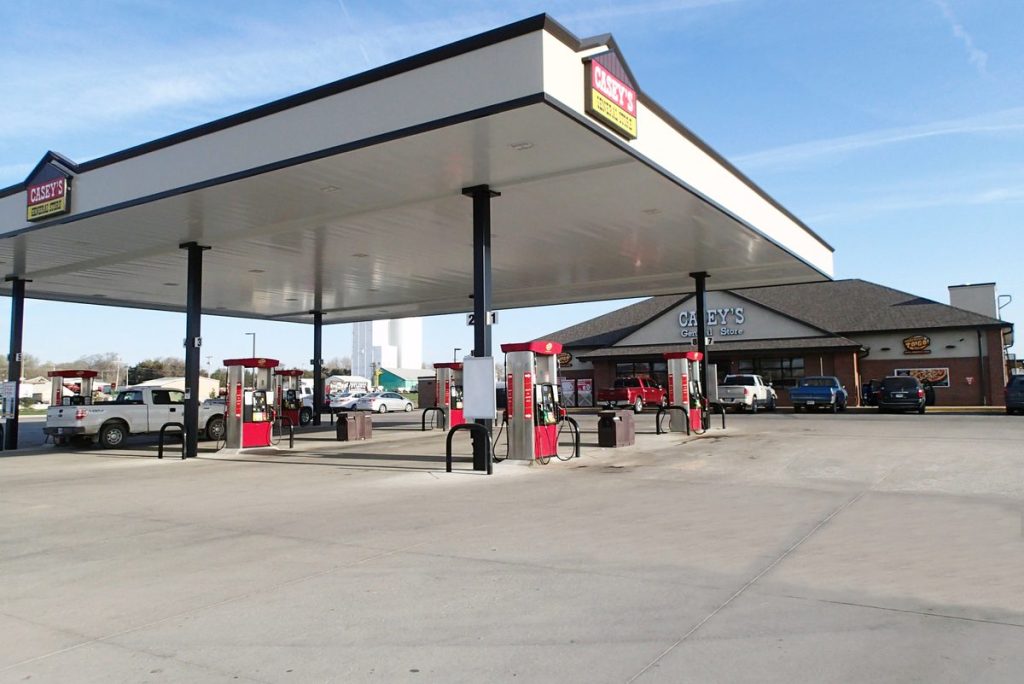
Retail developments on East First Street near the U.S. Highway 136 bypass, including the Casey’s General Store pictured here, are part of an overall economic success story for Maryville tied to a number of public-private partnerships that have provided incentives for business growth and investment.
MARYVILLE, Mo. — For most small, rural communities in northern Missouri, hoping for economic growth is like dreaming about a faraway country: something nice to think about but that is probably just not going to happen.
Maryville is an exception. Unlike most of the region, which in many cases is still shrugging off the effects of the 2008 recession, business is booming in this town of around 11,000 people.
Restaurants are full, gas stations are busy, hotels are booked and several new businesses are in the offing along the south end of the Main Street retail corridor.
Some folks might say that the Nodaway County seat is just lucky, an economic odd fellow long blessed by the existence of Northwest Missouri State University and a few profitable factories.
But, in reality, strong local economies don’t just spring from luck. They are planned for, executed and built by people with purpose, skill, capital and, most of all, a willingness to work together.
In Maryville’s case, civic leaders and the local business community have made intentional decisions over the past half-dozen years or so that have resulted in a variety of institutions, venues and enterprises now laying any number of golden eggs — especially in terms of dollars flowing into town from people who don’t live here.
Perhaps more than any other factor, Maryville’s ability to attract spending from outside, rather than just recirculating local dollars as many of its neighbors are forced to do, is responsible for the current state of relative prosperity.
City Manager Greg McDanel, in a recent interview with The Forum, said the influx of outside dollars is very much intentional, and is the result of years of work focused on leveraging existing assets, such as Northwest, as well as developing new ones, including the Boulders Inn & Suites hotel and city-owned conference center at Mozingo Lake Recreation Park.
Also coming into its own as a money-spinner is Northwest’s Carl & Cheryl Hughes Fieldhouse, which doubles as a venue for youth sporting events and large-scale exhibitions and gatherings of all kinds.
Such developments have helped turn Maryville into a regional destination, McDanel said, despite being something of a “tough sell” — distant from major metropolitan areas, off the interstate, and lacking the charm of, say, a New England fishing village, or even a historic river town like Weston 75 miles to the south.
Still, largely through cooperative partnerships between City Hall, the university and private enterprise, Maryville has managed to make itself an attractive place for out-of-towners to spend their money.
A key, McDanel said, has been a renewed sense of cooperation and mutual interest between the city and Northwest, something, he added, that is oddly lacking in many university towns.
A frequent presenter at town-and-gown conferences, McDanel, himself a Northwest grad, said he was “shocked” to learn how many communities “did not have a good relationship” with their local college.
“The fact that we can work together benefits everyone,” said McDanel, who added that it was important to realize that “not all partnerships are equal,” and that various parties and stakeholders needed to recognize the necessity of giving in a little in order to maximize future gains.
“The question is no longer ‘should we partner?’ McDanel said, “I think we’ve moved beyond that. The question is ‘how can we partner?’”
He cited the Hughes Fieldhouse as “a fantastic example.”
At first, he said, there was some community opposition to the city’s decision to support development of the $20 million facility with $3.4 million in hotel “bed tax” revenues over 23 years. Such concerns, however, have largely evaporated as the center begins to draw hundreds of people to town for track meets, youth soccer games and other events.
According to the Maryville Tourism Committee, which determines how unobligated bed tax revenues are spent, the fieldhouse has hosted five track meets this spring, and that during meet weekends the local hotel occupancy rate has reached 100 percent. The pre-Hughes occupancy rate at this time of year hovered around 30 percent, the committee reported.
Another investment beginning to pay big dividends in terms of drawing outside spending is the hotel and conference center complex at Mozingo Lake, a public-private development that brings thousands of people to the municipal park each year for everything from corporate conferences to bass tournaments to weddings.
One recent week saw the conference center booked each day, said McDanel, continuing that the facility will host a wedding every single Saturday between now and November. The couples may be local, he said, but the hundreds of guests they invite come from all parts of the country.
McDanel said that while about 50 percent of Mozingo operations are funded through a half-cent sales tax generating about $1 million a year, the lake’s estimated annual economic impact is around $10 million. So, roughly, every public dollar spent at the lake generates $10 for the local economy.
“Any bank in the world would take that,” McDanel said.
On the industrial front, the city worked with the local Kawasaki Motors manufacturing plant to hammer out a bonding/tax abatement scheme that brought the factory into the city limits and financed a $25.5 million, 100,800 square-foot plant expansion and made possible the creation of about 50 new jobs at the city’s largest employer.
A third economic partnership driver has been the city’s willingness to pay for commercial infrastructure, primarily water and sewer hookups and storm water runoff control, that has provided incentives for retail development along the East First Street and the South Main corridors.
On the south side, public infrastructure paid for with budgeted economic development tax dollars has led to the location here of a Wells Bank branch along with two proposed gas stations — one of which is already under construction — and a proposed restaurant.
To the east on East First Street (U.S. Highway 136), similar municipal spending led to the creation of a new Casey’s General Store and the Pizza Ranch restaurant.
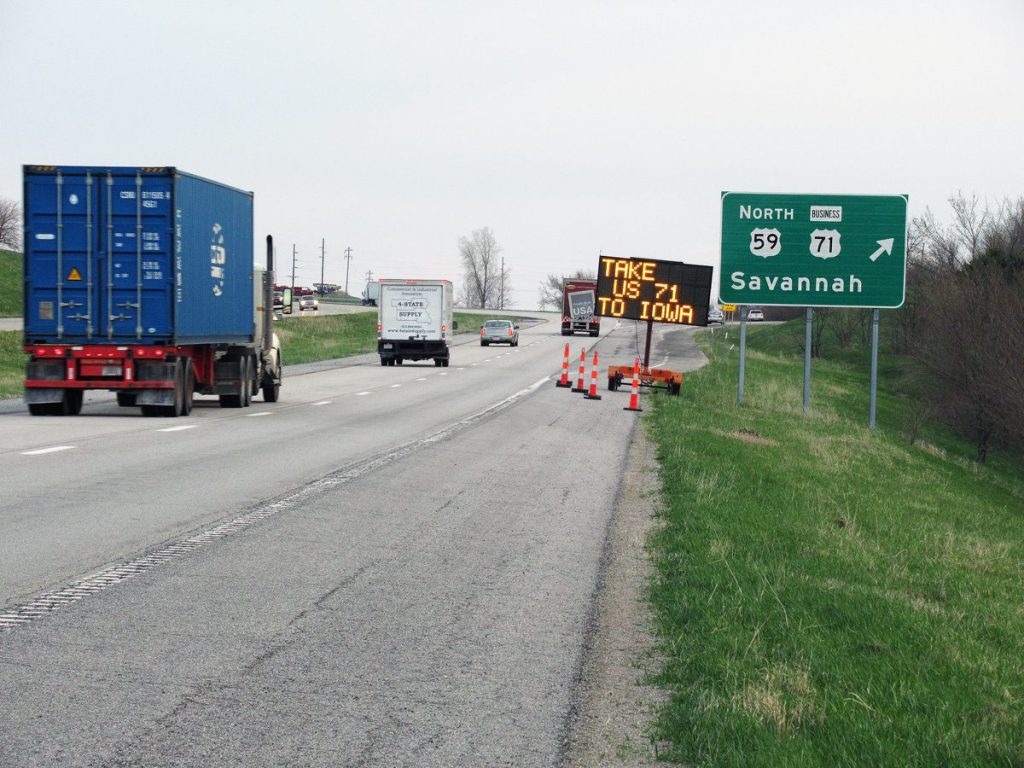
This spring’s severe flooding to the west across the Missouri River Valley has turned U.S. Highway 71 into a de facto interstate highway and caused a mini retail boom for businesses along both corridors.
While profiting from the misfortune of others is no cause for celebration, it can be said that the windfall — with at least one business reporting an 8 percent increase in business and hotels representing 80 percent occupancy — would not be happening had it not been for public-private partnerships formed years ago.
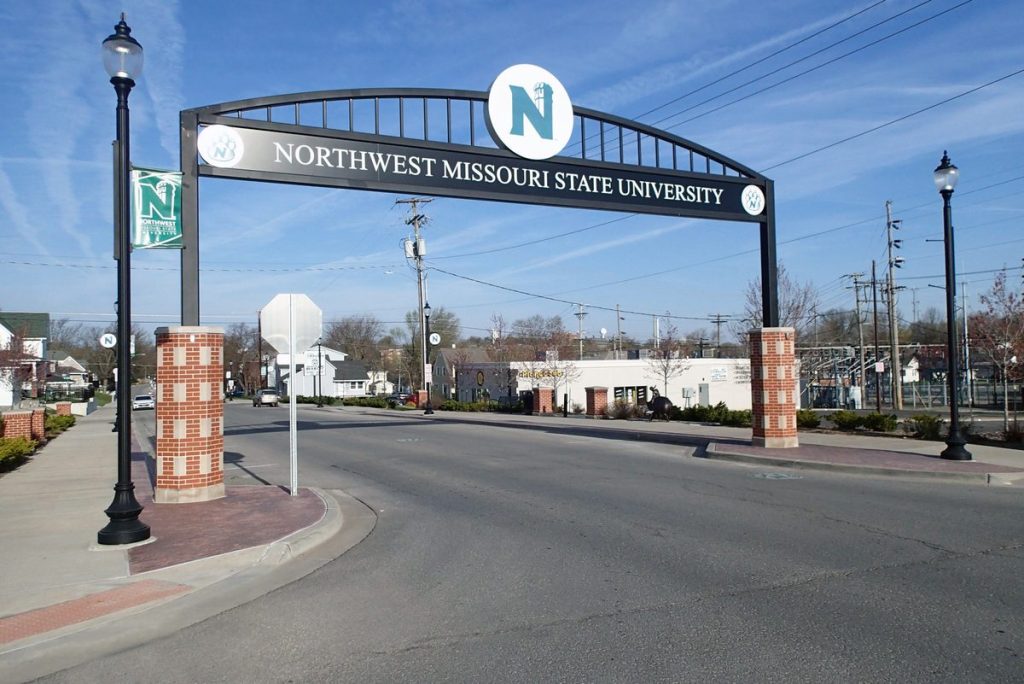
McDanel said a new era in the city’s move toward working with Maryville’s various economic players began around 2012, when City Hall and Northwest decided to bury a number of longstanding hatchets and work together on revitalizing the West Fourth Street pedestrian corridor.
A strong personal relationship between McDanel and Northwest President John Jasinski bore fruit in the form of a $75,000 investment by the university, which paid engineering costs for the $2.2 million project, which embraced landscaping, sidewalks, ornamental street lighting, new pavement and various infrastructure upgrades.
Northwest’s involvement came at a time when the university was facing serious fiscal problems in the wake of deep state funding cuts. Nevertheless, Jasinski and his team decided the risk and sacrifice were justified, a call that led to Northwest’s first major nonacademic off-campus investment in decades.
“If you asked the university administration today, I think they would say it was worth every penny,” said McDanel, noting that the West Fourth Street overhaul provided Northwest with what amounts to an attractive front porch greeting visitors at the main entrance to an institution whose local economic impact is estimated at $619 million a year.
Josh McKim, executive director of Nodaway County Economic Development, agrees that Maryville’s ability to attract outside spending is vital to the local economy. He also offered figures to back up that assertion.
McKim said research shows “Maryville proper,” defined as a rough square extending 5 miles in each direction beyond the city limits, has an estimated retail potential of $137 million and actual retail sales of $187.6 million, which creates a positive “retail gap” of over $50 million generated largely by out-of-town customers.
On the downside, when the target area is extended 15 miles in all directions from the city limits, Maryville has a potential retail demand totaling $237 million, but actual sales of only $203 million. That leaves a negative retail gap of nearly $34 million, which McKim said indicates considerable customer “leakage,” which increases the closer area shoppers live to St. Joseph.
Similar leakage on a smaller scale, he said, occurs in the north part of the county, where Nodaway County residents take advantage of close-to-home retail opportunities in Iowa towns like Clarinda.
But even with significant competition, McKim said, Maryville has been able to capitalize on its role as a regional shopping and employment hub thanks largely to Hy-Vee and Walmart along with institutions and corporate enterprises like Kawasaki, LMP Steel & Wire, DRiV Inc. (formerly Federal-Mogul), Laclede Chain & Mfg. Co., Deluxe Corp., Mosaic Medical Center-Maryville and Northwest, all of which employ numerous workers who commute from other communities.
“Those people may not live here,” McKim said, “but they do spend money here and create more sales activity.”
As for the future, McKim said his office is working to create more diversity in the local retail community, especially on the part of local investors and businesspeople.
“The national chains have sort of pulled in their horns,” he said, “so local retailers are an important part of the mix.”
McKim said attracting national chain stores remains a goal, but that locally owned business are an increasingly important part of the retail scene.
“We want to encourage folks to see the opportunity shown in the numbers,” he said, adding that Maryville needs to do a better job of “creating our own (businesses) and keeping our value here.”
Too many Maryville goods and services, he said, are produced locally then sold or provided elsewhere. Agriculture commodities, like corn and soybeans, are probably the most obvious examples.
“We ship it somewhere,” McKim said. “We add value somewhere else.”
ANTHONY BROWN/THE FORUM
A new day of cooperation between the City of Maryville and various institutional and business entities began around 2012, when plans emerged for a $2.2 million overhaul of what is now the West Fourth Street corridor. City Manager Greg McDanel said a series of “open-door partnerships” and policies have helped Maryville take advantage of opportunities for economic development.
SKYE POURNAZARI/THE FORUM
The closure of Interstate 29 north of St. Joseph has turned U.S. Highway 71 into a de facto interstate and is providing retail businesses along South Main Street and near the East First Street/U.S. Highway 136 bypass intersection with an economic windfall.