Immunizations important for students
NODAWAY COUNTY HEALTH DEPARTMENT
Children attending school in Nodaway County are required to be up-to-date with immunizations before the start of the school year. The Nodaway County Health Department is offering walk-in immunization days throughout August.
MARYVILLE, Mo. — The school year is quickly approaching, and while there’s plenty of school and supply shopping still to be done, immunizations should also be on every parent’s to-do list. Tabitha Frank of the Nodaway County Health Department said the time to get immunizations taken care of is sooner rather than later.
“Missouri school statutes state that they have to have the immunizations before school starts,” Frank said. “So they shouldn’t be coming to school without those vaccinations.”
Not only does getting the vaccines early keep students in line with school policy. It also helps children not associate the discomfort of shots with school.
“We don’t want people to wait until right before school or even the day before school starts,” Frank said. “You know your legs are a little sore or arms; you don’t want to feel like that the next day when you have to start school. And we don’t want to associate school and shots together.”
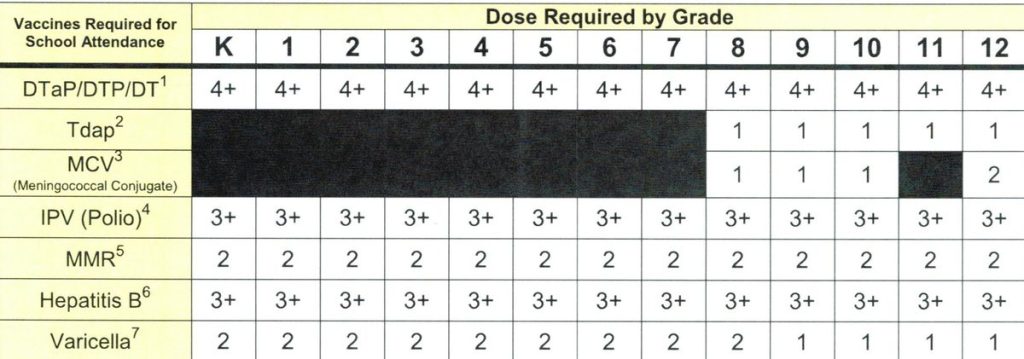
Vaccines differ for students of different ages, but for kindergartners, five are required:
The DTaP vaccine is administered in four or more doses and protects against diphtheria, tetanus and pertussis.
The IPV vaccine is administered in three or more doses in protects against poliovirus.
The MMR vaccine is administered in two doses and protects against measles, mumps and rubella.
The Hepatitis B vaccine is administered in three or more doses and protects against Hepatitis B.
The Varicella vaccine is administered in two doses and protects against chicken pox.
Along with the five required immunizations, two others have been suggested for kindergartners. The Hepatitis A vaccine is administered in two doses and protects against Hepatitis A, while the Influenza vaccine is administered once a year and protects against the flu.
“Hepatitis A is a fecal, oral disease, so if you eat out a lot you’re potentially at risk,” Frank explained why the vaccine is recommended. “So if someone is infected with Hepatitis A, they use the bathroom, improperly wash their hands and now they’ve fixed your food.”
Frank said that these vaccines can all be administered in one visit.
Those going into eighth grade are required to have had all of their kindergarten shots as well as two other vaccines:
The Tdap booster vaccine is administered in one dose and protects against diphtheria, tetanus and pertussis.
The Meningococcal (MenACWY) vaccine is administered once in eighth grade, and twice in 12th grade unless the first dose was administered on or after 16 years of age. It protects against bacteria types A, C, W and Y.
Along with two requirements, four vaccines are recommended for those entering eighth grade, which include the previously mentioned varicella and influenza vaccines. The other two immunizations are the Human Papillomavirus (HPV) vaccine, which protects males and females against the most common type of HPV that can cause several types of cancer, and the Meningococcal B (MenB) vaccine, which protect against some serogroup B bacteria.
“The HPV vaccine out on the market for cancer prevention,” Frank explained. “That’s one that we highly encourage.”
While kindergartners can get their vaccines all in one day, those in eighth grade would be asked to come back for some immunizations.
“On the eighth-graders that are getting the T-dap and the meningitis, they can get both of those the same day. But if they also choose to get some of those that we recommend, like the HPV vaccine and Hepatitis A vaccine, if they haven’t had those already, then those are a series of shots so they would have to come back for the next set.”
According to Frank, for those immunizations delivered in a series, it is important to follow up and get each shot, otherwise the protection offered by the immunization will not be as effective.
“You’re not going to have all of your protection,” Frank said. “It’s not like it’s going to be zero, but you just won’t have your full protection without those added doses.”
While the state does require these immunizations to be administered to all students, immunization exemptions are available to those who wish to skip certain vaccines or have allergies to ingredients within them.
“Those that don’t want to vaccinate, they can fill out an immunization exemption card,” Frank said. “So whatever they’re exemption might be, they’ll have to get one of those cards filled out and filed with the school.”
While it is possible to opt out of some immunizations with the school, Frank reminds parents that this means children could be missing major school time in the event of an outbreak.
“Always the thing to remember with that is, if you chose not to vaccinate for Varicella let’s say, so chicken pox, in past years we’ve had an outbreak of chicken pox,” Frank said. “So if your kid is one of those that has an exemption, your kid can’t go to school until the outbreak is deemed to be over. So that could be sometimes weeks, so parents have to miss work and the kid’s going to be out of school.”
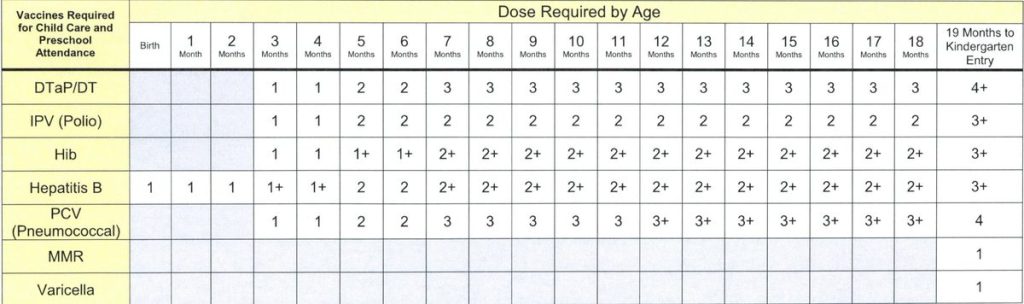
Along with immunizations for schools, the state also has placed requirements on children who are going to be in a licensed day care facility or preschool.
“They have to have that many particular doses of each vaccine to be considered immunized for preschool, child care or whatever it might be,” Frank said. “Say they’re a 6-month-old, and now they’re at 7 and a half months and haven’t had their 6-month shots, now we consider them behind, so they’re not up-to-date. So their parents really have to get them vaccinated to be able to stay in.”
While it is up to the parents to take their child to be vaccinated, some responsibility also falls on the child care provider.
“The state of Missouri does immunization audits and looks at those records to make sure all those kids are vaccinated,” Frank said. “That’s the provider’s responsibility to make sure the kids are vaccinated. It’s not their issue to get them vaccinated, but they need to say, ‘Hey, our policy requires everyone to be properly vaccinated, and your child is still needing so-and-so.’”
Of course, children get sick or appointments may have to be scheduled later than the vaccine schedule, and in this case in-progress documents are available for parents to give the provider to show that they plan to have the proper vaccines administered.
Children can receive their vaccines through their primary health care provider or through the Nodaway County Health Department.
The health department takes all major insurances as well as Medicaid. Frank says they also will work with those the department considers underinsured to make sure immunizations are taken care of by only charging a $20 administration fee.
“If someone is underinsured, which are people who maybe have insurance but their insurance caps vaccine costs so they will only pay up to a certain point but not beyond that, that’s what we consider underinsured,” Frank explained. “Underinsured also encompasses someone that has insurance, but they don’t cover vaccines at all. And then uninsured, we also take care of it.”
Immunization appointments are available to both patients and non-patients of the health department on Thursdays according to Frank. In order to make things easier on parents and students, the health department has set aside certain days where walk-ins are welcome.
“They don’t have to have an appointment, they don’t have to be an established patient or anything like that,” Frank said. “They just have to have their shot record is all.”
The next walk-in times are scheduled for 8:30 a.m. to 4 p.m. on Aug. 6-10 and Aug. 13.
For more information contact the Nodaway County Health Department at 660-562-2755.
NODAWAY COUNTY HEALTH DEPARTMENT
Immunizations are required for children attending a licensed child care facility or preschool. The Nodaway County Health Department can administer all required immunizations.