Tariffs trouble Laclede Chain
SKYE POURNAZARI/THE FORUM
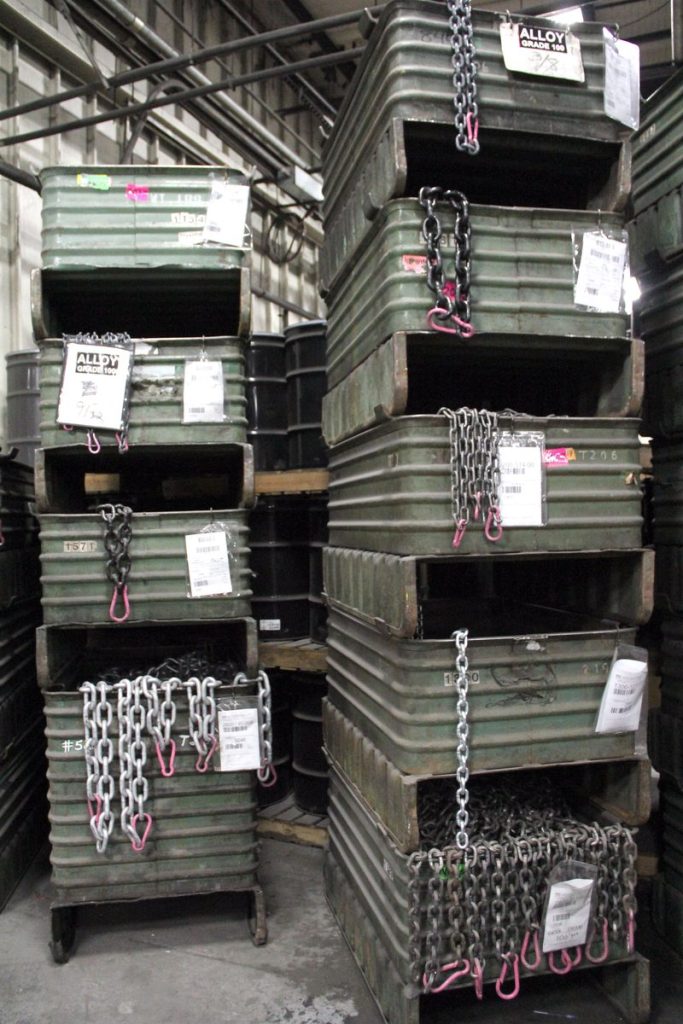
Chain containers are shown Wednesday, July 18 at Laclede Chain Manufacturing in Maryville. They hold various kinds of chain with different alloys and coverings. The small containers hold 2,000 pounds worth of chain, while the larger one, such as the bottom left container holds 4,00 pounds worth of chain.
MARYVILLE, Mo. — Last week, U.S. Sen. Claire McCaskill, D-Mo., called for an end to trade wars, citing harm to Missouri businesses, including Laclede Chain Manufacturing Co., LLC based in St. Louis, Missouri, with a major manufacturing plant in Maryville. Laclede Chain Vice President Tim Riley disputes the picture painted by McCaskill’s office.
McCaskill on Tuesday, July 17, sent a letter to U.S. Secretary of Commerce Wilbur Ross outlining how tariffs and retaliatory tariffs hurt manufacturers and farmers in Missouri. In that letter, she claimed Laclede Chain had laid off more than 20 workers due to the tariffs.
The Maryville Forum spoke Wednesday morning with Riley at the Maryville manufacturing plant. He said those layoffs were not strictly from the tariffs.
“This is kind of a blurb,” Riley said. “I spent maybe five minutes talking to her (McCaskill’s) team, not her. Both of the other reporters I talked to kind of fact checked and asked questions after the fact. … Her team never really came back and did anything like that.”
Riley explained Laclede has four locations, but two manufacturing facilities, one in Maryville and another in Vicksburg, Mississippi.
At the Vicksburg plant, Riley said, the company laid off 10 people. In the St. Louis office, two sales people were laid off and in Maryville, eight people were laid off.
According to Riley, the layoffs took place through production schedule changes and attrition.
“We let go of a few people here,” he said. “But it was more through attrition than an actual layoff situation.”
Riley said the jobs at the Maryville plant are both physical and demanding.
“It’s not for some people,” Riley said. “It’s more like we stopped hiring people. We were trying to build up our workforce and we were working six days a week.”
He said the company stopped working six days a week and went back down to five at the local plant and stopped actively trying to fill out the teams.
Shifting discussion to the tariffs imposed by President Donald Trump’s administration, Riley said they did affect the company.
“We were growing like gangbusters,” he said. “We started running six days a week just after Labor Day (2017). The teams have been working really hard. It had been great, great business, great everything.”
Until April 2018, the company was growing year-over-year by about 25 percent, Riley said.
“And then the tariffs came into place,” he said. “It was like a one-two punch for us.”
He said just before the tariffs were put in place, steel scrap prices were starting to go up, but it took two big steps, one in March and one in April.
The company told customers it had to raise prices in May, causing sales in that month to drop off, he said. Some customers have come back in June and July, but it’s nowhere near where it had been, according to Riley.
“I do want our politicians to understand that they’re playing with things that are going to cause people to possibly lose their job,” Riley said.
Saying he’s somewhat upset about being lumped into McCaskill’s letter, Riley said it’s more about companies seeking exemption from the tariffs, and that’s not what Laclede is doing.
“We’re not looking for an exemption,” he said. “We’re a U.S manufacturer buying U.S. raw materials. We just wish that our raw material suppliers, the steel mills wouldn’t have passed on all of their price increases to us.”
Riley explained that those steel mills with tariff protection could conceivably put buyers out of business, by passing along all those increases.
“We have zero protection,” he said. “All of our products are still having to compete with import products from China and also from Europe. We have those additional costs. Those guys (steel suppliers) don’t have that.”
Saying it’s been a tight, competitive market with imports, but that Laclede does have some companies that very strongly want to buy American, Riley explained even some of those customers, though willing to purchase at a somewhat higher price, are considering moving toward purchasing imported goods, just to keep their costs down.
“Those are customers, if that happens, that we’d probably lose that business for good,” he said. “So that could be permanent loss. It’s not yet, but it could be permanent loss of our business. … The ultimate of that is some kind of plant closure or something drastic like that, but that’s far down the road.
“Those are very painful things to have to consider and think about,” Riley said. “It’s a shame because yes, we always struggle to compete, but it was a field we were used to playing in and now all of the sudden things have changed. Our costs have gone drastically up because of that. We’ve gone from a growth-focused mode where we’re really trying to grow our business to let’s close up and tighten down the hatches and be safe, because we don’t know what’s going on with prices outside of our control going up.”
He said it’s been hard for employees on the floor because they were excited and focused on growth, seeing that company head into new areas of the market and purchase new equipment, only to see those investments and opportunities halted. Riley said it almost looks like the overall economy is going from very good growth to slowing down, because of rising prices everywhere.
Laclede Chain, in operation since 1854, employs about 200 people, Riley said. The Vicksburg plant that just opened about six years ago has about 45 employees, while about 20 are employed at the sales office in St. Louis and about 10 at the company warehouse in Vancouver, Washington. The company has about 110 employees at the Maryville production facility.
“This really became our main manufacturing plant in the 1970s,” he said. “We absolutely do not want to have anything happen to this location. We have no intention of going away from this location. It’s absolutely critical to our business.”
Saying he’s held town halls at the Maryville plant explaining what is going on to the employees. “The families here in this community are very, very important to us,” Riley said. “We care a lot about the families here and the community here. We care about what could happen to communities like this, because in my opinion, Kawasaki, Nucor, we’re all in the same boat. We all use a lot of metal and steel.
“I don’t think that’s the intention of this administration. I think at least their words say, they want to make America great, and I think when they talk about that, they’re talking about communities like this; trying to make them stronger and prosperous. It’s not working that way.”
SKYE POURNAZARI/THE FORUM
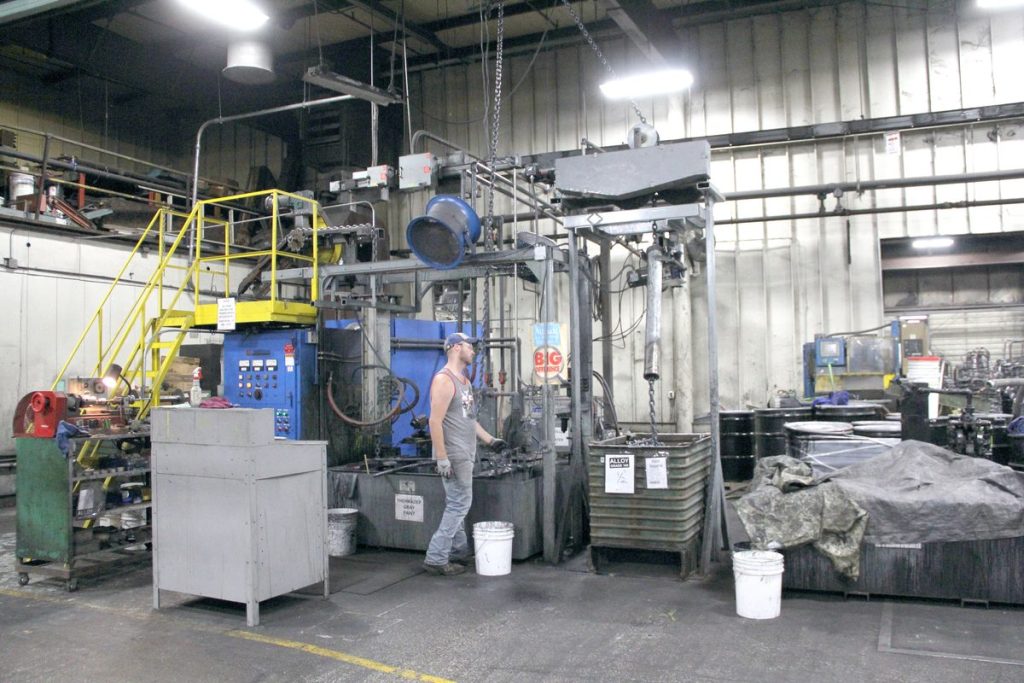
Ryan Vogel, six-year employee at Laclede Chain Manufacturing in Maryville said that he likes his job, which involves running machinery to coat chain in various alloys.
SKYE POURNAZARI/THE FORUM
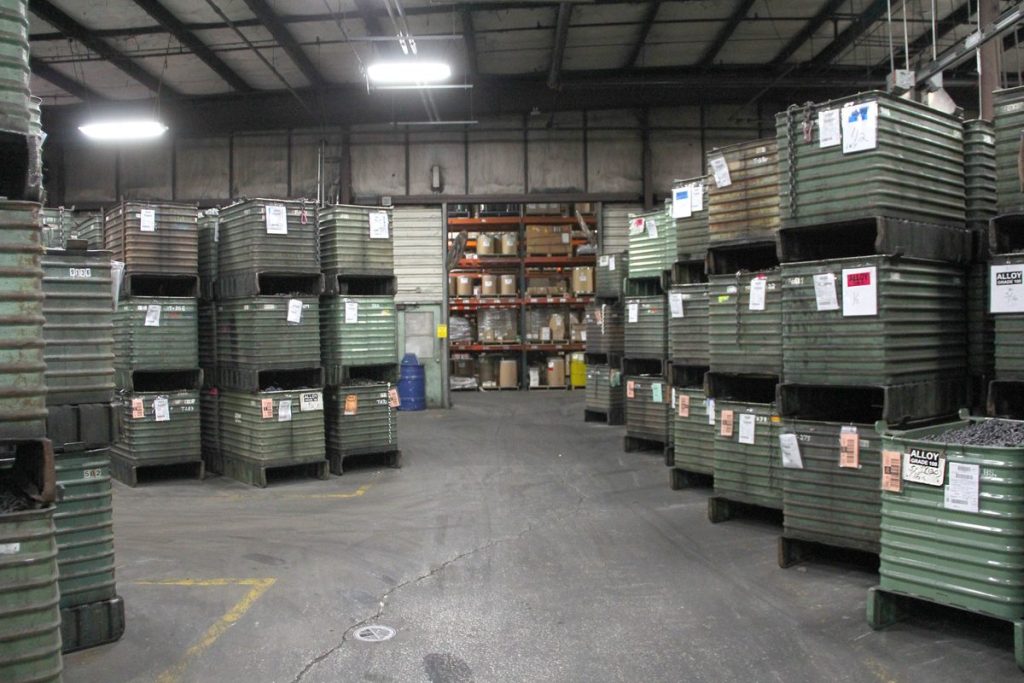
Rows of chain containers are shown Wednesday, July 18, located near the Laclede Chain Manufacturing storage area.
SKYE POURNAZARI/THE FORUM
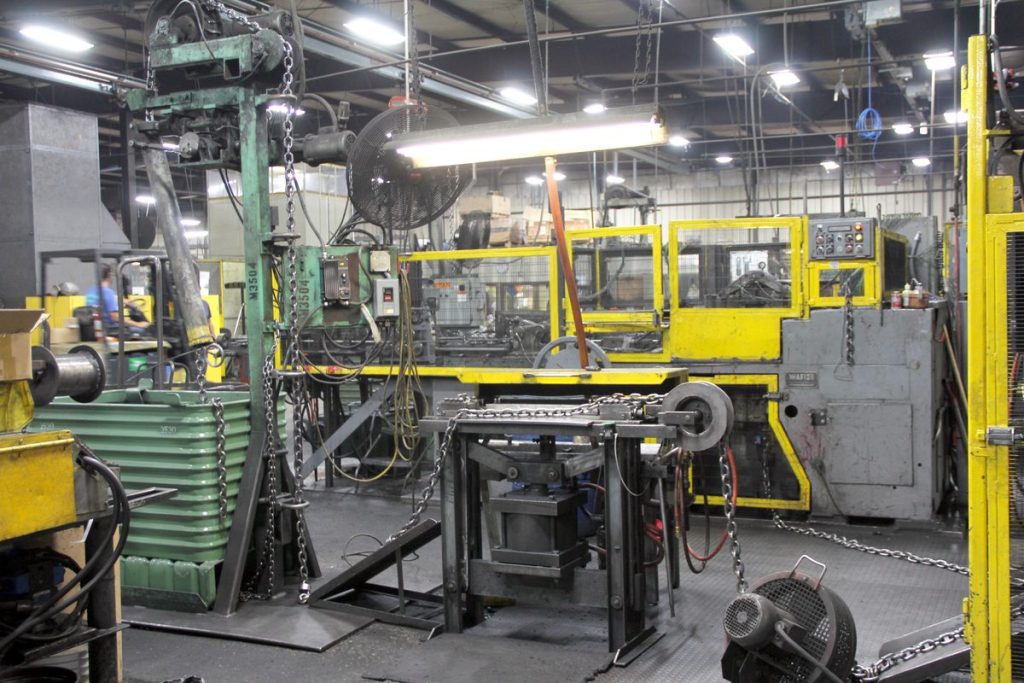
Shown Wednesday, July 18 in Maryville, is a chain creation station. One Laclede Chain Manufacturing employee will run two of these chain creation stations.
SKYE POURNAZARI/THE FORUM
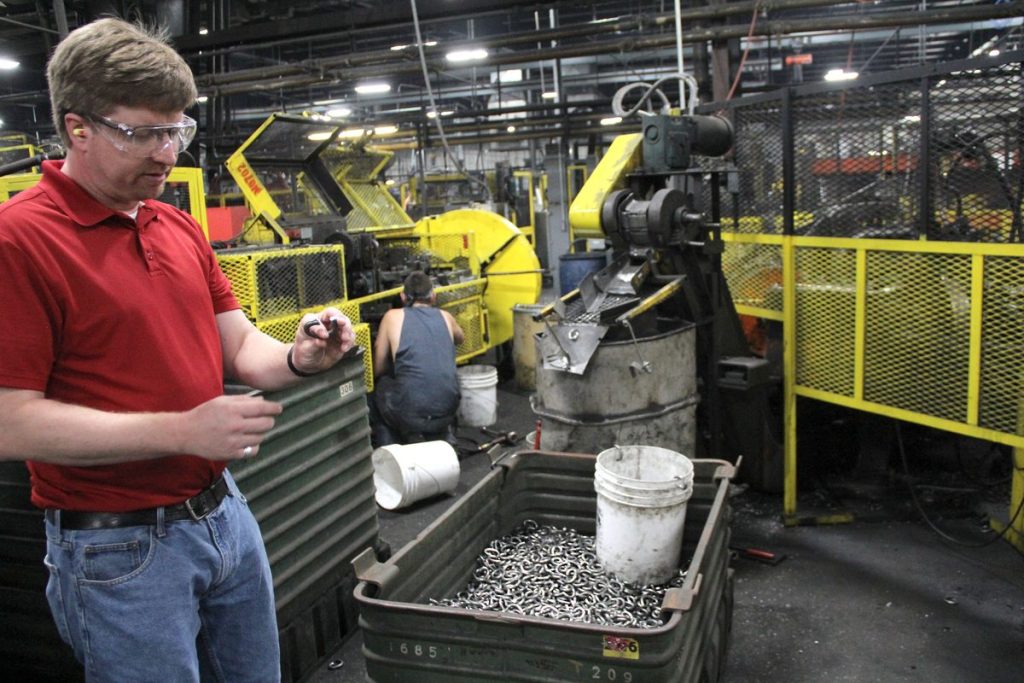
Laclede Chain Vice President Tim Riley, shows a link created by a machine Wednesday, July 18 at Laclede Chain Manufacturing in Maryville.
SKYE POURNAZARI/THE FORUM
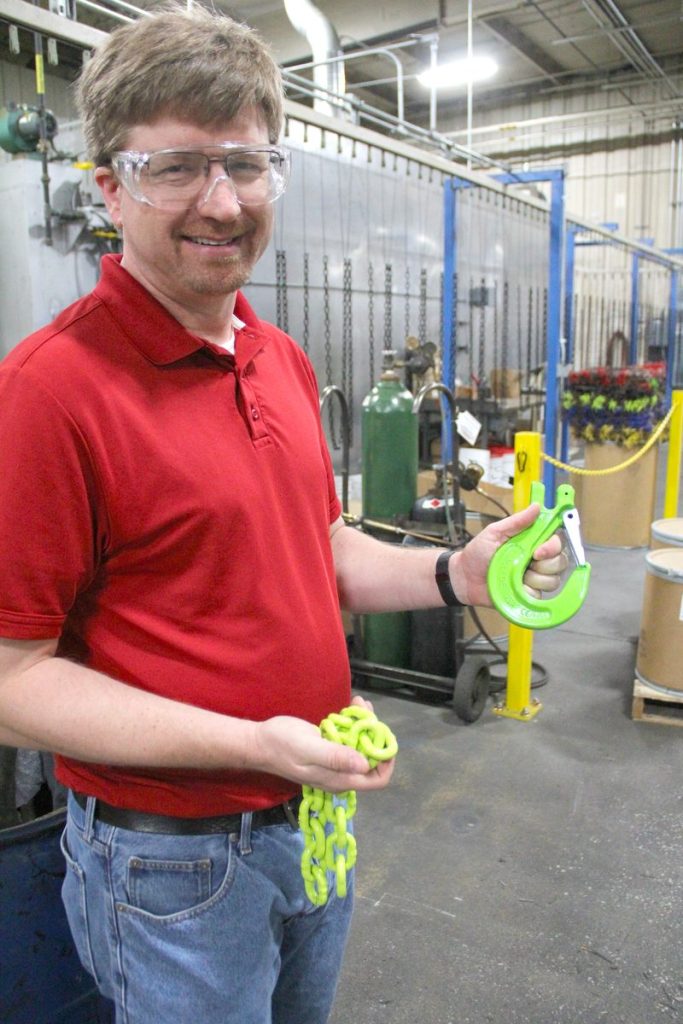
Laclede Chain Vice President Tim Riley, holds two pieces with the “Hi Vis,” green and yellow colors offered by Laclede Manufacturing in Maryville. When the business was still in growth mode it purchased new equipment to begin creating powder-coated chains with high-visibility colors offering safety colors that purchasers can use in their workplaces.
SKYE POURNAZARI/THE FORUM
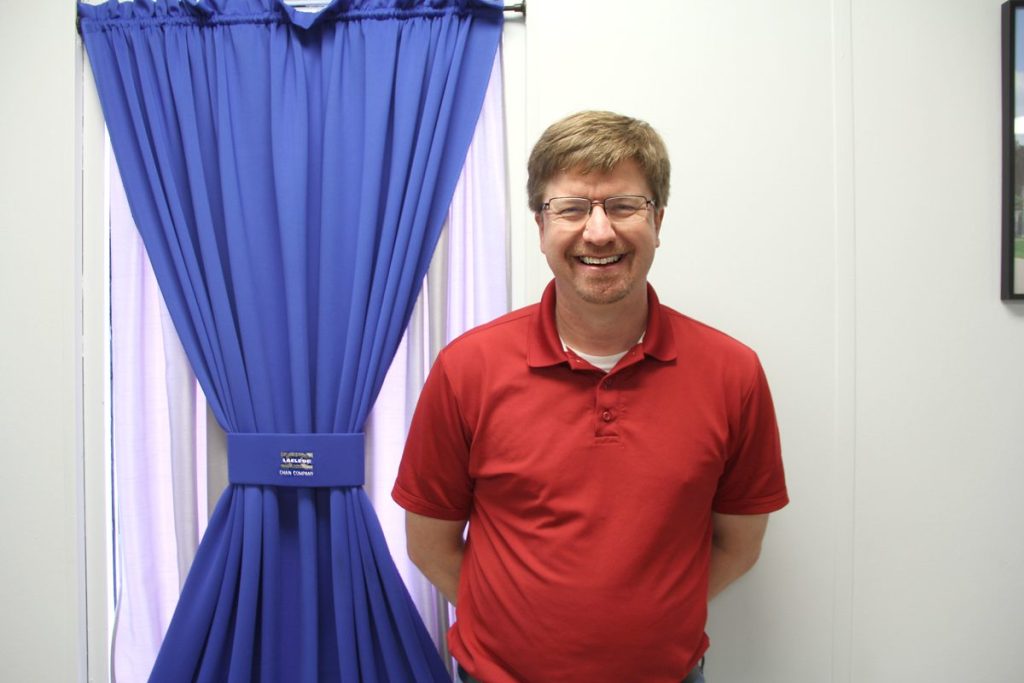
Tim Riley Vice President of Laclede Chain
SKYE POURNAZARI/THE FORUM
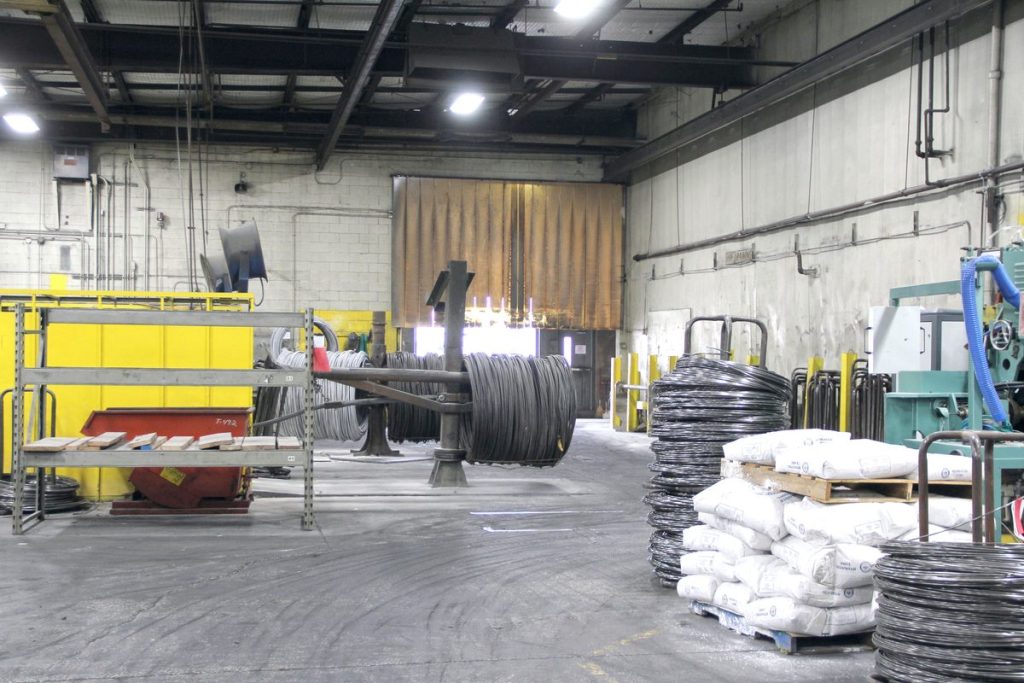
Steel is unloaded through the far door in large coils on Wednesday, July 18. Tim Riley, Laclede Chain vice president said the steel is then pulled to a circumference better suited for creating the chain.