Black history goes beyond February
JESSIKA EIDSON/THE FORUM
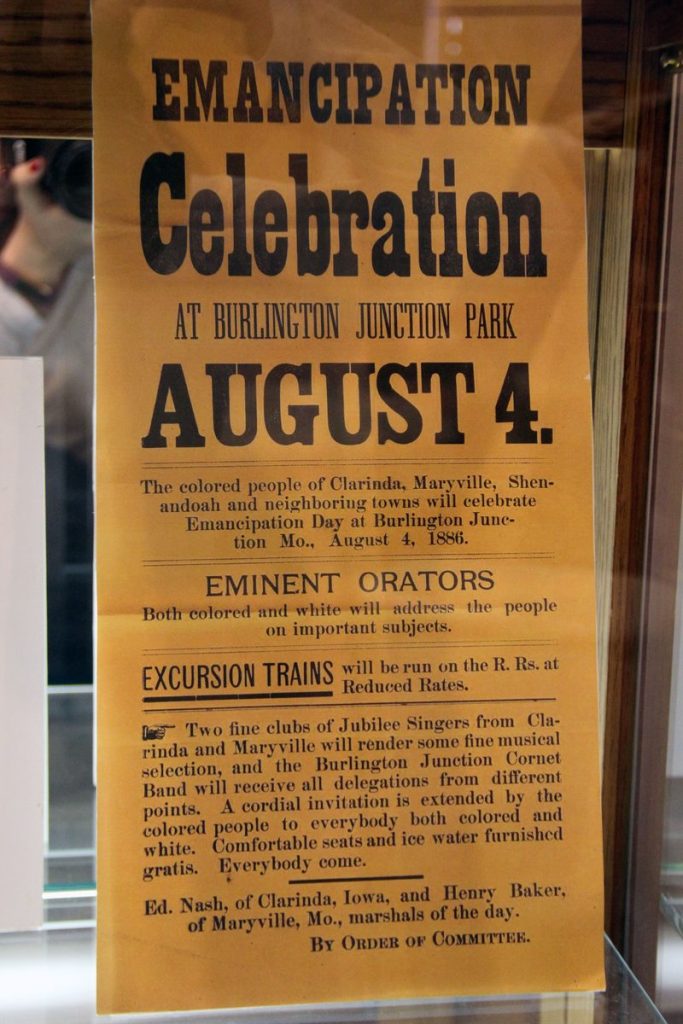
Nodaway County Historical Society Museum displays a poster announcing an Emancipation Celebration. The black community celebrated its emancipation every year from 1870 to 1919.
NODAWAY COUNTY, Mo. — The history of black Americans is one of great persecution and intense perseverance. Stories about significant characters such as Harriet Tubman, Rosa Parks and Martin Luther King, Jr. are studied and discussed throughout the month of February in honor of Black History Month.
While these national icons should be remembered, it is important for individuals to know the black history that affects them personally. According to Cathy Palmer, a historian at the Nodaway County Historical Society Museum, it is through remembrance that we might find understanding and even progress.
“If we talk about what happened in the past, maybe that idea of flexibility and cooperation, we can use it today,” Palmer said. “We have a way to go, and this can help.”
Smith, Graves and other slaves
The history of black life in Nodaway County begins as it does across our nation, with slavery. One historian, Martha Cooper, notes that Nodaway County was not an exception to the practice in her book “Life, Liberty and the Pursuit of Happiness: Nodaway County, Missouri: a Black history, 1840-1940.”
“All of the negative aspects of bondage are found here — slaves sales, beatings, breaking up families by allotting,” Cooper writes.
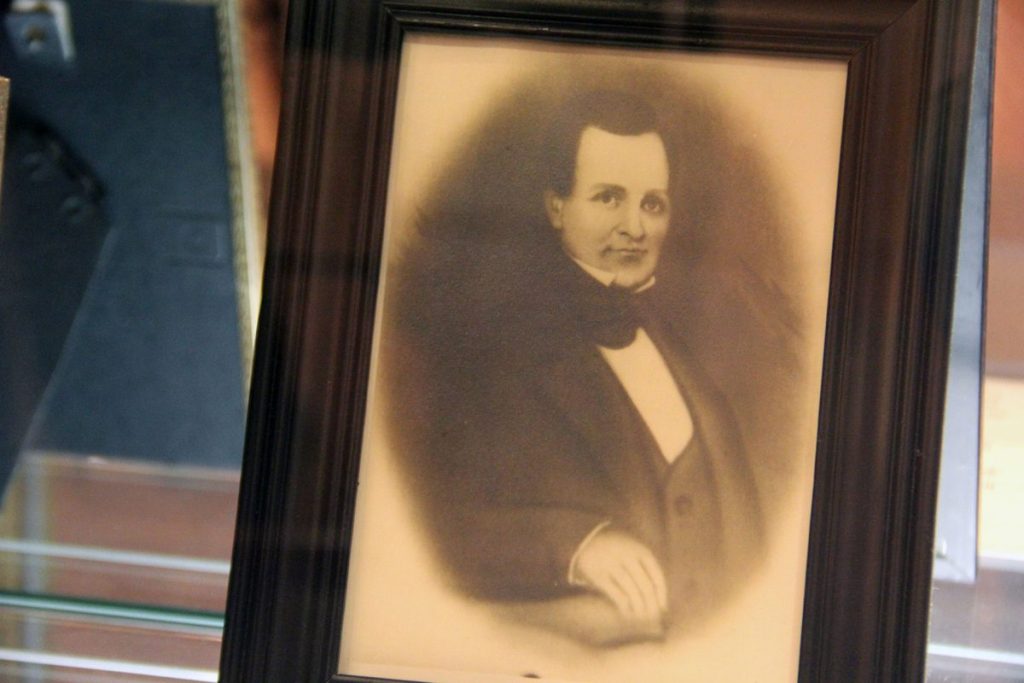
There are many documents claiming to note the first slaves brought to the area, but the most notable group was those owned by I.N. Prather in the 1830s or 1840s. Prather owned upwards of 15 slaves on his land he liked to call “Reindeer.”
By the year 1860, Nodaway County held 146 slaves who were valued at $64,348. The majority of slaves at this time were females between the ages of 20-29. Many of these slaves worked domestically; Eliza (sometimes written as Liza) Smith was an example of this.
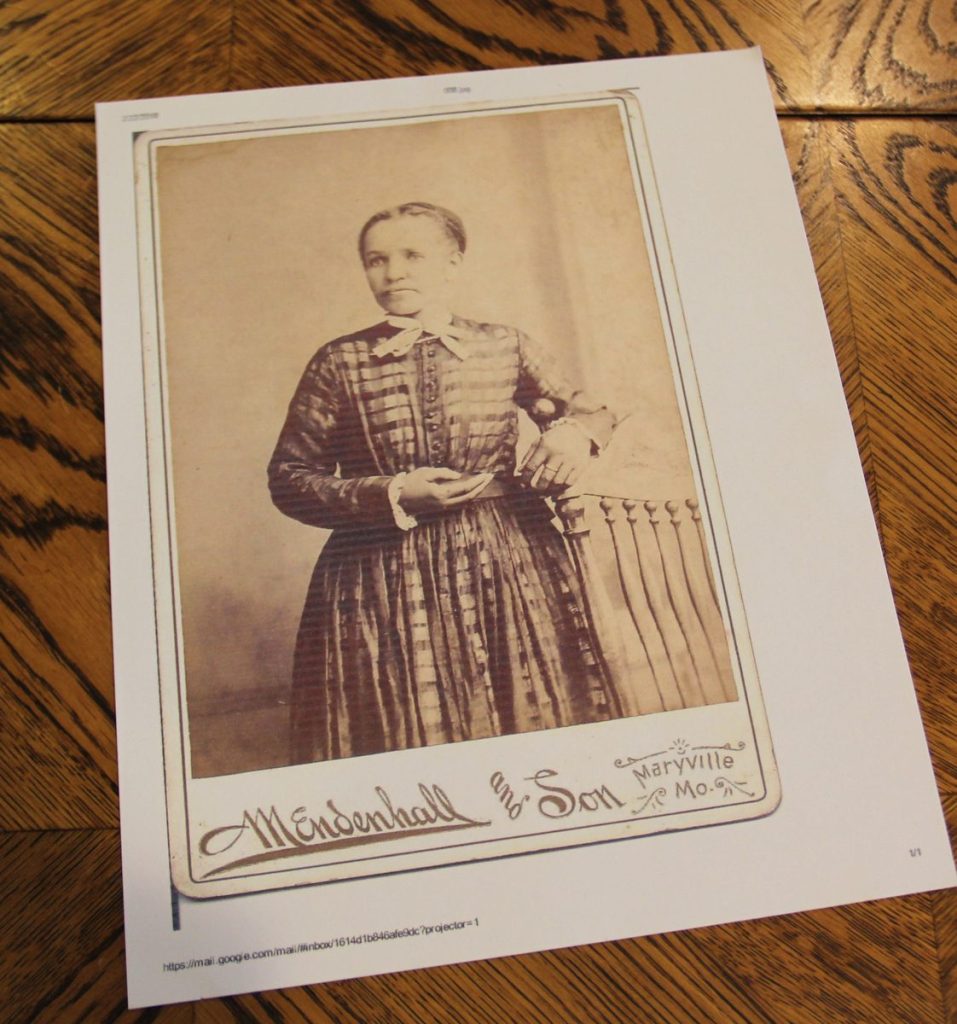
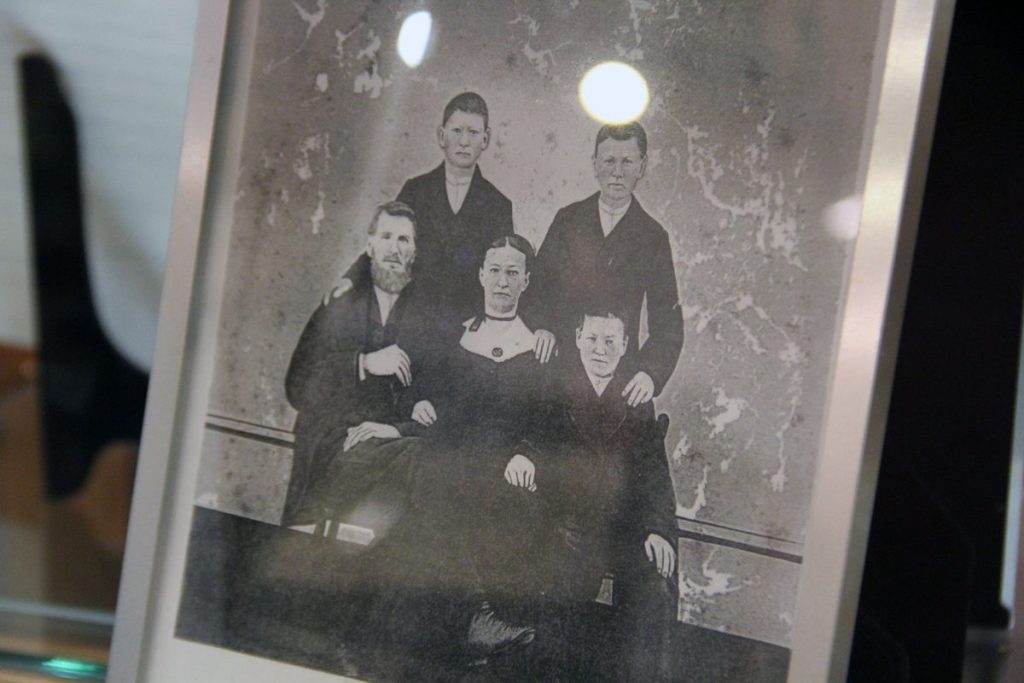
Bought at the age of 8 years old, Smith served as a cook for a man named Jeremiah Smith near Clearmont.
“That was just so he had somebody to cook for him,” Palmer explains. “That seems young today, but back then she would have already been helping.”
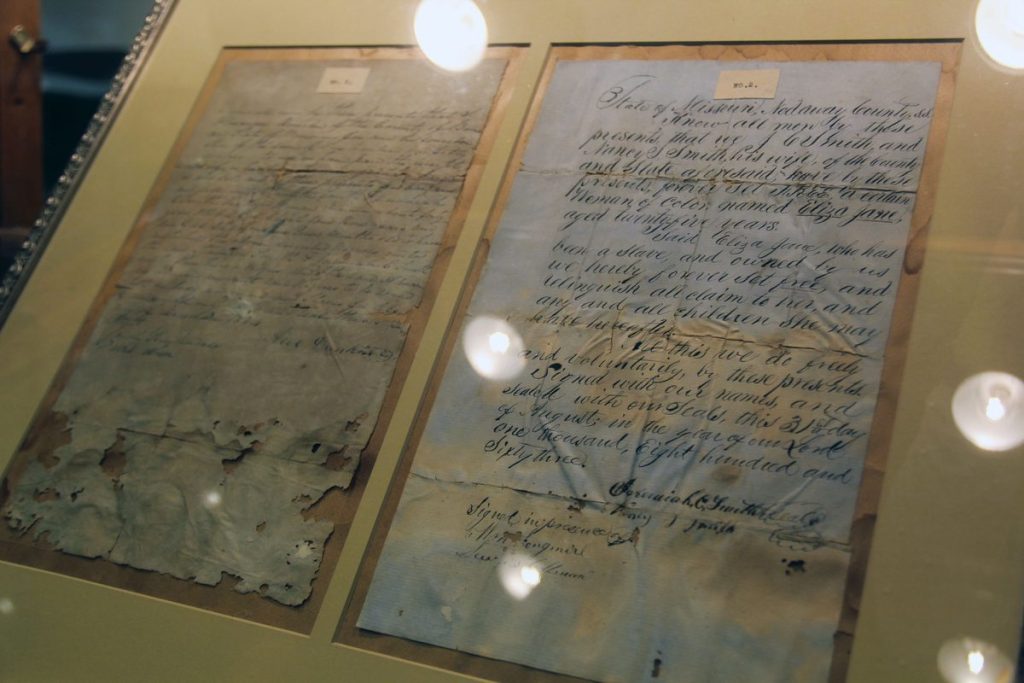
Smith was fortunate enough to receive her freedom from her owner, and chose to stay near the family she had grown up with. She remained in Nodaway County until her death in 1914 and was buried in Clearmont.
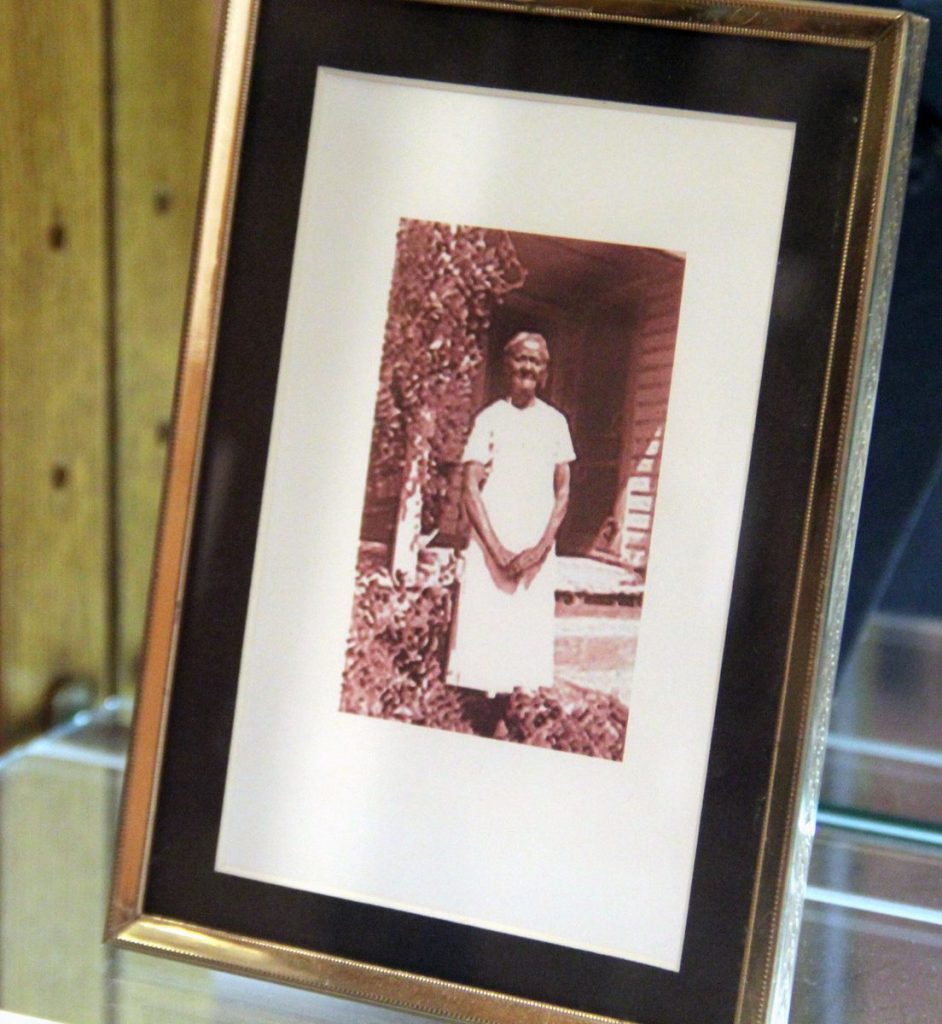
Smith was not the only ex-slave to stay near her owners. Sarah Graves who lived near Skidmore also chose to stay in Nodaway County.
“She’s had a harder life, because she talks about the scars on her back,” Palmer says. “She had a house and a husband and a son, and was well thought of in that area.”
Palmer tells the story of how Graves was thought of as almost family in her community.
“Somebody complained about her sitting at the table at somebody’s house, and the woman of the house said ‘she’s sitting at the table or nobody’s eating.’”
While there are many reports of slaves staying near their former owner, Palmer says records of mistreatment are harder to find.
“You have to remember the selectiveness of that generation,” Palmer says.
Nodaway County was reportedly affected by the Undergound Railroad. Maryville was on a road called Tarkio that began in St. Joseph and branched out through the region. One slave, Henry Baker, used the road to escape and later helped others to find freedom.
While some areas were confirmed to be connected to the railroad, a lack of paperwork has left some historians with only spoken accounts.
“We have had some family stories,” Palmer says. “One is a barn that has a stone foundation in it, that family lore rumors that it was part of the Underground Railroad.”
Emancipation Celebrations
While Lincoln issued the Emancipation Proclamation on Jan.1, 1863, this declaration only applied to slaves in the South. Slaves of Nodaway County were not freed until two years later on Jan. 11, 1865.
The black community made a point to celebrate its freedom every year. The annual Emancipation Day celebration began in 1870 and continued for almost five decades.
Each year on Aug. 1, the black community would celebrate with picnics, speeches and always a reading of the Emancipation Proclamation.
“The annual Emancipation Day celebration, 1870 to 1919 was the day when joy abounded,” Cooper writes.
According to Palmer, while the black community celebrated, there were some in the community that did not realize the significance of the event.
“I’m ashamed of the way it was reported in the newspaper, because it kind of made fun of them,” Palmer says.
Segregation in school
Douglas School began in 1871 with one teacher by the name of Lillie Evans and 35 students. Throughout its run, the all-black school faced many hardships including community interference and a fire in 1918.
“The harshness of discrimination is depicted plainly in the segregated school of Maryville,” Cooper writes.
Students of the school could only attend up to eighth grade and were then forced to travel to St. Joseph or Kansas City for further education because there was no black high school. This lack of resources was a main reason the school eventually closed.
“They did have a black school here, and in later times it closed for lack of numbers,” Palmer says. “People would go to St. Joe to the black school there.”
Northwest Missouri State University was segregated legally until 1954, but did not receive its first black student until 1958. Fenton Williams, a St. Joseph native, only attended one year at the college.
Williams was not allowed to stay on the campus with his fellow students, but was instead brought in by an administrator named Everett Brown. Joe Bell followed Williams who was the first black student to complete his degree with the college.
“I can remember just right after that, we had an influx of sports players that were black,” Palmer recalls. “I know basketball and football both brought in, through scholarships, black students to play. Then it just became normal.”
Palmer believes the university was a leader in progress for the community, remembering some of the college’s milestones.
“Through the university, I think you would see the most progress,” Palmer said. “It was earth shaking that they had a black organization; for a few years we had a white homecoming queen and a black homecoming queen.”
Maryville to Mobville
Racism and violence did not pass over Nodaway County during the Jim Crowe era.
“There were KKK in this area,” Palmer says. “We received an envelope with a KKK meeting announcement for a small town in this area. There was a note with it saying, ‘I’m not proud of this, but this is a part of our history.’”
The Ku Klux Klan was not as outspoken in Nodaway County as in other parts of the country, but there were times when their influence could be seen. There were reports of cross burnings, blackmail and a public appearance by the Klan in a local church.
Probably the most well known case of violent racism in Nodaway County is the lynching of Raymond Gunn. Gunn had confessed to sexually assaulting and killing a schoolteacher by the name of Velma Colter in 1930.
Despite being moved several times for his safety prior to the trial, Gunn never made it to the courthouse. Instead, a mob forced him to walk barefoot for three miles to the scene of the murder and burned him on top of the schoolhouse.
“The colored race was represented in Maryville by one person today, and his ashes remain at Garret School,” the Maryville Daily Forum reported.
The lynching was brought to the attention of the nation and Governor Caulfield and left a black mark on Maryville for decades. This incident changed the culture of black people in Maryville according to Palmer.
“It was a very divided time,” Palmer says. “The one thing that we have discovered through talking with people, was that people who had domestic servants, they hid them. I can think of a couple families where they lived in the basement of the main house. You didn’t see blacks in Maryville.”
According to Palmer, the black population in Maryville was not visible again until the 1960s.
“A way of life for the black people of Maryville died with him,” the Gazette reported.
The two Kings and a Nigerian
There are not many records of activity surrounding the Civil Rights movement. According to Palmer, Kansas City had a major riot, but the community of Maryville did not experience unrest. She believes this was in part due to the lack of students and faculty at Northwest willing to join the cause.
“The main thing was if you were on the faculty, if you wanted to keep your job, you weren’t going to be encouraging anyone,” Palmer explains.
The era of the Rodney King riots also had little effect on the community according to Palmer.
“We were aware of it and we were following it, but I don’t remember any uprising of people here,” Palmer recalls.
There was however an incident nearly a decade before the L.A. riots in which a young black man was murdered in the Nodaway County jail. Four other inmates killed Wallace Nduka Morgan, a Nigerian student of Northwest, in July of 1983. Whether or not this was racially provoked, the event caused many foreign students of Northwest to feel unsafe according to accounts.
“About then is when things started changing, and the university is the one that started activities to bring more awareness,” Palmer says. “I can see a progression from there.”
This event was a catalyst in advancing the jail’s facilities and creating events to raise awareness of the black community.
This history of Nodaway County’s black community does have its moments of darkness and shame, but this history can be used to teach us a little about ourselves and inspire a diverse, progressive community.
“Maryville’s had some episodes in their life where they haven’t treated them well,” Palmer says. “Maryville has made quite a bit of progress.”
JESSIKA EIDSON/THE FORUM
Eliza Smith. Smith worked as a slave from the age of eight and was eventually given her freedom.
JESSIKA EIDSON/THE FORUM
Sarah Graves. Graves — also known as “Aunt Sally” — was interviewed later in life to document her experience as a slave.
JESSIKA EIDSON/THE FORUM
I.N. Prather. Prather was a prominent slave owner in Nodaway County.
JESSIKA EIDSON/THE FORUM
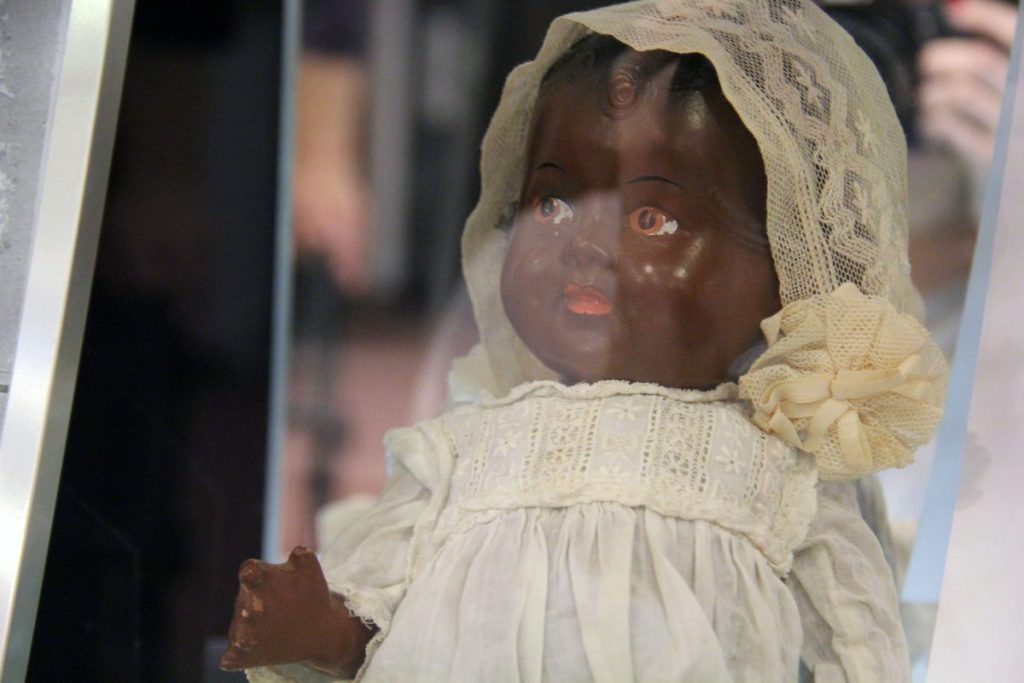
A doll given to Jane Carden Evans by Santa is kept at the Nodaway County Historical Society Museum. Black dolls were rare to find in Maryville at this time.
JESSIKA EIDSON/THE FORUM
Family of Jeremiah Smith. Smith was the owner of Eliza Smith whom he later freed.
JESSIKA EIDSON/THE FORUM
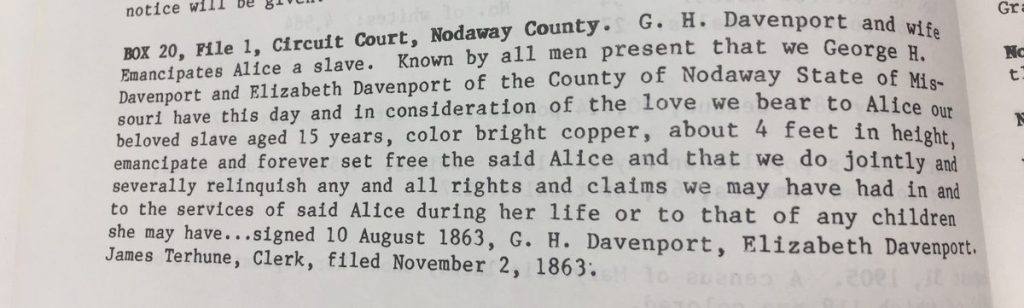
The Davenports declare their slave Alice to be free. Martha Cooper compiled several documents and accounts of slavery in Nodaway County in her book.
JESSIKA EIDSON/THE FORUM
The Davenports declare their slave Alice to be free. Martha Cooper compiled several documents and accounts of slavery in Nodaway County in her book.
JESSIKA EIDSON/THE FORUM
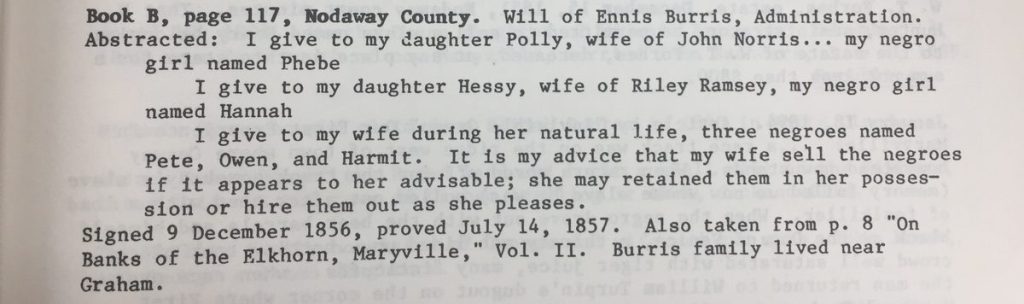
Enice Burris gives away his slaves to his children. Slaves and their children were often passed down in between family members.