Area couple starts designated driver campaign
FACEBOOK
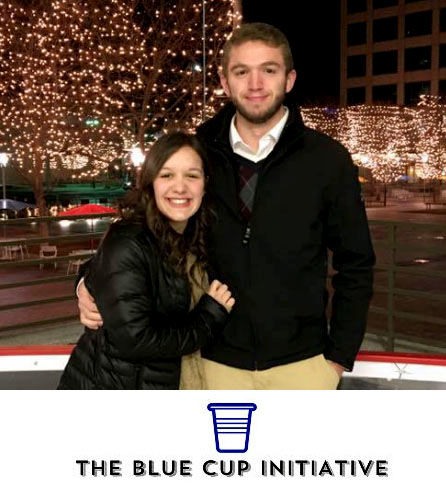
Reid Osborn and Madden are the founders of the Blue Cup Initiative. The former Northwest student and sophomore founded the program following the death of Morgan McCoy.
MARYVILLE, Mo. — Last month, the City of Maryville suffered the loss of a Northwest student at the hands of a drunken driver. The death of Morgan McCoy resonated with many in the community, including Reid Osborn and Emily Madden who have begun an initiative to raise awareness of designated drivers.
How Blue Cup began
“I was with her the night that happened,” Madden said. “Looking back, this is obviously for her. Maryville is a small town; it’s like a family here. You want your family to get home safe and be safe, even if they’re walking, to not get hit by anyone.”
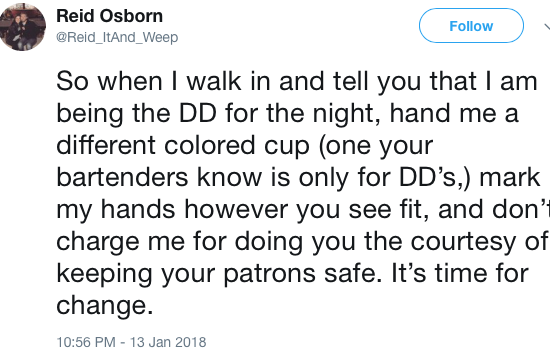
It was about a week after the tragic event that the idea for the Blue Cup Initiative was created. While attending a local bar, Osborn who was acting as a designated driver was required to pay a cover charge and had trouble getting nonalcoholic drinks from bartenders. Frustrated, Osborn took to Twitter to express his irritation with the experience.
“When I walk in and tell you I am the DD for the night, hand me a different-colored cup (one your bartenders know is only for DDs), mark my hands however you see fit and don’t charge me doing you the courtesy of keeping your patron’s safe,” Osborn said in his thread. “It’s time for a change.”
Osborn’s thread went viral almost overnight. Many praised the idea of allowing designated drivers to drink for free and be identified by a different-colored cup. Osborn used the momentum of the tweet to brainstorm a plan for what would become the Blue Cup Initiative.
“Social media can be so bad, but it can also be a great platform,” Osborn said. “With Twitter and Facebook now, we knew we had people behind it before we even had something.”
What is Blue Cup?
The main goal of the Blue Cup Initiative is to increase awareness of designated drivers by giving blue cups to those who let bartenders know they will not be drinking.
“You want to get as many people home as safely as possible,” Osborn said. “So, if that means I have to hold a blue cup in my hand so that my friend across the bar knows ‘If I need a ride tonight, I know that Reid is sober,’ then that’s a really easy way to do that.”
Osborn believes many people, including some of his friends, choose to drink and drive because they don’t have anyone they know to take them home.
“The No. 1 answer by far that I got, like over 90 percent, said the reason that they chose to drive home was because they didn’t even know that there was someone else available to drive,” Osborn said.
Osborn said he is aware of other programs in Maryville that provide safe alternatives, but thinks they have limitations. One similar program that is like the Blue Cup Initiative is the “CHEERS to the Designated Driver” program that began at the University of Missouri and encourages participating establishments to serve free nonalcoholic drinks to designated drivers.
“It’s similar in a way that you’re going to get that free drink,” Osborn said. “What it does not do, is it does not raise awareness that there’s someone there to drive you.”
Several bars and restaurants in Maryville are a part of the CHEERS program: Burny’s, Molly’s Party Club, Pagliai’s Pizza and The Palms. According to Osborn, most people don’t know these establishments take part in CHEERS.
“I have honestly, up until this point, never heard about CHEERS,” Osborn said. “I have not seen any information in any of the bars for CHEERS.”
Another option for Northwest students is the “Safe Ride Home” late night taxi. The program, which is managed by campus police, allows students to call the service for a ride home.
“We’re not trying to replace Safe Rides at all,” Osborn said. “I used Safe Rides when I was at Northwest. They’re just undermanned for how many people there are.”
Safe Ride Home has provided six to eight thousand rides each year for the past five years according to campus Police Chief Clarence Green. While Green said the taxi usually only takes about 12 to 15 minutes, Madden said she has waited upward of an hour for a ride through the program.
“There are so many people using it, that it takes so long,” Madden said.
Osborn and Madden plan on meeting with the campus police and hope to create a partnership in the near future.
“We’re just trying to add even more safe rides out there, because any driver is safer than any person who has had that one drink and is behind the wheel,” Osborn said.
Concerns about Blue Cup
A few concerns with the Blue Cup Initiative are the lack of background tracks and medical training for drivers who volunteer for the program.
The issue of sexual assault often arises when dealing with alcohol consumption, and those who are receiving rides through the Blue Cup Initiative may be putting themselves into a vulnerable situation. According to Madden, this could happen in many situations and hopes that users would use good judgment with whom they ride home.
“Maryville is such a small community that you kind of know everyone, or you know the familiar faces.” Madden said. “If there’s a DD sitting there, you most likely will know one or two.”
Green, police chief for Northwest University Police and overseer of Safe Rides, suggests using programs that require background checks.
“We recommend everyone use Safe Ride,” Green said. “I would use those or an Uber or a Lyft, services that provide background checks and trainings for its drivers in case an emergency occurs.”
Another issue that could arise would be that of medical emergencies. Safe Ride drivers are trained on what to do in the case that someone who has been drinking is injured or possibly has alcohol poisoning.
“If something occurs while that person is transporting someone in their vehicle, say they get sick or something medical, you have someone who’s trained and has an attachment with emergency services,” Green said. “We have policies, procedures and full training for all of our drivers.”
According to Osborn, the decision to bring a passenger to the emergency room would be up to drivers on an individual basis, saying the program is for volunteers and has no contractual obligations.
“If I know somebody, and I’m driving them home and I think that they have alcohol poisoning because they have not stopped throwing up on the 3-mile drive to their house, then not only as the sober driver, but me just being a friend to them, I would feel obligated to take them,” Osborn said. “This is a volunteer-basis program; it’s not a contract. Just because I go in and say I’m DD, doesn’t mean I have to take you personally home.”
The future of Blue Cup
The Blue Cup Initiative will be officially launching March 10 at The Palms. Osborn and Madden have been working with owner Erik Schreiber to get the program going.
“He was impacted with the whole Morgan McCoy thing like the whole rest of the community was, but I think he was one of the biggest ones who jumped on it first because of that reason,” Madden said. “He was the one that was most excited about it, because we were doing something for her.”
Madden and Osborn say they will be beta launching the initiative in Maryville, but are hoping to expand the program throughout Missouri with the help of “Save Mo Lives,” an effort by the Missouri Coalition for Roadway Safety.
“There were multiple counties saying that they would love to have this,” Osborn said. “This can grow as big as it wants, because it’s so dead simple, it doesn’t cost the bar a lot of money and it could possibly save lives. Anything that can do that, I feel like a lot of people can get behind.”
Social media also may play a part in expanding the program. According to Osborn, his original thread has been viewed almost 50,000 times. Madden says colleges across the United States have asked about adopting the program.
“Our own college campuses or own communities can take it and adopt it themselves,” Madden said. “We just want it to be as big as it can be because it goes back to bringing awareness.”
Osborn and Madden say they don’t care about getting recognition for the Blue Cup Initiative, they just want to see deaths like McCoy’s prevented.
“It could not work at all other than getting that one person home safe that night, and that’s a win,” Osborn said. “That’s a parent who’s not losing their kid. That’s friends of this person who aren’t going to have to go through what the town just went through.”
TWITTER
Reid Osborn takes to Twitter to discuss options for designated drivers. The original Twitter thread was viewed almost 50,000 times since its posting.

TWITTER
The Blue Cup Initiative aims to increase designated driver awareness. The program is set to launch on March 10 at The Palms.